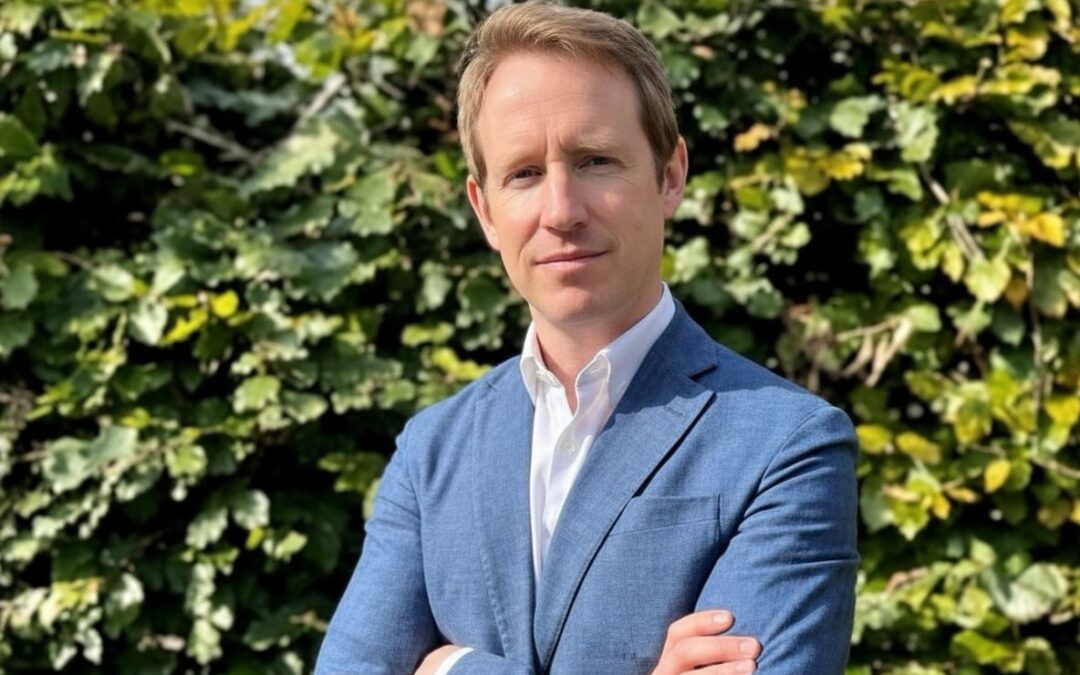

Henry Li’s BioRoundup is a weekly analytical roundup that tracks where power, capital and science are actually moving in the global life-sciences ecosystem.
Rather than simply reporting news headlines, Li curates developments from across deals, policy, industry strategy and market structure, synthesising stories from boardrooms, governments, labs and regulatory bodies into an integrated narrative. He highlights major deals, policy shifts, strategic incentives and structural trends, and then offers concise “how to read it” insights that explain why these developments matter to investors, biotech leaders, policymakers and innovation ecosystems. His lens bridges science, economics and geopolitics, showing not just what happened, but what it signals about the future direction of the sector.
In this first instalment, Henry Li’s BioRoundup turns to the industrial mechanics of modern biopharma; the incentives, partnerships and manufacturing decisions that increasingly determine where medicines are developed, produced and priced. Across Europe, Asia and the United States, governments and companies alike are treating drugs less as isolated products and more as strategic infrastructure, tied to supply security, industrial policy and long-term healthcare budgets.
The developments covered here span regulatory reform, metabolic disease strategy, rare-disease dealmaking, biosimilars consolidation and AI-enabled chemistry platforms. While they appear diverse, they share a common thread: power is shifting toward actors that can align science with policy, capital and manufacturing scale. Whether through programmable incentives in Europe, decade-long obesity franchises, focused rare-disease bolt-ons, Global South manufacturing champions or “machine-native” chemistry designed for reshoring, the sector is reorganising around durability rather than speed alone.
Taken together, these stories illustrate a life-sciences landscape in which success is no longer defined solely by clinical differentiation, but by how effectively companies navigate, and shape the regulatory, geographic and industrial systems that surround their science.
Global – Incentives, obesity and industrial plumbing
1) EU reaches political deal on pharma reform and incentives
EU institutions have agreed a political deal on the overhaul of pharmaceutical legislation, including new rules on data exclusivity, orphan-drug incentives and supply-security obligations. Standard market exclusivity drops from 10 to 9 years, with data usable by generics after 8 years. Companies can earn back extra protection through add-ons linked to unmet need, launch breadth and other criteria. The package sits alongside the proposed Critical Medicines Act, which is meant to treat supply of key drugs as infrastructure rather than a purely commercial issue.
How to read it: The basic European bargain on medicines is being rewritten in full view. Big pharma loses a year of default protection, but gains a more programmable menu of incentives; Brussels gets more levers on shortages and dependency. For boards, the real question is not the headline “9 years” but how hard it will be in practice to qualify for add-on years – and how far national HTA bodies use their new information powers when they re-price products inside already stretched budgets.
2) Zealand’s metabolic-disease tie-up shows obesity’s second phase
Zealand Pharma has struck a multi-asset metabolic-disease alliance with OTR Therapeutics, combining Zealand’s peptide expertise with OTR’s platform and regional partners, including a Chinese biotech for Greater China rights. The package spans obesity and NASH, with co-development, regional licensing and profit-sharing rather than a simple royalty stream.
How to read it: The obesity race has moved beyond “do you have a GLP-1 that works”. The contest is now about stitching together combinations, new mechanisms and regional ecosystems that look durable over a decade, not just a single launch. European mid-caps are using Chinese partners as part of the development and capital stack, not just as downstream distributors. For policymakers, it pushes obesity and NASH firmly into industrial-strategy territory: trial locations, manufacturing footprints and reimbursement all move together.
3) Mirum buys Bluejay for up to 820 million dollars in rare liver disease
Mirum Pharmaceuticals is acquiring Bluejay Therapeutics in a deal worth up to 820 million dollars, paying cash, stock and milestones for brelovitug, a late-stage monoclonal antibody for chronic hepatitis D. The drug already has Breakthrough Therapy designation from the FDA and PRIME status from the EMA, with a phase 3 read-out expected in 2026.
How to read it: Mid-cap rare disease deals like this remain one of the cleanest ways to buy growth without triggering competition alarms. Mirum deepens a focused liver-disease franchise with a de-risked asset that fits neatly alongside its existing cholestatic portfolio. For investors, it reinforces a pattern: in a capital-tight world, bolt-ons around tightly defined speciality areas beat empire-building, and the combination of orphan incentives plus concentrated patient populations still commands a premium.
4) Biocon fully integrates its biosimilars arm in a 5.5 billion dollar move
India’s Biocon is taking full ownership of Biocon Biologics, valuing the biosimilars business at around 5.5 billion dollars and buying out minority stakes including Viatris’s holding. The goal is a simpler structure and a clearer pitch as a unified global biopharma across diabetes, oncology and immunology.
How to read it: Biosimilars are being treated less as side businesses and more as core industrial infrastructure. Folding Biocon Biologics in tightens governance and lets Biocon present itself as a single “Global South” champion for insulins and monoclonals. For policymakers who talk about diversifying supply chains away from a small set of Western firms, this is the sort of company they have in mind. The open question is whether procurement and regulatory rules will actually reward this kind of manufacturing-heavy player over the long haul.
- https://www.biocon.com/biocon-limited-to-integrate-biocon-biologics-limited-to-create-a-unified-global-biopharmaceutical-leader/
- https://www.thepharmaletter.com/pharmaceutical/biocon-limited-to-integrate-biocon-biologics
5) Excelsior raises 95 million dollars to make chemistry “machine-native”
Excelsior Sciences has launched with 95 million dollars in financing (70 million Series A plus a 25 million state grant) to industrialise what it calls “machine-native” chemistry. Its “smart bloccs” framework breaks molecules into standardised building blocks that robots and AI systems can assemble and optimise, with an eye on accelerating discovery and making US-based small-molecule manufacturing competitive again.
How to read it: The interesting AI stories now come with reactor vessels attached. Excelsior sits exactly where Washington wants private capital to go: a platform that speeds design and supports reshoring arguments for critical medicines. For larger pharma, the choice is whether to treat this as just another clever vendor or as infrastructure that will, over time, shape where and how their own chemistry and manufacturing actually happen. Either way, AI for drug discovery is clearly merging with industrial policy, not just with screening libraries.
Shared with permission from the author Henry Li – Senior Policy Advisor, Tony Blair Institute for Global Change | LinkedIn: Profile