

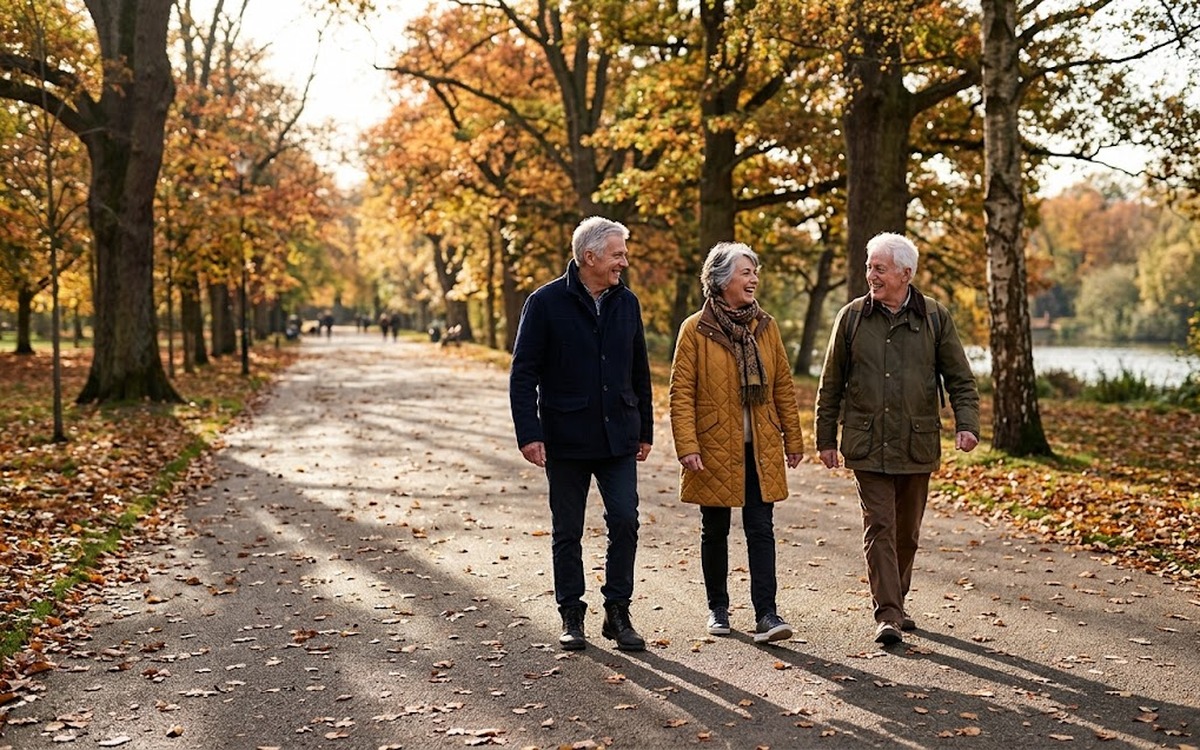
The link between physical activity and dementia depends on where that activity happens, according to a meta analysis of 74 studies covering more than four million adults. Leisure time exercise was associated with a lower risk of dementia, while activity undertaken at work or while commuting pointed in the opposite direction. Researchers and commentators alike are urging caution over how far the underlying data can be pushed.
Research on physical activity and dementia has generally treated exercise as a single quantity. The systematic review and meta analysis published in The Lancet Public Health instead splits it into domains, separating leisure time exercise from activity at work, on the commute and in the home.
The work, led by Professor David Raichlen of the USC Dornsife College of Letters, Arts and Sciences, pooled data from 74 cohort and case control studies involving more than 4.2 million participants aged 45 to 93 across 30 countries. Participants were followed for a median of ten years, during which investigators recorded diagnoses of all cause dementia, Alzheimer’s disease and vascular dementia.
The review is the first to systematically test whether the physical activity paradox, a pattern well documented in cardiovascular research in which physically demanding work fails to deliver the benefits associated with voluntary exercise, extends to dementia.
What the review found
The clearest signal came from leisure time activity. Participants in the most active group for leisure time physical activity had a 24 per cent lower relative risk of dementia than those in the least active group.
Occupational physical activity ran the other way, associated with a 20 per cent higher relative risk of dementia. Active commuting showed a more modest increase. In both cases, however, the analyses rested on a small fraction of the total evidence base, with five studies contributing to the occupational finding and two to the commuting one. Household activity appeared beneficial, but that result rested on a single study.
Natan Feter, the study’s first author and a postdoctoral fellow in Raichlen’s Evolutionary Biology of Physical Activity Lab at USC, said the findings challenge the assumption that “every move counts” where brain health is concerned. The authors argue that research into physical activity and dementia prevention may need to account for the circumstances in which activity takes place rather than focusing on volume of movement alone.
The quality question
The headline sample size invites more confidence than the underlying studies support. Nearly half of the 74 included studies were rated low quality, findings varied considerably between them, and the certainty of some of the evidence was assessed as minimal. As an analysis of observational data, the review cannot establish cause and effect.
Dr Susan Kohlhaas, Executive Director of Research and Partnerships at Alzheimer’s Research UK, was direct on the point. An analysis involving more than four million people sounds definitive, she said, but “size cannot make up for weaknesses in the underlying evidence”. She added that the variation between studies makes firm conclusions difficult to draw.
She also cautioned against the reading that has dominated much of the early coverage. “People should not conclude from this study that having a physically demanding job, or walking or cycling to work, increases the risk of developing dementia,” she said. The occupational and commuting findings, she suggested, may instead reflect working conditions, socioeconomic circumstances, stress or exposure to pollution rather than the activity itself.
The most consistent result, that leisure time activity is associated with lower dementia risk, is also the one that aligns with the existing evidence base on physical activity and dementia.
What it means for prevention research
The practical advice does not change. Alzheimer’s Research UK maintains its position that “what is good for your heart is good for your brain”, with regular physical activity forming part of a broader picture that includes staying mentally and socially engaged.
Where the review is more useful is in showing how much work remains before domain specific advice can be given with confidence. Kohlhaas pointed to the need for long term studies that measure activity accurately over time, account for the varied circumstances of people’s lives, and test whether changing behaviour genuinely alters dementia risk.
That is a considerably harder study design than the observational cohorts that make up most of the current literature, and it is the gap that any future guidance on the context of physical activity will need to close.
Expert comment supplied by Alzheimer’s Research UK.