Stellaromics Expands Pyxa® Adoption as Instruments are Installed at Leading Research Institutions Across the U.S. and Europe
Icahn School of Medicine at Mount Sinai, CNAG, Karolinska Institutet, and Stanford University will apply 3D spatial multi-omics across neuroscience, immunology, oncology, and tissue atlas research
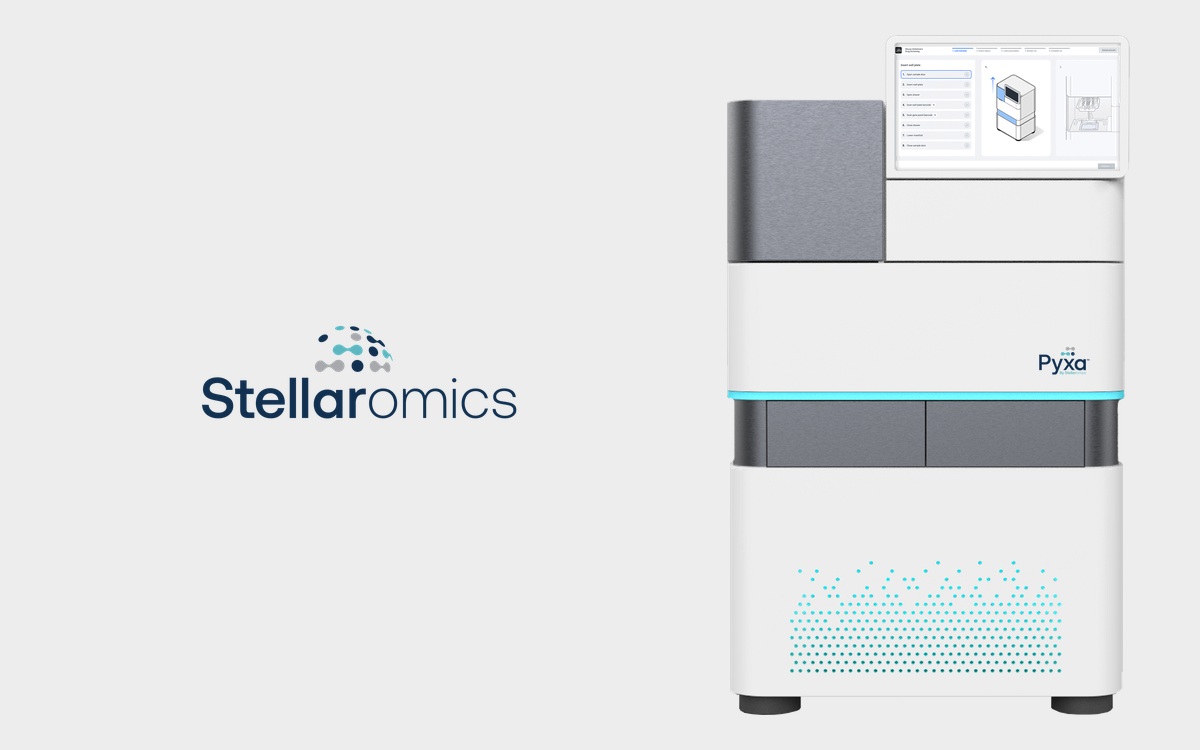
BOSTON, 15 September 2026 – Stellaromics, Inc., the leader in 3D spatial multi-omics, today announced the first commercial placements of its Pyxa® platform, the industry’s first solution for true 3D spatial multi-omics in intact tissue – at the Icahn School of Medicine at Mount Sinai (New York City), CNAG (Barcelona), Karolinska Institutet (Stockholm), and Stanford University (Stanford, California). Pyxa captures subcellular detail for hundreds of molecular targets simultaneously in tissue sections up to 100 micrometers thick, revealing the tissue architecture, cell–cell interactions, and molecular gradients that are lost in conventional thin-section approaches.
The placements follow the commercial launch of Pyxa at the Advances in Genome Biology and Technology (AGBT) meeting in February 2026 and mark the company’s transition from Early Access into global commercial availability.
“These laboratories represent exactly the kind of science Pyxa was built for,” said Todd Dickinson, Ph.D., Chief Executive Officer of Stellaromics. “Each of these groups has spent years extending the limits of what can be resolved in tissue, and each has recognized the need to push past the challenges of flat 2D tissue analysis. Seeing our first commercial systems go into the hands of these visionaries — across neuroscience, oncology, immunology, and atlas-scale reference building — is extremely gratifying for our team and is testimony to the promise of and need for 3D spatial biology.”
The commercial placements are:
Icahn School of Medicine at Mount Sinai (New York, New York)
Robert Sebra, Ph.D., Professor of Genetics and Genomic Sciences and Director of the Center for Advanced Genomics Technology (CAGT). Dr. Sebra’s group develops and applies bulk, single-cell, spatial, and in situ genomics methods to determine which cellular niches drive disease versus normal function, integrating transcriptomic, chromatin accessibility, proteomic, and epigenetic data across human cohorts and model systems.
“The questions we ask about disease increasingly come down to cellular niches. We want to understand which cellular neighborhoods drive pathology, and which preserve normal function,” said Dr. Sebra. “Those niches are fundamentally three-dimensional structures, so we want to understand not just what cells are doing, but where they sit in relation to one another. We plan to examine these spatial relationships alongside multi-omic data we generate across human cohorts to better understand how they may contribute to the cellular architecture of disease.”
CNAG (Centro Nacional de Análisis Genómico), Barcelona, Spain
Anna Pascual Reguant, Dr. rer. nat., Spatial Genomics Team Leader. The Spatial Genomics team investigates how tissue architecture and spatially regulated gene expression shape immune responses and disease in cancer, chronic inflammation, infection, and autoimmunity. They develop and establish cutting-edge spatial transcriptomics and tissue profiling technologies to resolve the cellular organization and interactions that underlie disease and to enable next-generation pathology.
“Tissue function emerges from the spatial relationships between cells, and these relationships are inherently three-dimensional,” said Dr. Pascual-Reguant. “3D spatial transcriptomics allows us to reconstruct tissue architecture and better understand how immune, epithelial, stromal and vascular cells are organized within distinct niches. By capturing these interactions across intact volumes, we can uncover how spatial organization drives immune responses, chronic inflammation and malignant transformation, revealing mechanisms of disease that remain hidden in two dimensions.”
Holger Heyn, Ph.D., Single Cell Genomics Group Leader and Co-chair of the Standards and Technologies Working Group of the Human Cell Atlas. Dr. Heyn’s group pairs advanced single-cell and spatial sequencing with computational method development to build reference atlases. A central aim of the group is translating these technologies into clinical tools for precision diagnostics and next-generation immunotherapies in oncology and immune-mediated disease.
“Reference atlases are only as complete as the dimensions they capture,” said Dr. Heyn. “Adding true volumetric resolution to our single-cell and spatial toolkit is an important step toward atlases that reflect how human tissues are actually organized and toward translating that organization into clinical applications in oncology and immune-mediated disease.”
Karolinska Institutet (Stockholm, Sweden)
Michael Ratz, Ph.D., Department of Cell and Molecular Biology, who leads the Developmental Neurogenomics group. Dr. Ratz developed next-generation clonal tracing, which combines cellular barcoding in vivo with single-cell and spatial transcriptomics to resolve the lineage relationships underlying mammalian brain development. His lab applies these tools to understand how neural circuits assemble and how mutations in risk genes give rise to neurodevelopmental disorders.
“Using Pyxa, we aim to map the developing brain in three dimensions while simultaneously measuring the molecular identity and spatial context of individual cells,” said Dr. Ratz. “Combining our in vivo barcoding approaches with true 3D spatial transcriptomics gives us a direct view of which cells are related by lineage, which neurons are connected within circuits, what cell types they are, where they are located, and how they are organized within the surrounding tissue.”
Stanford University (Stanford, California)
Karl Deisseroth, M.D., Ph.D., D.H. Chen Foundation Professor of Bioengineering and Professor of Psychiatry and Behavioral Sciences, and Investigator of the Howard Hughes Medical Institute. The Deisseroth lab developed optogenetics and hydrogel-tissue chemistry — including CLARITY and STARmap™, the foundational chemistry underlying Pyxa — and uses these methods to map the cell types, connections, and circuit dynamics that drive behavior and neuropsychiatric disease.
“Commercial placements at institutions of this caliber, along with our Beta sites, validate both the technology and our ability to support it globally,” said Veronica Mankinen, Senior Vice President of Global Commercial Operations at Stellaromics. “Since our launch at AGBT, we have seen momentum across academia and biopharma, with a growing installed base spanning North America and Europe, and we are focused on enabling researchers to see how true 3D spatial multi-omics can advance their research beyond traditional techniques.”
The placements announced today join Pyxa systems already operating at leading research institutions in the U.S. and U.K. under the company’s beta program, where early datasets in oncology and neuroscience are demonstrating what volumetric spatial analysis reveals that thin sections cannot. Stellaromics will continue expanding Pyxa availability across North America, Europe, and Asia-Pacific through 2026, with new applications, panels, and analysis capabilities planned throughout the year. Researchers can see Pyxa data presented at upcoming scientific meetings, including the European Society for Spatial Biology (ESSB) meeting and the Society for Neuroscience’s (SfN) Neuroscience 2026 annual meeting.
About Stellaromics
Stellaromics is a privately held company dedicated to pioneering breakthroughs in 3D spatial multi-omics. Spun out of the laboratories of Karl Deisseroth (Stanford University) and Xiao Wang (MIT and Broad Institute), the company’s mission is to empower researchers with cutting-edge tools that illuminate the complexities of biological systems, enabling groundbreaking discoveries that improve human health. Stellaromics is headquartered in Boston, Massachusetts, USA.