

The US Food and Drug Administration has approved Tregzi, a regulatory T-cell therapy developed by Orca Bio. It is the first treatment built from highly purified regulatory T cells to reach the American market. The FDA cleared Tregzi on 30 June 2026. It is designed to reduce a serious complication of stem cell transplantation in adults with blood cancer. This gives transplant physicians a new option for patients undergoing matched-donor procedures.
What Is Tregzi and How Does It Work
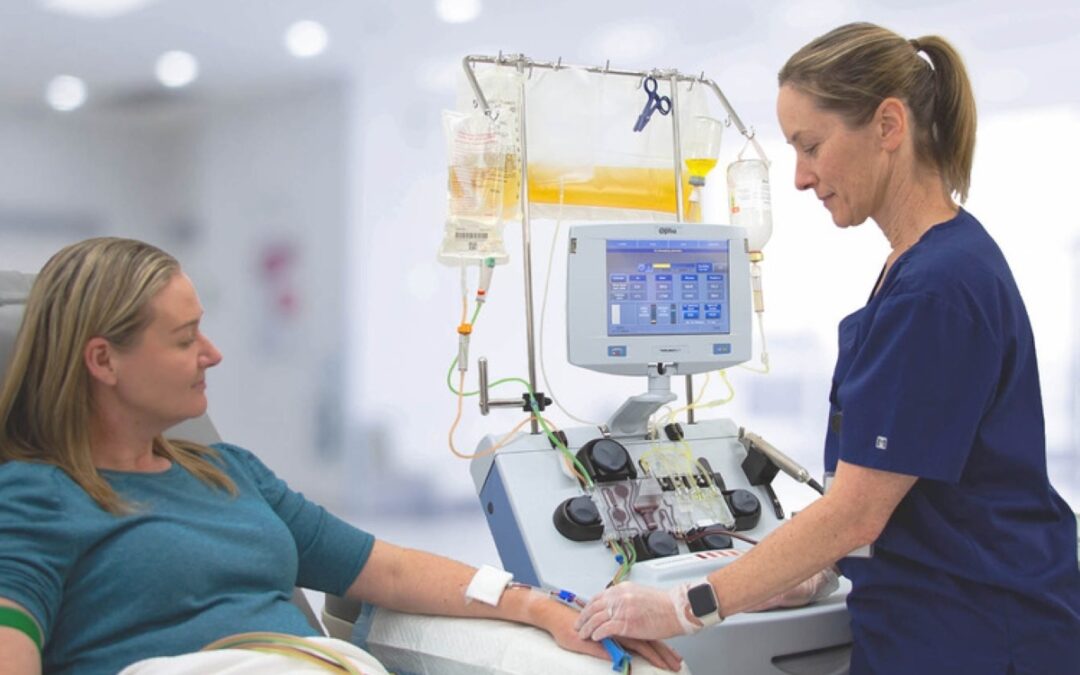
Tregzi, known during development as Orca-T, is manufactured from the blood of an HLA-matched donor. It is administered in three sequential components. Hematopoietic stem and progenitor cells (HSPCs) and regulatory T cells, commonly called Tregs, are infused on the day of transplant. Conventional T cells follow two to three days later. Each component is dosed individually, which differs from the unmanipulated mix used in conventional allogeneic stem cell transplantation.
The therapy is used alongside a myeloablative conditioning regimen. It helps rebuild a patient’s blood and immune system. At the same time, it aims to improve survival free from chronic graft-versus-host disease (GVHD). GVHD is a common and potentially debilitating complication in which donor immune cells attack the recipient’s healthy tissue. Orca Bio’s Chief Executive, Nate Fernhoff, called the approval a milestone “for the field, for the company, [and] for leukemia patients.”
The Science Behind the Regulatory T-Cell Therapy
Tregs occur naturally in donor blood. However, they represent only a small fraction of circulating immune cells. Orca Bio’s manufacturing process isolates and purifies these cells. It then combines them with HSPCs and conventional T cells at precisely defined doses. The purified Tregs are intended to suppress the harmful immune response that drives GVHD. Meanwhile, the subsequent infusion of conventional T cells helps clear any residual cancer cells. This preserves the beneficial graft-versus-leukaemia effect that makes transplantation potentially curative.
Because the Tregs are not frozen, the whole process moves quickly. It takes around 72 hours from blood draw to infusion. That tight window reflects the biological fragility of the purified cells. Orca Bio manufactures the product at a dedicated facility in Sacramento, California. The company has said its regulatory T-cell therapy platform is built on foundational work in CD34 cell selection. That work has been refined over more than a decade.
Precision-T Trial: The Data Behind the Approval
The approval rests on Precision-T (NCT05316701), a multicentre, randomised, controlled Phase 3 trial. It enrolled 187 adults with acute myeloid leukaemia, acute lymphoblastic leukaemia, myelodysplastic syndrome or mixed-phenotype acute leukaemia. Patients were randomised to receive either Tregzi followed by single-agent tacrolimus, or a conventional unmanipulated allograft followed by tacrolimus plus methotrexate. All patients received myeloablative conditioning from a related or unrelated matched donor.
At one year, the trial met its primary endpoint: survival free from moderate-to-severe chronic GVHD. The rate was 78.0% in the Tregzi arm, compared with 38.4% in the control arm. This corresponds to a hazard ratio of 0.26. The cumulative incidence of moderate-to-severe chronic GVHD was 12.6% among Tregzi recipients, versus 44.0% in the control group. Overall survival at one year reached 94% for Tregzi patients, compared with 83% for those who underwent conventional transplantation. Rehospitalisation rates were also lower in the Tregzi arm. The results were published in the journal Blood in 2026.
Miguel-Angel Perales, Head of the Adult Bone Marrow Transplant Service at Memorial Sloan Kettering Cancer Center, highlighted a long-standing challenge in the field. He said it has meant “preserving the vital graft-versus-leukemia effect while minimizing the risk of GVHD and infection.” The trial data suggest Tregzi may help address that balance.
Regulatory Pathway: Priority Review, RMAT and Orphan Drug Status
The regulatory T-cell therapy’s biologics license application benefited from several FDA expedited programmes. It received Orphan Drug Designation and Regenerative Medicine Advanced Therapy designation ahead of filing. The FDA then granted Priority Review. The agency’s target action date was extended from April to July 2026, following a request for additional manufacturing information. Orca Bio said the step reflected the close collaboration required between developers and regulators for advanced cell therapies. The FDA approved the product on 30 June 2026, ahead of its revised action date.
Pricing, Manufacturing and Commercial Rollout
Orca Bio has set a wholesale acquisition cost of 428,000 US dollars for Tregzi. The company says this reflects the therapy’s status as a one-time treatment. It also reflects the potential to reduce long-term complications and their associated costs. The launch is backed by up to 250 million US dollars in recent financing. This includes a Series F round that closed in December 2025. Manufacturing currently takes place in Sacramento. A second facility was recently announced in Princeton, New Jersey, to shorten transit times and expand capacity. Orca Bio expects Tregzi to reach around 25 US transplant centres by the end of 2026. First orders are anticipated within weeks of approval.
What This Means for Patients and the Transplant Field
For many patients with acute leukaemia or myelodysplastic syndrome, an allogeneic stem cell transplant remains the only realistic route to a cure. Historically, though, that route has come bundled with a meaningful risk of chronic GVHD and its associated complications. Tregzi is only the second cell therapy to reach FDA approval in the GVHD setting, following Mesoblast’s Ryoncil. Ryoncil is approved for steroid-refractory acute GVHD in paediatric patients, whereas Tregzi targets chronic GVHD prevention in adults undergoing transplantation.
As with any donor-derived cell therapy, Tregzi carries specific risks that clinicians will need to monitor closely. These include the possibility of secondary malignancies, post-transplant lymphoproliferative disorder, and transmission of infectious agents from donor material. Regular monitoring protocols are built into the product’s prescribing information to manage these risks.
Outlook: Orca Bio’s Pipeline and the Road Ahead
Orca Bio’s near-term focus is squarely on the Tregzi launch. Fernhoff has said the company is well capitalised for commercialisation. He is treating additional fundraising as a lower priority for now. Speculation continues, meanwhile, about a potential future public listing amid a reopening biotech IPO market. The company’s pipeline includes Orca-Q, a second-generation allogeneic T-cell immunotherapy that has already received RMAT designation from the FDA.
So far, Tregzi’s approval is confined to the United States. No equivalent filing with the European Medicines Agency has been confirmed. Regulatory T-cell products face a more fragmented approval landscape in Europe. There, advanced therapy medicinal products must satisfy both centralised EMA requirements and country-level oversight. Researchers have flagged this structure as a persistent barrier to wider Treg therapy adoption on the continent. For UK and European transplant centres, Tregzi’s progress will likely be watched closely. It offers an early signal of what a purified Treg-based approach can achieve. That is true even before any equivalent product reaches this side of the Atlantic.
Tregzi’s approval also fits into a broader pattern across regenerative medicine. Precision-engineered, donor-derived cell products are increasingly displacing one-size-fits-all approaches to transplantation. This echoes the broader momentum behind personalised cell-based treatments seen elsewhere in the field. For now, Tregzi stands as proof that a regulatory T-cell therapy can be manufactured reliably at commercial scale. Its real-world performance across the planned network of US transplant centres will be closely watched by physicians and competitors alike.
All content is published for informational purposes only and does not constitute medical, legal, or investment advice. For more information, see our Terms and Conditions