
Beam Therapeutics plans to file for US risto-cel approval as early as year-end 2026. Under the FDA’s published review goals, a decision would follow roughly eight to 12 months after submission. No FDA action date has been announced. The plan follows positive topline pivotal data from the BEACON trial, which Beam released on 10 November 2026.
Risto-cel (ristoglogene autogetemcel, formerly BEAM-101) is a one-time autologous cell therapy for sickle cell disease. Beam said the planned filing has the “potential to be the first BLA for a base editing therapy”. That makes the risto-cel approval question a test for the whole base editing field.
It also raises a second question. Two gene therapies for sickle cell disease have held FDA approval since December 2023. Clinicians, payers and investors will want to know how risto-cel compares with them, and on what evidence.
What Did the BEACON Pivotal Data Show?
BEACON is a Phase 1/2 trial (NCT05456880) in people with severe sickle cell disease and recurrent vaso-occlusive crises (VOCs). Beam announced the topline results on 10 November 2026, using a data cutoff of 20 October 2026.
By that cutoff, 39 adults and 10 adolescents had been treated. Of these, 31 had completed the follow-up needed for the primary endpoint.
That endpoint was freedom from severe VOCs for at least 12 consecutive months, known as VF12. Beam said BEACON met it, based on independently adjudicated results at a prespecified interim analysis. According to the company, the trial also met all primary safety endpoints and all secondary endpoints. These included freedom from inpatient hospitalisation for severe VOCs for 12 consecutive months.
Beam said safety findings were consistent with earlier BEACON data. It linked them to plerixafor, cell collection, busulfan conditioning, the transplant process and the underlying disease.
What the topline release did not disclose
The release did not state how many of the 31 evaluable patients achieved VF12. It also gave no adverse event counts. Beam said detailed pivotal results will be presented at a medical meeting in 2027.
Before then, earlier-cutoff results will be presented orally at the 68th American Society of Hematology (ASH) Annual Meeting. That meeting runs from 12 to 15 December 2026 in New Orleans.
Analysts at H.C. Wainwright noted the same gaps. BioSpace reported the firm’s view that “detailed safety, response rates and longer-term outcomes remain the next focus”.
How risto-cel works
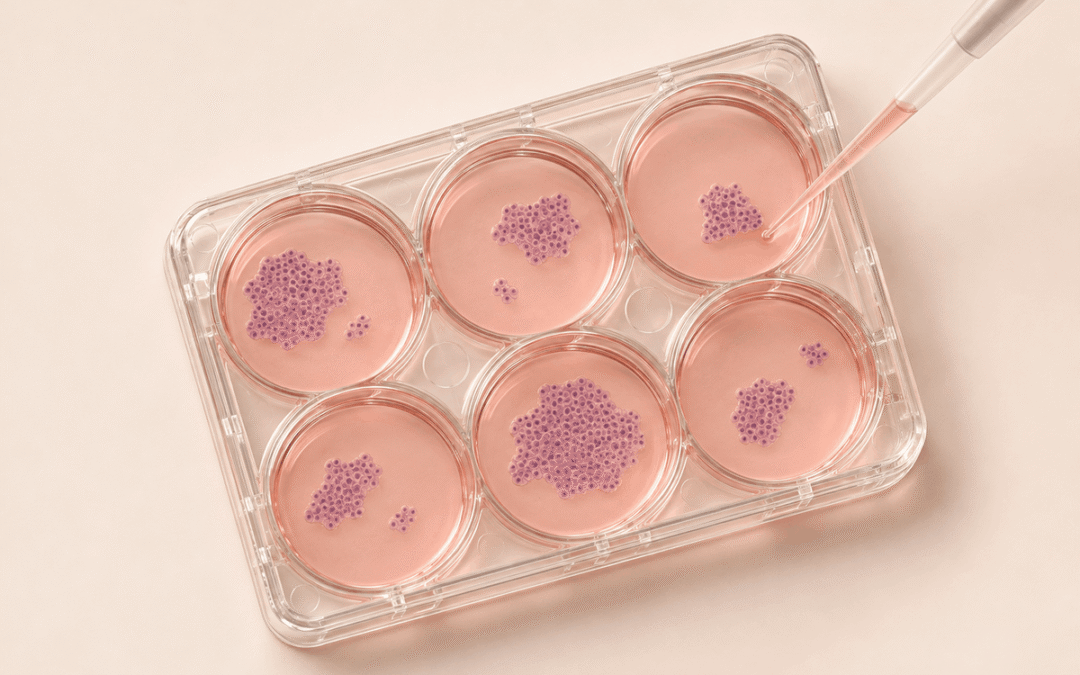
Risto-cel uses a patient’s own CD34+ blood stem and progenitor cells. These cells are base edited in the promoter regions of the HBG1 and HBG2 genes. According to Beam, the edit stops the repressor BCL11A from binding there, while leaving BCL11A itself intact. The aim is to raise fetal haemoglobin, a form of haemoglobin that does not sickle.
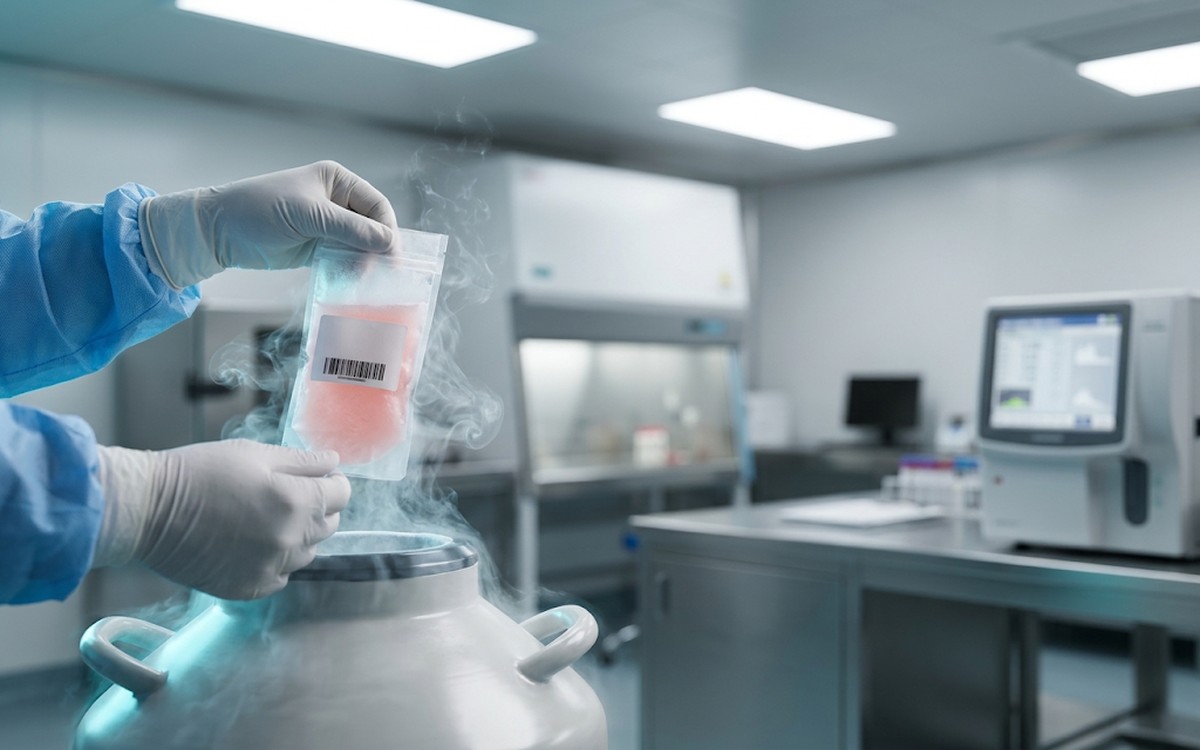
Base editing is designed to change single DNA letters without cutting both DNA strands. That sets it apart from Casgevy’s CRISPR-Cas9 approach, as this guide to how base editing differs from CRISPR explains. However, the treatment journey is similar. Patients still need stem cell collection, busulfan conditioning and an autologous transplant.
What Is the Risto-cel Approval Timeline?
Beam expects to submit a Biologics License Application (BLA) to the FDA as early as year-end 2026. Chief Executive Officer John Evans called the topline results “a defining milestone for risto-cel”.
The review clock is set out in the FDA’s PDUFA VII goals letter. For an original BLA, the clock starts at the end of a 60-day filing period. The agency aims to act on 90 per cent of priority applications within six months of that point. For standard review, the goal is ten months.
On that framework, a decision would come about eight months after submission under priority review. Under standard review, it would come about 12 months after submission. A year-end 2026 filing would put the goal date between about September 2027 and the turn of 2028. Risto-cel holds FDA orphan drug and Regenerative Medicine Advanced Therapy (RMAT) designations. Beam has said RMAT brings the potential for rolling and priority review.
Several caveats apply. Beam’s 10 November release does not say whether the company will seek priority review. Goal dates are targets, not guarantees, and the clock starts only once the FDA receives the BLA. The release also lists risks. The FDA may require more data, and durability over longer follow-up is uncertain.
The risto-cel approval timeline will firm up in stages. A confirmed submission comes first, then FDA acceptance with a review designation and goal date. Upcoming action dates across the sector are listed in the FDA drug approval decisions tracker.
How Does Risto-cel Compare With Casgevy and Lyfgenia?
The FDA approved Casgevy and Lyfgenia on 8 December 2023. Casgevy (exagamglogene autotemcel) comes from Vertex Pharmaceuticals and CRISPR Therapeutics. Lyfgenia was developed by bluebird bio and uses a lentiviral vector.
In the FDA’s summary, 29 of 31 evaluable Casgevy patients (93.5 per cent) met the primary outcome. That outcome was freedom from severe VOC episodes for at least 12 consecutive months. For Lyfgenia, 28 of 32 patients (88 per cent) achieved complete resolution of vaso-occlusive events. That was measured between six and 18 months after infusion. Lyfgenia carries a boxed warning on the risk of haematologic malignancy.
The comparator has also moved. On 1 July 2026, the FDA extended Casgevy’s US indication to patients aged two years and older. All eight evaluable patients aged five to under 12 met the primary outcome in a sickle cell study. The extension to under-fives rested on extrapolation from that data.
Why a direct comparison is not yet possible
Risto-cel’s VF12 endpoint mirrors the Casgevy outcome in structure. However, Beam has not yet disclosed the proportion of BEACON patients who met it. The trials were also run at different times, with different follow-up periods. Any comparison would be cross-trial rather than head-to-head, and would need careful caveats even after full publication.
Until then, the risto-cel approval case rests partly on haematological and process measures. Beam’s ASH 2025 data (31 patients, August 2025 cutoff) showed mean fetal haemoglobin above 60 per cent. Mean sickle haemoglobin fell below 40 per cent. Median neutrophil engraftment came at 17.5 days and platelet engraftment at 19 days. Patients needed a median of one collection cycle.
In that cohort, no patient had an investigator-reported severe VOC after engraftment. The same 31-patient dataset was published in the New England Journal of Medicine in 2026.
The dataset also shows the burden of transplant. The most common treatment-emergent adverse events were stomatitis, febrile neutropenia and decreased appetite. One patient died of respiratory failure four months after infusion. The investigator judged the death likely related to busulfan conditioning and unrelated to risto-cel.
What Does This Mean for UK Patients?
The UK moved first on Casgevy. The MHRA authorised it on 15 November 2023 for patients aged 12 and over. The authorisation covered sickle cell disease and transfusion-dependent beta thalassaemia. The agency described it as a world-first gene therapy authorisation.
NICE recommended Casgevy with managed access in January 2025. Its final guidance, TA1044, followed in February 2025. The recommendation covers people aged 12 and over with recurrent VOCs and no suitable matched related donor. It applies only to those with at least two VOCs a year in the previous two years. NICE’s appraisal papers give a list price of £1,651,000 per course.
Beam’s 10 November release discusses only a US filing. It sets out no timetable for submissions to the MHRA or the European Medicines Agency. For UK clinicians, risto-cel approval therefore remains a US question for now.
What to Watch Next
Three dated events will sharpen the answer. The ASH oral presentation in December is the next scheduled data disclosure. The BLA submission follows, targeted for as early as year-end 2026. FDA acceptance would then set a review designation and a goal date.
Competition is also shifting. Beam’s release names approved gene therapies for sickle cell disease among its competitive risks. Lyfgenia’s maker now operates as Genetix Biotherapeutics, following a 2025 private buyout and rebrand reported by Fierce Pharma.
For now, the answer has clear limits. By Beam’s account, risto-cel’s pivotal trial has met its primary endpoint. The size of that benefit, and the date of any risto-cel approval decision, have yet to be disclosed.