

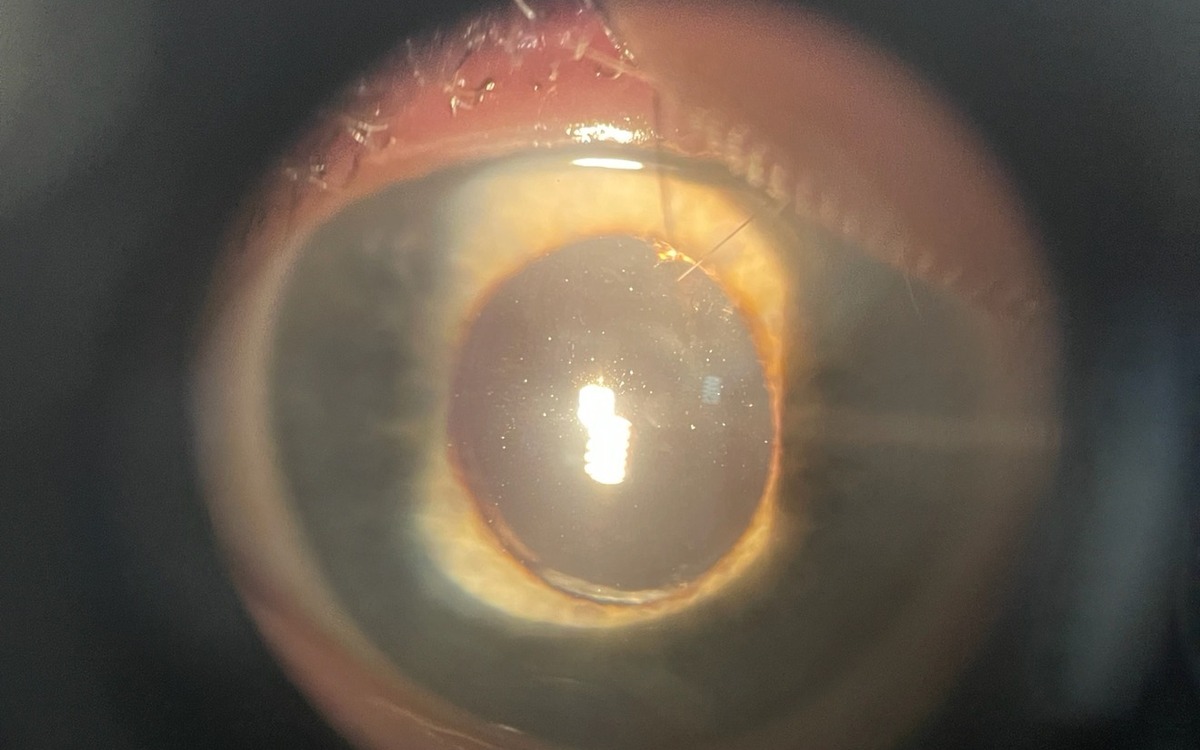
On November 9, 2026, the US Food and Drug Administration (FDA) made a class-wide change. Every GLP-1 drug (Ozempic, Wegovy, Mounjaro, Zepbound, all of them) must now list NAION in the Warnings and Precautions section of its label.[1] NAION is non-arteritic anterior ischemic optic neuropathy. Within days of the GLP-1 NAION warning, patients were asking a frightening question. Could the medicine they take for diabetes or weight loss blind them? Prescribers were asking a different one. What are we supposed to tell them now?
Both questions deserve a careful answer. The headline risk and the real risk are very different. And explaining that gap well matters as much as the science itself.
What NAION is
NAION is an injury caused by reduced blood flow to the optic nerve that can produce sudden, painless, sometimes permanent vision loss.
It usually hits one eye. People often notice it when they wake up. The vision loss is usually permanent. No treatment reliably brings vision back once it happens. That is why even a small signal linking a widely used drug to NAION gets attention.
What the evidence actually shows
Yes, it means there is a potential increased risk, not that someone taking a GLP-1 medication will develop NAION.
The FDA based its decision on a pooled analysis. 126 randomized trials. More than 134,000 patients. The numbers: about 6.4 cases of NAION per 100,000 patient-years with a GLP-1, versus 3.8 in the comparison groups. Fifteen probable events in total.[1] Cases have now been reported with every GLP-1 on the market.[1] In Europe, it is already listed as a very rare side effect of semaglutide. That followed the European Medicines Agency’s safety committee review in June 2025.[2]
The North American Neuro-Ophthalmology Society and the American Academy of Ophthalmology issued a joint statement. Their conclusion: a possible association exists. Causality has not been established. The risk remains low.[3] That is where the evidence stands. A signal, not a verdict.
These are study estimates rather than a precise prediction for an individual patient.
Why a rare risk earned a GLP-1 NAION warning
If the numbers are small, why did the FDA act? Because frequency is only half the math.
The severity of a complication matters alongside its frequency. Even a rare risk deserves attention when it can permanently affect vision.
My interpretation is that this warning helps patients recognize symptoms and allows physicians to weigh the potential risk when prescribing.
A label warning is not just a statement about risk. It is a tool. It puts the symptoms in front of patients and prescribers. So when the rare event happens, it gets recognized fast instead of missed.
What prescribers should do now
For prescribers, the practical steps are straightforward. They do not include stopping treatment.
I would encourage awareness without panic. Patients should discuss concerns with their prescribing physician before changing treatment.
These drugs can offer major health benefits. The decision should reflect the person’s medical history and treatment needs. That is worth saying plainly. The worst outcome here would be patients quitting effective treatment out of fear.
It’s also worth remembering that the people most likely to be prescribed these drugs (people with diabetes, high blood pressure, sleep apnea) already carry a higher baseline risk for NAION, so the risk isn’t starting from zero.
Three things are worth doing. First, mention the GLP-1 NAION warning when treatment is started or reviewed. Say it in the same breath as the other counseling that already happens. Second, name the red-flag symptoms out loud. NAION is painless, and patients may otherwise wait. Sudden vision loss, a new blind spot, or a missing portion of vision needs immediate medical attention, even if there is no pain. Third, ask about prior NAION. Patients with a previous episode should talk through that history with their treatment team. If NAION does develop, the FDA advises clinicians to consider stopping the drug unless its benefits clearly outweigh the risk.[1]
Communicating a rare but serious risk
The harder problem is communication. A rare risk that can permanently affect vision is frightening. And fear does not scale neatly with probability. The prescriber, the pharmacist and the regulator have to hold two facts at once. The risk is real. And it is small.
GLP-1 and vision loss is rare but not something to take lightly. Always with any medication have to factor in all the pros with the cons. All medication have risks.
That is the right frame, in the consulting room and on the label alike. Patients do not need to hear that the risk does not exist. They do not need to hear that it should stop them taking a medicine that may be transforming their health. They need to know what to watch for. What to do if it happens. And that their prescriber has weighed the balance with them.
The GLP-1 NAION warning does that work. It does not say these medicines are unsafe. It says: here is a rare, serious possibility. Know the symptoms. Act fast if they appear. For a complication with no treatment and permanent consequences, that is a warning worth having. And worth explaining properly.
Author Bio