
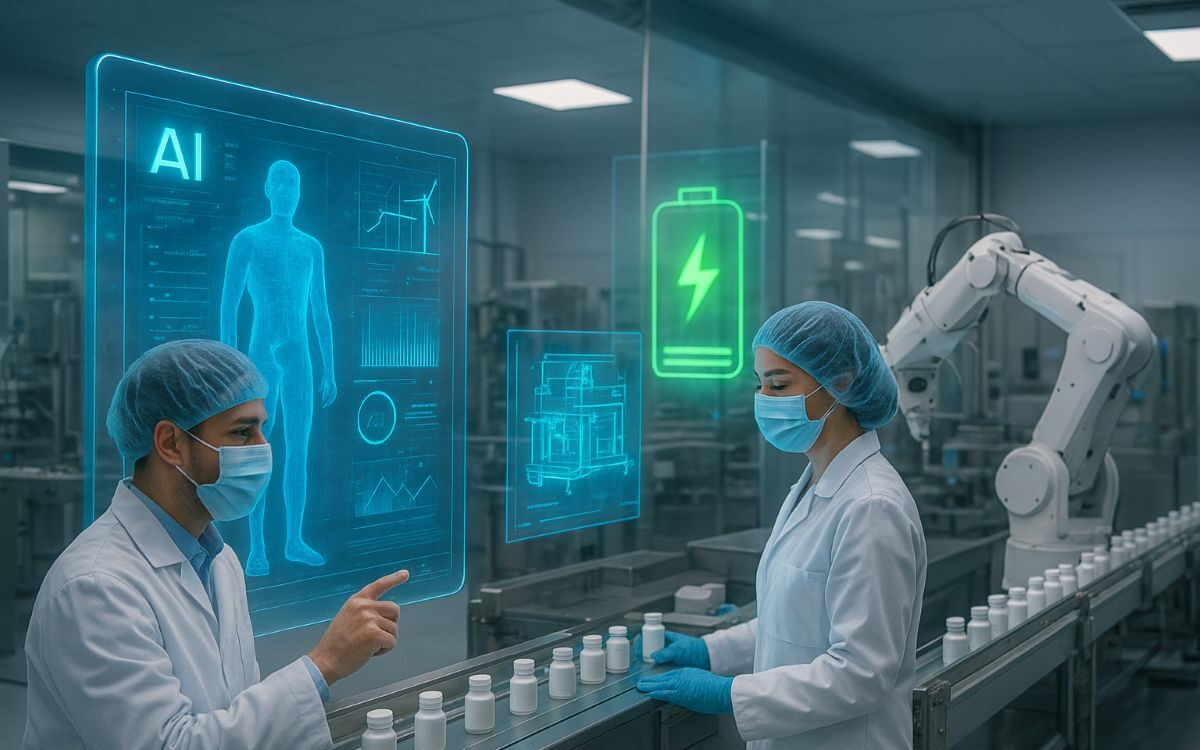
As the pharmaceutical industry undergoes rapid transformation, a new paradigm is taking shape. Known as Pharma 5.0, it represents more than an upgrade in technology, it is a fundamental shift toward human-centric innovation, sustainable manufacturing, and intelligent systems that support better patient outcomes. Pharma 5.0 brings together advanced technologies and purposeful design to reshape how medicines are discovered, produced, and delivered.
From Industry 1.0 to Pharma 5.0: A Brief Evolution
Pharma 1.0 began with traditional, manual, paper-based operations driven by batch processing and limited automation.
Pharma 2.0 introduced early automation with basic digitisation and modern quality-control systems.
Pharma 3.0 brought data-driven capabilities into the picture through digital records, analytics, and computational modelling.
Pharma 4.0 advanced this further into a fully connected, automated, smart ecosystem that uses AI, IoT-enabled equipment, robotics, and real-time analytics across the pharmaceutical pipeline.
Pharma 5.0 builds on these foundations by adding human-centric design, sustainability, and ethical intelligent systems into the core framework of future pharmaceutical operations.
What Exactly Is Pharma 5.0?
Pharma 5.0 integrates smart digital technologies with human expertise, sustainability goals, and patient-centric thinking. It focuses on designing systems where technology enhances human decision-making. In this model, artificial intelligence acts as a collaborator rather than a replacement for scientists, clinicians, and manufacturing operators. AI copilots support drug discovery, augmented reality enhances training and quality control, predictive models guide clinical choices, and digital twins allow experts to simulate changes in manufacturing before implementing them.
Pharma 5.0 also accelerates the shift toward hyper-personalised medicine. This includes personalised therapies developed using genomic insights, flexible manufacturing systems capable of producing small or individualised batches, and AI-driven tools that help identify the right therapy for each patient. The goal is to create a healthcare environment where treatments are tailored with far greater precision than traditional models allow.
Sustainability is another defining pillar of Pharma 5.0. The industry aims to reduce its environmental footprint through energy-efficient processes, the adoption of renewable energy, waste-reduction strategies, advances in green chemistry, and circular supply systems that prioritise resource efficiency. This aligns with global expectations for ESG performance.
Pharma 5.0 also strengthens supply-chain resilience by incorporating blockchain transparency, real-time production monitoring, predictive logistics, and decentralized or distributed manufacturing networks. These innovations help protect against disruptions like those seen during the COVID-19 pandemic.
Equally important is the emphasis on ethical intelligent systems. AI applications in Pharma 5.0 are designed with transparency, reduced algorithmic bias, regulatory alignment, and strong privacy protections. As real-world data and sensitive patient information play an increasingly central role in drug development and monitoring, ethical governance becomes essential.
Interconnectivity completes the Pharma 5.0 framework. Every stage of the pharmaceutical lifecycle, from early research and clinical trials to regulatory submissions, manufacturing, distribution, pharmacovigilance, and real-world patient outcomes, is linked in a continuous data ecosystem. Real-world evidence supports faster and more informed decisions, while digital submissions and integrated quality systems help streamline regulatory processes.
Key Technologies Driving Pharma 5.0
Pharma 5.0 is powered by technologies such as artificial intelligence, machine learning, digital twins, cloud and edge computing, robotics, IoT-enabled devices, blockchain, 5G connectivity, virtual and augmented reality platforms, and multi-omics analytics including genomics and proteomics. What differentiates Pharma 5.0 from earlier stages is not the technologies themselves but the manner in which they are used, with a deliberate emphasis on ethics, sustainability, and human empowerment.
Why Pharma 5.0 Matters
Pharma 5.0 matters because it transforms patient care by enabling faster access to new therapies, supporting the development of personalised treatments, enhancing safety monitoring, and improving manufacturing consistency and quality. For pharmaceutical companies, it increases R&D productivity, accelerates decision-making, supports more adaptive operations, reduces environmental impact, and encourages better regulatory readiness through digital documentation and real-time insights. For regulators, it enables more transparent data sharing, improved oversight of manufacturing processes, faster validation of submissions, and enhanced post-market safety monitoring.
Pharma 5.0 in the Real World
Pharma 5.0 is already visible across the industry. Some companies use digital twins to simulate production lines, while personalised cell and gene therapies such as CAR-T are increasingly manufactured on demand. AI-assisted medicinal chemistry is significantly reducing drug-discovery timelines, and robotics is improving aseptic manufacturing precision. Blockchain systems are being deployed to ensure drug authenticity throughout the supply chain, and environmentally conscious facilities are investing in renewable energy and green-chemistry initiatives.
The Road Ahead
Pharma 5.0 is still evolving, but its trajectory is unmistakable. It points toward a future where technology amplifies human creativity rather than replacing it, where medicines are increasingly designed for individual patients, where manufacturing operates responsibly and sustainably, where data flows seamlessly through secure and ethical systems, and where success is measured not only by output but by health outcomes. This new paradigm offers a blueprint for the next decade of pharmaceutical innovation and positions the industry to meet the expectations of a rapidly changing world.