
The global obesity drug market is in the midst of its most competitive period in a generation. Since the approval of semaglutide as Wegovy and tirzepatide as Zepbound, pharmaceutical companies and investors have been watching closely for the next therapy capable of matching or exceeding their clinical benchmarks. Novo Nordisk’s CagriSema has been among the most closely anticipated candidates. With a substantial body of Phase 3 data now published, the picture that emerges is one of genuine clinical promise, complicated by a competitive landscape that has raised the bar considerably.
What Is CagriSema?
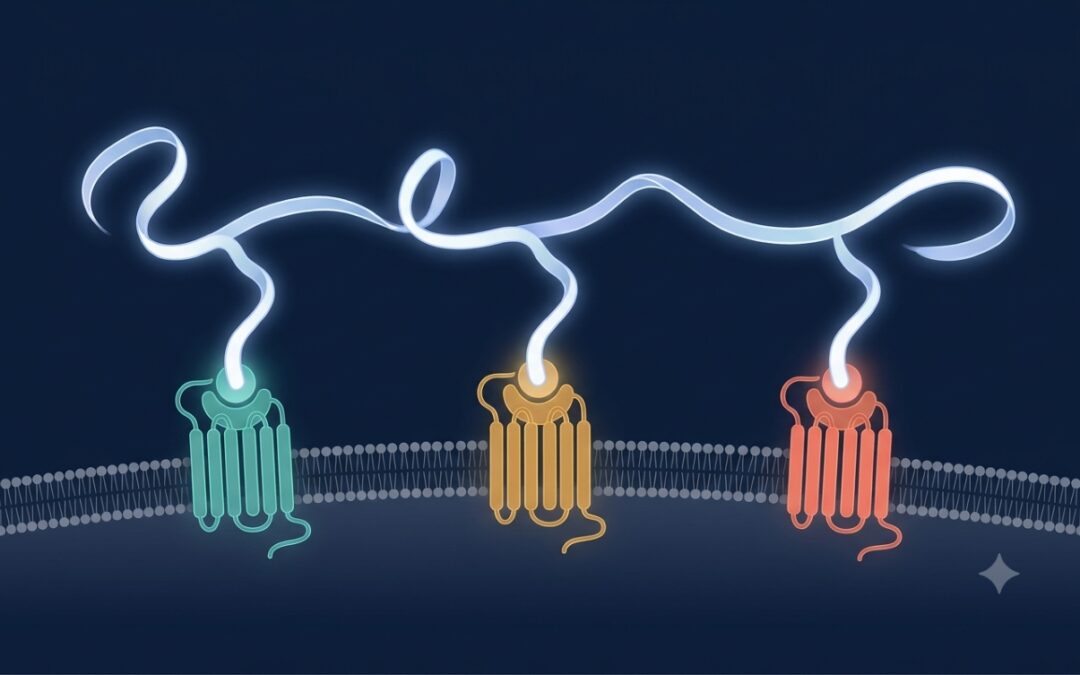
CagriSema is a fixed-dose combination therapy comprising two molecules administered together in a single once-weekly subcutaneous injection: semaglutide 2.4 mg, a glucagon-like peptide-1 (GLP-1) receptor agonist already approved for weight management as Wegovy, and cagrilintide 2.4 mg, a long-acting analogue of amylin, a hormone involved in appetite regulation and satiety signalling. The rationale for combining the two is pharmacological complementarity. GLP-1 agonists reduce appetite primarily through central nervous system pathways, while amylin analogues act through separate but overlapping mechanisms, slowing gastric emptying and suppressing glucagon secretion. The hypothesis is that targeting both pathways simultaneously produces additive weight loss beyond what either agent can achieve alone.
Novo Nordisk has been investigating CagriSema through the REDEFINE programme, a series of Phase 3 clinical trials in adults with overweight or obesity. A parallel programme, REIMAGINE, is evaluating CagriSema specifically in type 2 diabetes.
REDEFINE 1: Strong Results, Missed Ambitions
The first pivotal trial, REDEFINE 1, enrolled 3,417 adults with obesity or overweight and at least one weight-related comorbidity, but without type 2 diabetes. Participants were randomised to receive CagriSema, semaglutide 2.4 mg alone, cagrilintide 2.4 mg alone, or placebo, all once-weekly over 68 weeks. The trial used a flexible dosing protocol, permitting investigators to adjust doses based on individual tolerability and clinical judgement.
Headline results announced in December 2024 and presented in full at the American Diabetes Association’s 85th Scientific Sessions in June 2025, with simultaneous publication in the New England Journal of Medicine, showed that CagriSema produced a mean weight reduction of 22.7% at 68 weeks, significantly outperforming placebo. Notably, 50.7% of participants receiving CagriSema reached the BMI threshold for non-obesity by the end of the trial, compared with 10.2% of the placebo group.
The result was clinically meaningful. It was not, however, what Novo Nordisk had initially anticipated. The company had set an internal ambition of 25% or greater weight loss, a threshold REDEFINE 1 did not reach. The gap between expectation and outcome prompted a sharp decline in Novo Nordisk’s share price when the results were announced and opened questions about whether CagriSema could differentiate itself sufficiently from existing approved therapies.
REDEFINE 2: Efficacy in Type 2 Diabetes
REDEFINE 2, announced in March 2025, addressed a distinct population: 1,206 adults with obesity or overweight and type 2 diabetes across 12 countries, randomised in a 3:1 ratio to CagriSema or placebo for 68 weeks. The trial met its primary endpoint, demonstrating statistically significant and superior weight loss with CagriSema versus placebo. Under the if-all-adhere estimand, participants on CagriSema achieved approximately 15.7% weight reduction at week 68, compared with approximately 3% for placebo. Full results were presented at the American Diabetes Association’s 85th Scientific Sessions alongside the REDEFINE 1 data.
Martin Holst Lange, executive vice president of development at Novo Nordisk, described REDEFINE 2 as confirming the superior efficacy of CagriSema in people with overweight or obesity and type 2 diabetes and expressed confidence in pursuing regulatory approval. Participants also showed improvements in glycaemic control, cardiovascular risk markers, and physical function, adding to the drug’s clinical profile beyond simple weight reduction.
CagriSema: Safety Profile
Across both pivotal trials, the safety profile of CagriSema was broadly consistent with the established GLP-1 drug class. Gastrointestinal adverse events were the most frequently reported side effects, occurring in 79.6% of participants on CagriSema in REDEFINE 1, compared with 39.9% on placebo. Events including nausea, vomiting, and diarrhoea were predominantly mild to moderate in severity and described as transient. Discontinuation rates due to adverse events were reported as low and single-digit across both REDEFINE 1 and 2, which Novo Nordisk highlighted as a positive tolerability signal given the drug’s dual-mechanism approach.
REDEFINE 4: The Tirzepatide Test
The results that attracted the greatest market attention came from REDEFINE 4, an 84-week open-label Phase 3 trial reported in February 2026, in which CagriSema was pitted directly against tirzepatide 15 mg, the highest approved dose of Eli Lilly’s Zepbound. The trial enrolled 809 adults with obesity and at least one comorbidity, with a mean baseline body weight of 114.2 kg.
Under the if-all-adhere estimand, CagriSema produced 23.0% weight loss at 84 weeks, against 25.5% for tirzepatide. Under the treatment-regimen estimand, reflecting real-world adherence conditions, the figures were 20.2% versus 23.6%. The trial did not achieve its primary endpoint of demonstrating non-inferiority to tirzepatide. Novo Nordisk shares fell approximately 15% on the day the results were announced.
The open-label design of REDEFINE 4 is worth noting. Because both participants and investigators knew which treatment was being administered, the trial introduced a degree of bias that does not affect the blinded pivotal trials. Nevertheless, the directional outcome was clear: tirzepatide demonstrated numerically higher weight loss at every analysis point, and the non-inferiority margin was not met.
Novo Nordisk leadership maintained that a 23% weight loss result was clinically significant in its own right. Holst Lange pointed to the additive contribution of cagrilintide as evidence that the amylin mechanism delivers meaningful benefit beyond GLP-1 monotherapy, and noted that higher-dose CagriSema development is ongoing. A phase 3 trial of a higher-dose CagriSema formulation at 2.4/7.2 mg is planned for initiation in the second half of 2026, and the REDEFINE 11 trial, exploring CagriSema’s full weight-loss potential, is expected to report data in the first half of 2027.
CagriSema: Regulatory Status
Novo Nordisk filed a New Drug Application with the FDA for CagriSema in weight management in December 2025, based on the REDEFINE 1 and REDEFINE 2 pivotal data. An FDA decision is anticipated by late 2026. If approved, CagriSema would become the first GLP-1 and amylin combination product to reach the market for obesity, a genuinely novel mechanism designation that Novo Nordisk regards as a meaningful point of differentiation regardless of the tirzepatide comparison.
What It Means for the Obesity Market
The CagriSema story to date illustrates how dramatically the competitive expectations in obesity pharmacotherapy have shifted in a short period. A drug that achieves more than 22% weight loss, demonstrated across two pivotal trials in distinct populations, with a well-characterised safety profile, would until recently have been considered an exceptional result. In a market now anchored by tirzepatide and the anticipation of even more potent next-generation agents, the same data is being assessed against a higher standard. The rapid evolution of this market also reflects broader shifts in global drug development strategy, as manufacturers increasingly design launch programmes around emerging as well as established markets.
For clinicians, the nuances of the Phase 3 data matter. The flexible dosing protocol used in REDEFINE 1 and REDEFINE 2 reflects real-world prescribing practice, where doses are adjusted based on tolerability, and W. Timothy Garvey, a lead investigator in the trials, noted that the findings are directly relatable to clinical practice precisely because of that flexibility. The dual-mechanism approach may also offer specific advantages for particular patient subgroups, including those with type 2 diabetes and obesity where cardiometabolic improvements beyond weight loss are clinically important.
For Novo Nordisk, the path forward involves both the regulatory decision expected in late 2026 and the data from higher-dose and extended trials over the following year. Whether CagriSema ultimately occupies a meaningful commercial position in the obesity market will depend substantially on how the FDA evaluates the REDEFINE evidence package and how payers and prescribers weigh a well-evidenced but second-ranked option against the existing approved standard.