
For decades, oncology ran on a handful of dominant modalities: surgery, chemotherapy, and radiotherapy, later joined by targeted therapies and immunotherapy. Radiopharmaceuticals have now entered that conversation as a serious contender. These drugs combine a radioactive isotope with a targeting molecule that seeks out cancer cells, delivering a lethal dose of radiation directly to the tumour while leaving surrounding healthy tissue largely intact. The science has been developing for many years, but it is the commercial results, and the scale of capital now flooding the sector, that are forcing a fundamental rethink across the pharmaceutical industry.
What Are Radiopharmaceuticals?
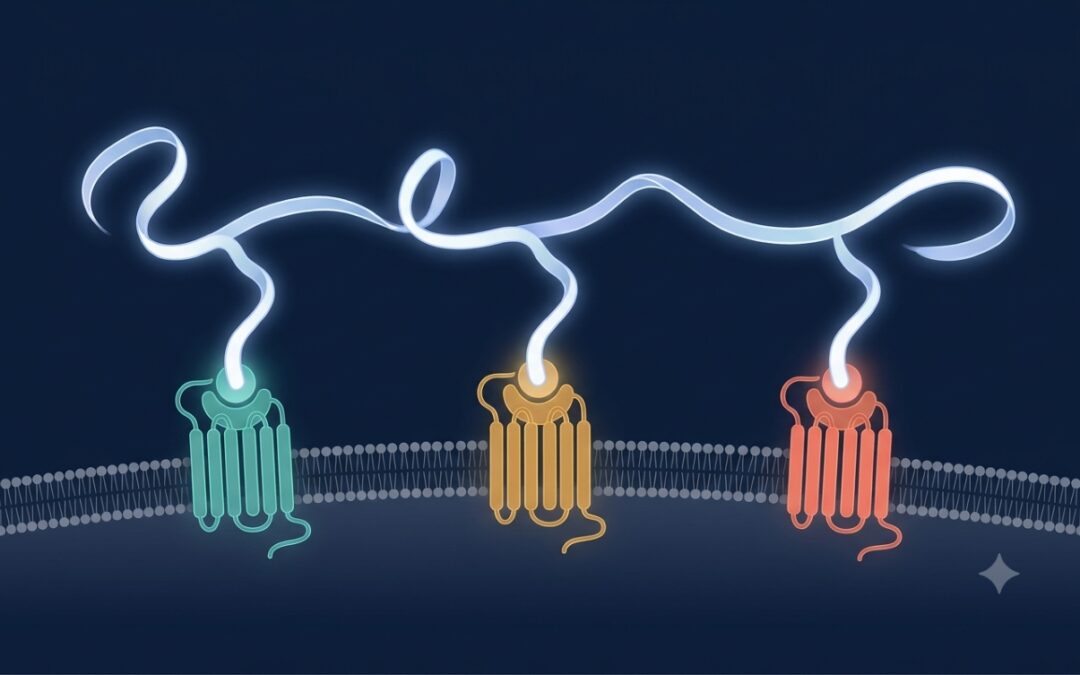
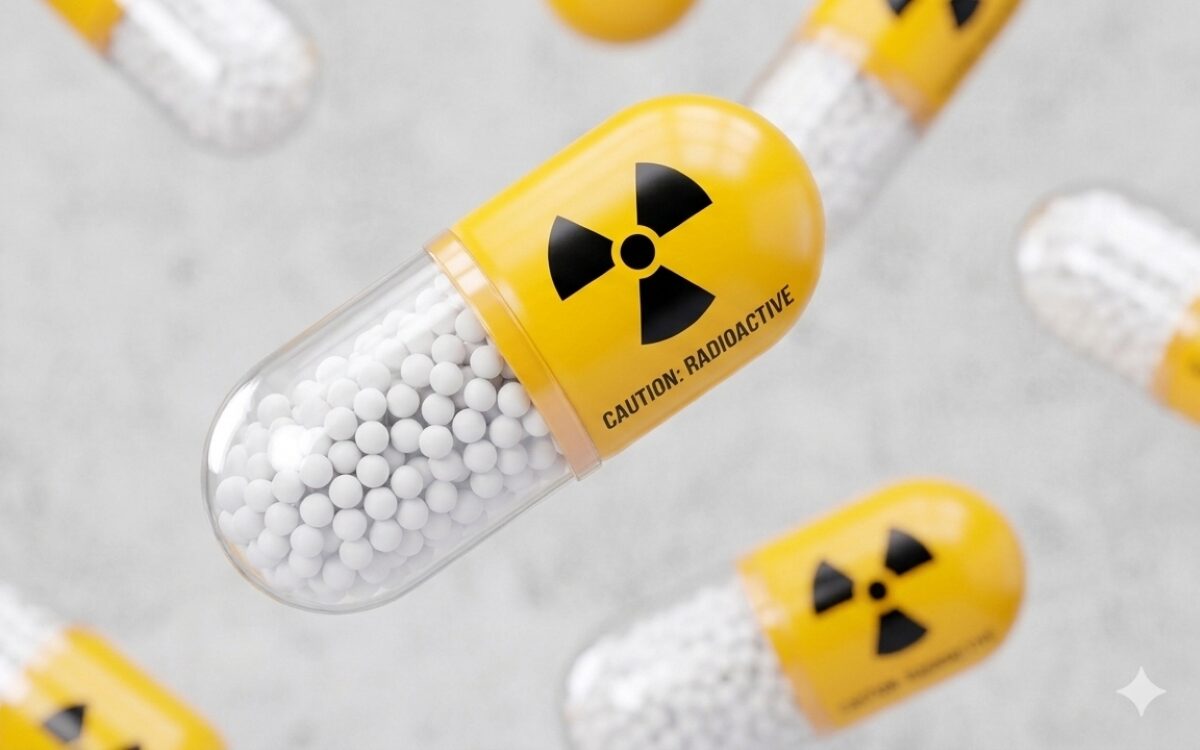
A radiopharmaceutical is composed of two parts: a radionuclide, which provides the therapeutic radiation, and a carrier molecule, which guides it to the target. Unlike conventional cancer drugs, where the pharmacological activity of the active ingredient provides the therapeutic effect, the radionuclide does the work. The carrier molecule, whether a small molecule, peptide, antibody, or antibody-drug conjugate, exists primarily to transport the radioactive payload to the tumour.
Once at the target site, the emitted radiation damages the DNA of cancer cells, triggering cell death. Crucially, this mechanism allows clinicians to treat both primary tumours and metastatic disease at the same time, since the drug travels systemically through the body. Radiopharmaceuticals also require 100 to 1,000 times lower quantities of the targeting molecule compared with conventional systemic therapies, because it is the radionuclide, not the drug’s pharmacological action, that delivers the therapeutic effect.
The field also encompasses theranostics, a term describing the dual use of these agents for both diagnosis and therapy. By swapping a therapeutic radionuclide for a diagnostic one, clinicians can first image a patient to confirm target expression, then treat using the same molecular carrier. This approach supports patient selection prior to treatment, improving outcomes and reducing unnecessary exposure to radiation.
The Approved Radiopharmaceuticals That Changed Everything
The commercial breakthrough for the sector came through Novartis. Its radioligand therapy Lutathera, approved by the US Food and Drug Administration in 2018 for gastroenteropancreatic neuroendocrine tumours, established that this class of drug could generate meaningful revenues alongside durable clinical benefit. Pluvicto, approved by the FDA in March 2022 for metastatic castration-resistant prostate cancer, went further still.
Together, Lutathera and Pluvicto generated $2.8 billion in combined sales for Novartis in 2025. In March 2025, the FDA further expanded Pluvicto’s indication to cover adults with PSMA-positive metastatic castration-resistant prostate cancer who had received androgen receptor pathway inhibitor therapy and were considered appropriate candidates to delay taxane-based chemotherapy. That expansion reinforced both the clinical value and the commercial longevity of the drug.
Both therapies are built around the beta-emitting isotope lutetium-177. Their success has catalysed an entire industry to move faster, spend more, and pursue a wider range of cancer targets.
Big Pharma’s Multi-Billion-Dollar Bet
The scale of investment over the past two years is extraordinary. In the span of roughly eight months between late 2023 and early 2024, four of the sector’s most prominent biotechs were acquired by major pharmaceutical groups. Bristol Myers Squibb paid $4.1 billion for RayzeBio, securing an actinium-225-based platform. AstraZeneca spent $2.4 billion acquiring Fusion Pharmaceuticals, also for actinium-225 access. Eli Lilly paid $1.4 billion for Point Biopharma. Novartis, already the market leader, acquired Mariana Oncology for $1 billion to strengthen its next-generation pipeline.
In April 2026, Regeneron Pharmaceuticals entered into a collaboration with Telix Pharmaceuticals to co-develop and co-commercialise next-generation radiopharmaceutical therapies, the latest in a series of deals that shows no sign of abating. The radioligand therapy market is estimated at $2.6 billion in 2025, with projections pointing to $4.8 billion by 2030 at a compound annual growth rate of 13.1%.
These acquisitions reflect a clear strategic logic. Novartis has demonstrated that a vertically integrated radiopharmaceutical business, one that spans isotope production, drug synthesis, distribution, and clinical delivery, can generate blockbuster revenues. Competitors are paying a premium to replicate that model rather than build it from scratch.
The Alpha Emitter Frontier
While all currently approved radiopharmaceutical therapies use beta-emitting lutetium-177, the next wave is focused on alpha-emitting isotopes, with actinium-225 attracting the most attention. Alpha particles deliver far higher energy over a much shorter range than beta particles. This means more potent, localised destruction of cancer cells and reduced exposure to surrounding healthy tissue. Alpha emitters are also thought to cause more double-strand DNA breaks, making them potentially more effective against radioresistant tumours.
Dr Gabriela Kramer-Marek, Leader of the Preclinical Molecular Imaging Group at the Institute of Cancer Research in London, described 2026 as “shaping up to be another big year for radiopharmaceuticals,” noting that there are several actinium-225-labelled molecules currently in development, with 13 already tested in humans.
At Johns Hopkins Medicine, Associate Professor Sangeeta Ray is pursuing a related line of research, designing molecules bound to radioisotopes that target prostate-specific membrane antigen, a protein overexpressed in prostate cancer and, as her team has demonstrated, in renal cell carcinoma as well. “It’s exciting to see patients respond so well to treatments that are not only effective but also less toxic,” Ray said.
The Supply Chain Challenge
The enthusiasm for radiopharmaceuticals meets a significant practical constraint: the supply chain is uniquely complex. Radioisotopes begin to decay the moment they are created. Half-lives range from hours to days depending on the isotope, requiring a just-in-time manufacturing and logistics model with little margin for error. Accelerators, cyclotrons, and hot cells currently carry lead times of two to three years, creating serious bottlenecks for any operation attempting to scale.
The pressure on actinium-225 supply has already produced real disruption. In 2024, Bristol Myers Squibb’s RayzeBio was forced to pause a Phase 3 clinical trial due to a shortage of the isotope. Frank Scholz, president and chief executive of NorthStar Medical Radioisotopes, acknowledged the scale of the operational challenge: “We actually have to relearn some things. It’s not a simple transfer of a small-molecule operator into a radiopharmaceutical plant.” NorthStar expects to be able to support global demand for key isotopes by late 2026.
Manufacturers also operate under dual regulatory scrutiny from the FDA and nuclear regulators such as the Nuclear Regulatory Commission in the United States, and equivalent bodies in other markets. The result is a high barrier to entry that favours well-capitalised, vertically integrated players, which in part explains why big pharma has been so aggressive in acquiring established radiopharmaceutical platforms.
Expanding the Target List
One of the most significant aspects of the current moment is the expansion of tumour types under active investigation. The first approved radiopharmaceutical therapies addressed neuroendocrine tumours and prostate cancer. The field is now moving into breast, lung, liver, colon, and pancreatic cancer, as well as aggressive brain tumours.
At the Institute of Cancer Research, researchers are conducting preclinical studies of a novel targeted radiopharmaceutical for high-grade gliomas, including IDH-wildtype glioblastoma, one of the most aggressive cancers with very limited treatment options. Guided by immuno-PET imaging, early results have been encouraging, with hopes that the programme will progress to early-phase clinical trials.
Startup Aktis Oncology, which filed for an initial public offering in late 2025 and counts Eli Lilly, Merck, Novartis, and Bristol Myers Squibb among its investors, is developing miniprotein-based radiopharmaceuticals targeting Nectin-4, expressed by bladder cancers and other solid tumours, and B7-H3, a protein involved in tumour growth. The company has argued that the radiopharmaceutical field “is still in its infancy” and that there is significant opportunity to broaden the patient populations who could benefit. Preliminary data from its lead programme are expected in 2027.
Novartis, meanwhile, is investigating radioligand therapies beyond its current approved indications, exploring new isotopes, ligands, and combination strategies for breast, colon, lung, and pancreatic cancer, and has established manufacturing capacity across multiple global sites.
A New Pillar of Precision Oncology
The trajectory of radiopharmaceuticals is no longer speculative. These drugs have moved from a diagnostic niche to a defined and commercially validated therapeutic category within precision oncology. The infrastructure being built in 2026, from expanded isotope production facilities to distributed manufacturing networks and new clinical delivery models, reflects genuine confidence that this represents a durable structural shift in oncology.
For patients, the appeal is clear: targeted radiation delivered precisely to tumours, with reduced systemic toxicity relative to conventional chemotherapy, and the ability to treat disseminated cancer simultaneously. For the pharmaceutical industry, competitive dynamics are already intensifying as the next generation of radiopharmaceuticals pushes into earlier lines of treatment and a broader range of cancer types than anything currently approved.
Whether the ambition attached to this field is ultimately realised will depend on resolving supply chain constraints, navigating complex regulatory requirements across multiple jurisdictions, and demonstrating sustained clinical benefit well beyond the tumour types addressed today. The evidence to date, and the scale of capital committed, suggests that oncology has found a new pillar.