

Originally published 15 May 2026. Updated 28 June 2026 to reflect the latest approved indications, pipeline data, and access developments.
GLP-1 receptor agonists have moved from specialist diabetes clinics to mainstream medicine with remarkable speed. Once known primarily as injectable treatments for type 2 diabetes, these drugs now span a rapidly expanding range of indications, from obesity and cardiovascular disease to chronic kidney disease and metabolic liver disease. With new oral formulations now approved and a competitive pipeline pushing the boundaries of what the class can achieve, understanding how GLP-1 receptor agonists work, and which patients stand to benefit most, has become essential knowledge for clinicians, researchers, and patients alike.
What Is GLP-1 and Why Does It Matter?
Glucagon-like peptide-1, or GLP-1, is a hormone produced naturally by specialised cells in the small intestine in response to food intake. Under normal physiological conditions, it performs several interconnected functions: it stimulates the pancreas to release insulin in a glucose-dependent manner, suppresses the release of glucagon (the hormone that raises blood sugar), slows the rate at which the stomach empties, and signals to the brain that the body has eaten enough.
The glucose-dependence of this insulin-stimulating effect is clinically important. Because GLP-1 only prompts insulin secretion when blood glucose is elevated, the risk of hypoglycaemia, the dangerous low blood sugar that can complicate other diabetes treatments, is substantially reduced when GLP-1 receptor agonists are used without insulin or sulphonylureas.
In people with type 2 diabetes and obesity, natural GLP-1 signalling is often impaired. GLP-1 receptor agonists are synthetic molecules designed to mimic and amplify this hormonal activity, binding to the same receptor but with a longer duration of action than the native hormone, which is broken down within minutes.
The Mechanism of Action
The GLP-1 receptor is a class B G protein-coupled receptor found across a wide range of tissues, including the pancreatic islets, the central and peripheral nervous systems, the heart, the kidneys, the lungs, and the gastrointestinal tract. This widespread distribution helps explain why GLP-1 receptor agonists produce effects that extend well beyond blood sugar control.
In the pancreas, activation of beta cells leads to increased insulin secretion and reduced glucagon output from alpha cells, together improving blood glucose control. In the gastrointestinal tract, gastric emptying is slowed, meaning nutrients enter the bloodstream more gradually and post-meal blood sugar spikes are blunted.
The brain-directed effects of GLP-1 receptor agonists are central to their effectiveness in weight management. By binding to receptors in the hypothalamus and other appetite-regulating regions, these drugs reduce hunger signals and increase feelings of fullness. Users typically report eating less not because of conscious restriction, but because their appetite decreases. This central mechanism is what distinguishes GLP-1 receptor agonists from older weight-loss drugs that relied on stimulant or fat-absorption-blocking approaches.
Beyond metabolism, GLP-1 receptor agonists exert anti-inflammatory and cardioprotective effects. In the liver, they reduce hepatic fat accumulation and oxidative stress. In the kidneys, they mitigate glomerular hypertension and promote natriuresis.
Approved Drugs in the Class
The GLP-1 receptor agonist class has evolved considerably since the approval of exenatide in 2005. That drug, which required twice-daily injection and was modest in efficacy, has since been discontinued in the United States. The drugs that now define the class are longer-acting, more potent, and available in a wider range of formulations.
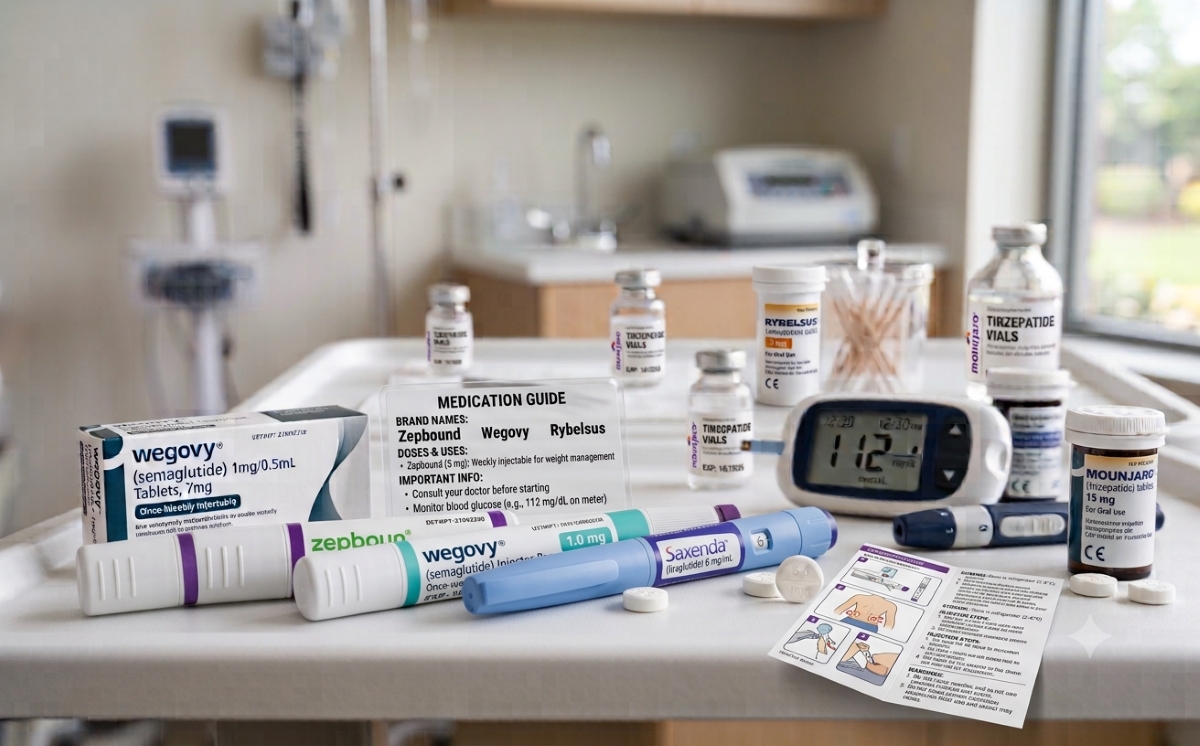
Semaglutide, developed by Novo Nordisk, is the most widely prescribed agent in the class. It is approved in injectable form for type 2 diabetes (Ozempic) and obesity (Wegovy), and in oral tablet form for diabetes (Rybelsus). Wegovy received a cardiovascular approval in March 2024 for adults with obesity or overweight and established cardiovascular disease but without diabetes, based on the SELECT trial. In January 2025, Ozempic became the first GLP-1 receptor agonist approved to reduce the risk of worsening kidney disease and cardiovascular death in adults with type 2 diabetes and chronic kidney disease, based on the FLOW trial, which showed a 24% relative risk reduction in the composite kidney and cardiovascular endpoint.
Tirzepatide (Mounjaro and Zepbound), developed by Eli Lilly, is a dual agonist that targets both the GLP-1 receptor and the GIP receptor, another incretin pathway. Its dual action produces greater insulin stimulation and more pronounced weight loss than GLP-1 agonism alone, with clinical trials demonstrating average weight reductions of around 21% in people with obesity. Tirzepatide has also received approval for obstructive sleep apnoea in adults with obesity.
Orforglipron (Foundayo), developed by Eli Lilly, is the most recent addition to the approved landscape. The FDA approved it in April 2026 as the first oral small-molecule, non-peptide GLP-1 receptor agonist approved for weight management. Uniquely, it can be taken at any time of day without food or water restrictions. Trials showed average weight loss of around 12% at the highest dose over 72 weeks, somewhat below the injectable agents, but with the significant advantages of convenience, needle-free administration, and a simpler chemical structure that may eventually support lower prices and broader access.
In August 2025, Wegovy became the first GLP-1 receptor agonist to gain FDA approval for metabolic dysfunction-associated steatohepatitis (MASH) with moderate-to-advanced liver fibrosis, further extending the class’s reach.
Who Are GLP-1 Receptor Agonists For?
The approved indications for this drug class have broadened significantly. At present, GLP-1 receptor agonists are used across the following populations:
- Adults with type 2 diabetes: All major GLP-1 receptor agonists are approved for glycaemic control in type 2 diabetes, either as monotherapy or in combination with other antidiabetic agents. The 2025 American Diabetes Association standards of care recommended GLP-1 receptor agonists as first-line pharmacological therapy alongside SGLT2 inhibitors for patients with type 2 diabetes who have or are at high risk of atherosclerotic cardiovascular disease or heart failure.
- Adults with obesity or overweight: Liraglutide (Saxenda, approved 2014), semaglutide (Wegovy, approved 2021), tirzepatide (Zepbound, approved 2023), and orforglipron (Foundayo, approved 2026) are specifically licensed for chronic weight management. Eligibility generally requires a BMI of 30 or above, or a BMI of 27 or above with at least one weight-related health condition such as hypertension, type 2 diabetes, or dyslipidaemia.
- Patients with cardiovascular disease: Wegovy holds an approval to reduce major adverse cardiovascular events in people with established cardiovascular disease who are overweight or obese but do not have diabetes. Ozempic has held a cardiovascular indication since 2020 for patients with type 2 diabetes and known heart disease.
- Patients with chronic kidney disease: Ozempic is approved to reduce the risk of kidney disease worsening and cardiovascular death in adults with type 2 diabetes and chronic kidney disease, based on the FLOW trial.
- Patients with obstructive sleep apnoea: Tirzepatide has received approval for moderate-to-severe obstructive sleep apnoea in adults with obesity.
In the UK, NICE updated its type 2 diabetes management guidelines in early 2026, significantly widening eligibility criteria. GLP-1 receptor agonists are now recommended for people with type 2 diabetes who have cardiovascular disease caused by blocked arteries, those diagnosed with the condition before the age of 40, or those living with obesity. NICE estimated that around 810,000 additional people could become eligible as a result.
Benefits Beyond Blood Sugar
The benefits of GLP-1 receptor agonists extend well beyond glycaemic control. A meta-analysis published in 2025 found that GLP-1 receptor agonists reduced major adverse cardiovascular events by 20% in people with obesity who did not have diabetes. Notably, analysis indicated that 35 to 55% of this cardiovascular benefit was independent of weight loss itself, suggesting that the drugs act on the heart and vasculature through mechanisms beyond simply reducing body mass.
The class also shows renal protective effects, anti-inflammatory properties, and in some studies, associations with reduced risk of colorectal and liver cancer, though longer trials with cancer-specific endpoints are still needed. Ongoing or recently reported trials are also evaluating these drugs in heart failure, peripheral artery disease, and cognitive decline, reflecting the broad distribution of GLP-1 receptors throughout the body.
Side Effects and Who Should Not Use These Drugs
The most common adverse effects of GLP-1 receptor agonists are gastrointestinal: nausea, vomiting, diarrhoea, and constipation. These effects are most pronounced during dose escalation and typically diminish as the body adjusts. Clinical protocols generally involve a slow upward titration, starting at a low dose and increasing gradually over several weeks, to minimise discomfort.
There are important contraindications and cautions to observe:
- GLP-1 receptor agonists carry a boxed warning regarding the risk of thyroid C-cell tumours and are contraindicated in patients with a personal or family history of medullary thyroid carcinoma or multiple endocrine neoplasia syndrome type 2 (MEN2). It is worth noting that this warning does not apply to other forms of thyroid cancer such as papillary or follicular carcinoma.
- Patients with a history of pancreatitis are generally advised to consider alternative treatments, as GLP-1 receptor agonists have been associated with reports of acute pancreatitis, though a definitive causal relationship remains unestablished.
- Those with severe gastroparesis should also avoid these drugs, as further slowing of gastric emptying can worsen symptoms.
- GLP-1 receptor agonists are not recommended during pregnancy. Women planning to conceive are advised to discontinue treatment in advance, with product-specific guidance varying by drug.
- Patients on sulphonylureas or insulin may need dose reductions of the concurrent medication, as GLP-1 receptor agonists lower blood glucose and can increase hypoglycaemia risk in combination.
The Shift Towards Oral and More Accessible Options
For most of the class’s history, GLP-1 receptor agonists have been injectable, a requirement that created a barrier for some patients with needle aversion or concerns about storage and administration. The approval of oral semaglutide (Rybelsus) for type 2 diabetes, and subsequently oral Wegovy for obesity management in December 2025, began to shift that landscape. Orforglipron’s approval in April 2026 accelerated the shift further, offering the first small-molecule pill that requires no fasting and no water restrictions.
The availability of generic liraglutide, the first generic GLP-1 receptor agonist to reach the US market, launched in August 2025, has introduced a further access pathway for some patients, particularly those for whom the newer branded agents remain out of reach due to cost or coverage gaps.
Access and affordability remain significant challenges. Injectable semaglutide and tirzepatide carry list prices of several hundred pounds or dollars per month, and insurance coverage for obesity indications remains inconsistent across health systems. These tensions are explored in detail in the GLP-1 uptake by country analysis published by Life Science Daily News.
What Comes Next
The GLP-1 receptor agonist landscape is evolving rapidly. Retatrutide, Eli Lilly’s triple agonist targeting GLP-1, GIP, and glucagon receptors simultaneously, has shown weight reductions of up to 28% in Phase 3 trials reported in 2026, with an FDA submission anticipated later this year. Novo Nordisk’s CagriSema, a combination of semaglutide and the amylin analogue cagrilintide, has demonstrated around 23% weight loss and has an FDA decision expected later in 2026.
The direction of travel is towards greater efficacy, more convenient administration, and expanded indications that reflect the biological reach of GLP-1 signalling throughout the body. For a comprehensive view of agents currently in development, the GLP-1 drug pipeline 2026 tracker covers the full field of oral and injectable candidates approaching the market.
What began as a diabetes drug class has become one of the most consequential developments in modern pharmacology, with implications stretching across metabolic medicine, cardiology, renal medicine, and beyond.