
GLP-1 receptor agonists are transforming obesity treatment. But the clinical conversation about lean muscle preservation is lagging behind the prescribing rate, and that gap has real consequences for patients, says Omar el-Gohary.
There is a version of the GLP-1 conversation happening in clinical settings that is incomplete. A patient arrives having heard about Wegovy or Mounjaro perhaps from a news article, perhaps from a friend who has lost significant weight, and the discussion centres almost entirely on efficacy and tolerability. How much weight can they expect to lose? Will they experience nausea? When will they see results?
These are reasonable questions. But there is one question that rarely comes up, either because the patient does not know to ask it or because the clinician is working within the constraints of a short appointment window: what happens to their muscle mass during that weight loss?
It is a question that deserves a much more prominent place in the pre-treatment conversation.
The Weight Loss Composition Problem
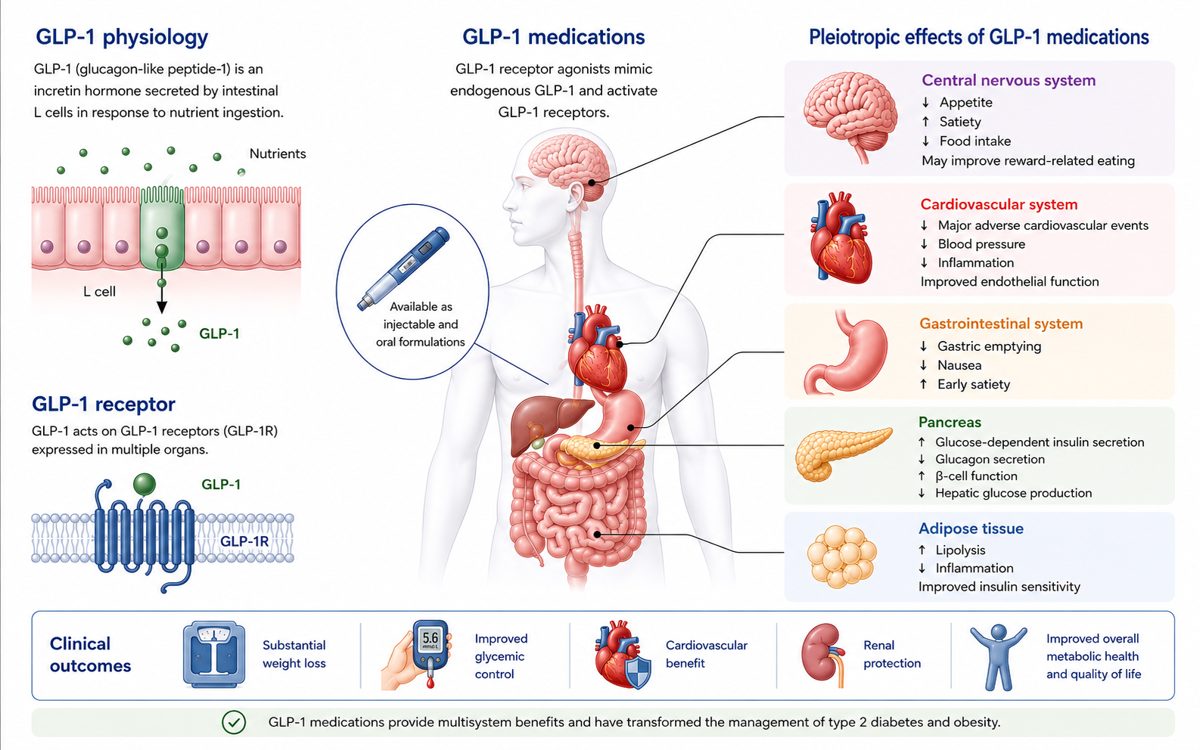
GLP-1 receptor agonists work by mimicking glucagon-like peptide-1, a hormone that regulates appetite and slows gastric emptying. The appetite suppression they produce is significant; patients describe a quietening of what many in the clinical community now refer to as food noise, the persistent neurological signal that drives overconsumption independent of genuine caloric need.
The result, in the landmark clinical trials, is impressive. The STEP 1 trial for semaglutide 2.4mg demonstrated a mean body weight reduction of approximately 14.9% over 68 weeks in adults with obesity.¹ The SURMOUNT-1 trial for tirzepatide showed reductions of up to 22.5% at the highest dose.² These are outcomes that approach the efficacy of bariatric surgery in some patient cohorts.
But weight loss is not fat loss. Total body weight is a composite of fat mass, lean muscle mass, bone density, water, and organ tissue. When the body loses weight rapidly, whether through caloric restriction, surgical intervention, or pharmacological appetite suppression, it does not selectively shed fat. A meaningful proportion of that weight loss comes from lean muscle tissue.
25-39%
The estimated proportion of weight lost on GLP-1 therapy that may come from lean mass rather than fat, based on body composition analyses from clinical trial data.³ The precise figure varies by patient, dose, and whether resistance exercise is incorporated.
Research published in the New England Journal of Medicine and subsequent body composition sub-analyses from the STEP trials have begun to quantify this more precisely. The evidence suggests that without deliberate intervention, patients on GLP-1 therapies may lose a significant proportion of their weight from lean mass, a finding that has considerable implications for long-term metabolic health, physical function, and the sustainability of results.³
Why Muscle Mass is Not a Cosmetic Concern
When patients hear the phrase “muscle loss,” they frequently interpret it through an aesthetic lens. The concern, in their understanding, is about looking less toned or feeling physically weaker. Both of these are valid. But the clinical stakes extend considerably further.
Skeletal muscle is the primary site of glucose uptake in the body. It is metabolically active tissue that plays a central role in insulin sensitivity, resting metabolic rate, and the capacity to sustain weight loss over time.
Losing it creates a physiological paradox: the patient achieves a lower body weight but may simultaneously compromise the metabolic machinery that is needed to maintain it.
“A patient can finish a course of GLP-1 treatment significantly lighter and simultaneously in a weaker metabolic position than when they started if muscle preservation was not part of the plan.”
This is the mechanism behind what clinicians commonly observe in weight cycling. The patient loses weight, including lean mass. Their basal metabolic rate decreases. When the pharmacological appetite suppression is reduced or withdrawn, the caloric threshold required to maintain their new weight is lower than expected, but their appetite, shaped by the neurological reward pathways that GLP-1s modulate, does not stay suppressed indefinitely without ongoing treatment. Weight regain follows, and it tends to return as fat rather than muscle. The patient ends up in a worse body composition position than before treatment began.
None of this is an argument against GLP-1 therapy. The evidence base for these medications, across metabolic, cardiovascular, and hepatic outcomes, is compelling and growing. The FLOW trial demonstrated meaningful reductions in kidney disease progression with semaglutide.⁴ The SELECT trial showed a 20% reduction in major adverse cardiovascular events in patients with obesity and established cardiovascular disease.⁵ These are not trivial findings.
But the drugs alone are not a complete treatment plan, and the clinical infrastructure around GLP-1 prescribing has not yet caught up with the pace of adoption.
What the Evidence Supports for Lean Mass Preservation
The good news is that the muscle loss associated with GLP-1 therapy is modifiable. It is not an inevitable trade-off of the weight loss process. Two interventions have a strong evidence base and should, in my view, be
part of every GLP-1 treatment discussion.
Resistance Exercise
Progressive resistance training (lifting weights, using resistance bands, or performing bodyweight exercises that progressively challenge the musculature) is the most effective stimulus for lean mass preservation and growth. A 2024 systematic review and meta-analysis published in Obesity Reviews found that resistance exercise significantly attenuated lean mass loss during hypocaloric periods, with particularly pronounced effects when combined with adequate protein intake.⁶
The challenge is implementation. A patient who begins GLP-1 therapy often experiences significant fatigue, nausea, and reduced appetite in the early weeks. Recommending a resistance training programme to someone in that state requires sensitivity and a graduated approach. Two sessions per week of 20 to 30 minutes, focusing on compound movements, is a realistic and evidence-supported starting point. The goal is not athletic performance. It is metabolic protection.
Protein Intake
Dietary protein is the primary substrate for muscle protein synthesis. During periods of caloric restriction, adequate protein intake reduces the degree to which the body catabolises muscle tissue for energy. Current guidelines suggest a target of 1.2 to 1.6 grams of protein per kilogram of body weight per day during active weight loss in adults; a figure that many patients on GLP-1 therapy fall short of, partly because the appetite suppression the medications produce makes hitting protein targets without conscious effort difficult.⁷
Clinical note
Patients on GLP-1 therapy frequently report that protein-rich foods (particularly meat and eggs) become less palatable during treatment. This is partly a nausea-related aversion effect. Clinicians and prescribers should proactively discuss protein sources that patients are likely to tolerate, including dairy-based options and plant proteins, and consider whether supplementation is appropriate on an individual basis.
The Role of Prescribers in Closing the Gap
The gap between what the clinical evidence supports and what patients typically receive as guidance when they are prescribed a GLP-1 is, in my experience, significant. Patients are frequently counselled on injection technique, on managing gastrointestinal side effects, and on the importance of dose titration. They are rarely given a structured framework for exercise and protein in the same conversation.
This is partly a structural problem. Primary care appointments are short. Beyond primary care, the growth of digital and remote prescribing channels has broadened access to GLP-1 therapies significantly, reaching patients who may not easily access specialist weight management services through traditional routes. But where consultations are brief or asynchronous, the opportunity for extended nutritional and lifestyle counselling is reduced, and that gap needs to be identified and addressed at a system level, not left to individual patients to navigate alone.
It is also a knowledge gap. Not all prescribers who are now writing GLP-1 prescriptions have deep familiarity with the body composition literature that has emerged in the last three years. The field is moving quickly, and the clinical frameworks around these medications are still maturing.
Closing this gap is a shared responsibility. It requires prescribers to extend the treatment conversation beyond the pharmacology. It requires platforms and services that operate in this space to build the supporting resources; structured guidance on exercise, protein, and long-term weight maintenance, that patients need but are not always receiving. And it requires patients to understand that a prescription, however effective the medication it covers, is the beginning of a treatment plan rather than the whole of it.
A Conversation Worth Having
GLP-1 receptor agonists represent a genuine step change in the treatment of obesity. The clinical outcomes data is robust and the benefit-risk profile, in appropriate patient populations, is well established. The enthusiasm in the prescribing community, and among patients, is warranted.
But enthusiasm and good outcomes are not the same thing. The patients who will do best on these medications over the long term are those who use them within a framework that protects lean mass, supports metabolic health, and addresses the behavioural and physiological underpinnings of weight regain. That framework needs to be part of the prescription conversation, not an afterthought, and not something the patient discovers by searching online months into their treatment.
As the prescribing rate for GLP-1s continues to rise in the UK and globally, the clinical community has an opportunity to get this right. The evidence is there. The question is whether we build the practice around it.
Author Bio

Omar El-Gohary MPharm, IPresc, GPhC 2059792 is a UK-registered pharmacist, independent prescriber and Founder of iQ Doctor. As Superintendent Pharmacist, he oversees the clinical governance and safe delivery of healthcare services across the platform. Omar has a particular interest in preventative healthcare, obesity management, men’s health, metabolic health and digital healthcare innovation, and regularly contributes expert commentary on emerging healthcare trends and patient wellbeing.