
In August, Nature Biotechnology published something AI antibody design has needed for years: a blinded scorecard. The AIntibody challenge, organized by Andrew Bradbury and colleagues at Specifica, an IQVIA business, evaluated 511 AI-designed or predicted antibodies submitted by 29 organizations across three tasks. The predictions were tested against independently generated experimental results. No team could grade its own work.1
The headline result was impressive. In the affinity maturation task, Aureka Biotechnologies produced an antibody that bound its target at 94.7 picomolar, roughly a 2,000-fold improvement over the starting molecule. The best conventional result was 113 picomolar. The two numbers were statistically indistinguishable. Aureka generated its sequence in under a week, but its model depended on sequencing data prepared through months of earlier laboratory work. The benchmark’s authors estimate that the approach could save two to three weeks of experimental optimization. That is a meaningful gain, not the elimination of three months of bench science.1
The rest of the scorecard deserves equal attention. Only about 13 percent of submissions in that task achieved at least a 20-fold improvement. In the ranking task, where models predicted which existing candidates would bind best, only about 10 to 14 percent of predictions improved upon a simple selection baseline, while randomly chosen clones did so 39 percent of the time. Results in the de novo design task varied widely across teams. The standout results were real, but they were not evidence that AI antibody design is consistently superior across the field.1
For pharmaceutical executives and investors, these findings point to a valuable but bounded achievement for AI antibody design. AI can materially accelerate a well-defined engineering task: making a known binder bind harder. That benchmark did not test whether AI could identify the right disease pathway, predict a patient response, or discover causal immunology. Those claims require different evidence.
Capital is moving faster than evidence
Money is not waiting for that distinction. A peer-reviewed analysis published in October identified 129 AI-enabled therapeutic assets across 69 companies that had entered human trials by March 2026; only five had reached or completed Phase 3.2 Platform deals continue to attract large headline figures. AstraZeneca’s October agreement with insitro provides $40 million upfront and up to approximately $1.46 billion in contingent milestone payments, not $1.5 billion in committed capital.3 Chai Discovery announced a collaboration with Roche on November 5, following other pharmaceutical partnerships.4
The clinical record shows where the bottleneck sits. In that same analysis, observed success rates were 77.8 percent in Phase 1 and 19.5 percent in Phase 2.2 These figures span multiple drug modalities, predominantly small molecules, and come from an immature, nonrandom set of programs. They do not prove that AI caused the early-stage successes or establish a head-to-head advantage over conventional discovery. What they do show is that promising design activity has not yet translated into demonstrated improvements in later-stage clinical outcomes. Phase 1 asks mainly whether a molecule is tolerable and behaves as intended. Phase 2 begins to ask whether it changes disease.
Why immunology, not AI antibody design, is the real test
To an immunologist, this distinction is not surprising. Binding affinity is a property of the molecule. Clinical efficacy depends on the biological system the molecule enters. Beyond a certain threshold, tighter binding may add little benefit because the limiting factors lie elsewhere: whether the target drives disease in a particular patient, whether redundant cytokine pathways compensate when one is blocked, whether the antibody reaches the affected tissue, and whether the patient develops antidrug antibodies that undermine treatment.
None of those questions was the object of an AI antibody design benchmark centered on a well-characterized viral protein. The AIntibody organizers acknowledge the need to test less familiar antigens and more demanding developability criteria.1 That is an important next step, but it is still distinct from establishing disease mechanism or clinical efficacy. Most commercially important immunological decisions involve biological systems far less mapped than a pandemic virus studied intensively for years.
The test case already in the clinic
The most consequential AI antibody story of this cycle will not be settled on a leaderboard. It will be settled in severe asthma. Generate Biomedicines used its platform to engineer GB-0895, an antibody against thymic stromal lymphopoietin (TSLP), a validated driver of airway inflammation. The molecule combines high target affinity with engineering designed to extend its half-life.5 The commercial logic is clear. The approved anti-TSLP treatment Tezspire is given every four weeks; Generate is testing dosing every 26 weeks. Two global Phase 3 trials are under way, with annualized asthma exacerbations measured over 52 weeks as the primary endpoint.5,6
This is AI antibody design doing what the AIntibody evidence suggests it can do well: improving a molecule against a validated target. TSLP biology was established before Generate’s models touched the sequence. If the trials succeed, a twice-yearly schedule could deliver meaningful convenience and commercial value. It would not, by itself, demonstrate that AI discovered new disease biology.
The economics are equally instructive. Generate raised approximately $400 million in its February IPO and planned to allocate roughly $300 million to its two pivotal asthma studies.7 In its November 12 update, the company reported $404.2 million in cash, cash equivalents and marketable securities at September 30. Along with a $30 million collaboration payment received in October, that capital is projected to fund its current operating plan into the first half of 2028, while the company expects to need additional funding for longer-term operations.8 AI may compress the design timeline. It cannot dispense with patient enrollment, a 52-week efficacy endpoint, or the capital required to test a drug rigorously.
What decision makers should ask
The lesson is not that AI antibody design is overhyped. Saving two or three weeks of laboratory optimization is a genuine productivity gain, and it can reduce the cost of discovery. The lesson is that the value of a cheaper design step depends on how much of total development cost and risk that step represents. For most programs, the larger burden remains clinical development, where efficacy must be demonstrated and failure remains expensive.
That suggests three questions boards and investors should put to any AI biologics platform. First, has its performance been scored blind, against experimental data it could not see, with developability reported? Self-reported benchmarks are not enough. Second, is the platform optimizing molecules against validated targets, or claiming to discover new biology? The first can create a cost advantage. The second, if established, could create a much larger pipeline advantage, but it requires evidence that a molecule-binding contest cannot supply. Third, what does the platform contribute after the molecule exists: patient selection, biomarker strategy, prediction of immunogenicity, or understanding of compensatory pathways? This is where immunology determines whether a drug works and where AI has substantial value yet to prove.
Regulators are beginning to explore AI in clinical development. In April, the FDA sought public input on a proposed pilot to improve early-phase trial decisions using AI; it did not announce a launched approval pathway for AI-discovered medicines.9 Better decisions at that stage would be useful. But they cannot substitute for proof of clinical benefit. The scarce resource in biologics is not simply better binders. It is knowledge of which immune pathway, in which patient, at which moment, is worth blocking. Until AI can help answer that question, the antibody will remain the easy part.
Author Bio
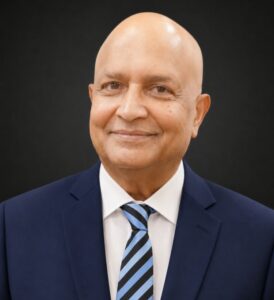
Matt Hasan, Ph.D., is an economist, AI strategist and systems thinker, and founder of The AI Humanist Movement.
Farah Hasan, Ph.D., is an immunologist who earned her doctorate in immunology at MD Anderson.