
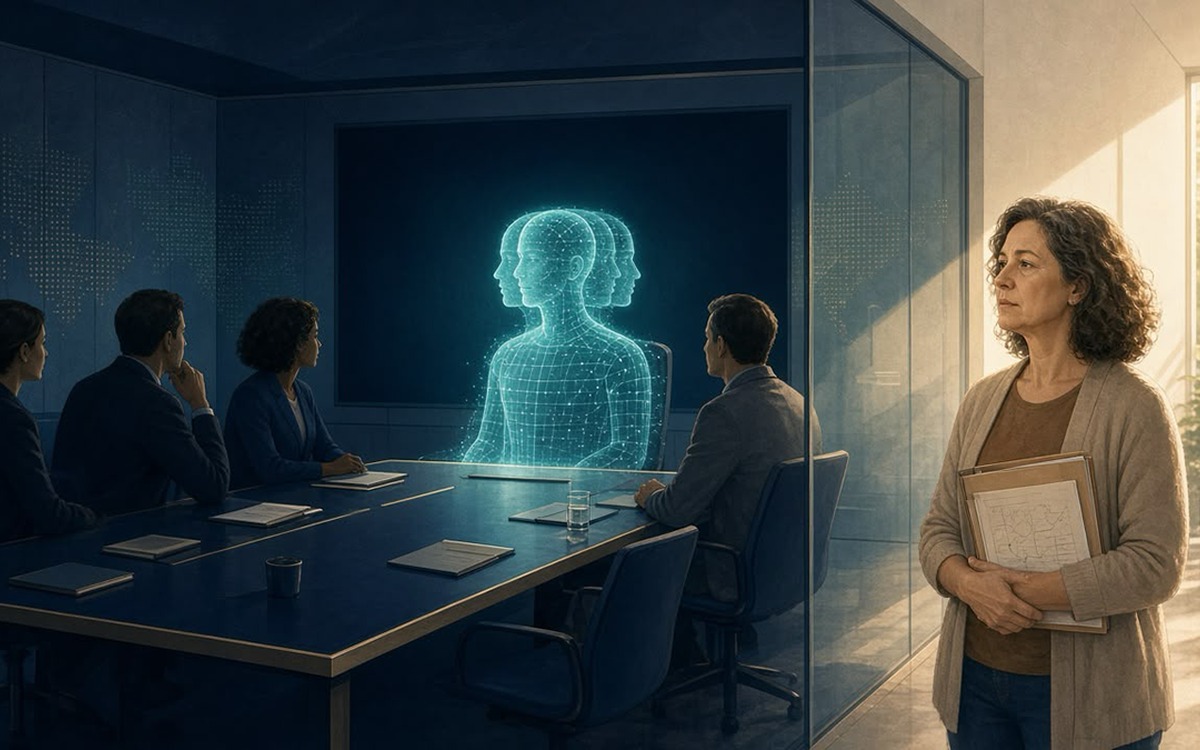
I spent years in pharma, biotech and genomics, in commercial, market access and training roles. I sat in a lot of rooms where smart people talked about patients. Too often, no patient sat in the room. Today, the synthetic patient is starting to take that place.
I also know the other side of that table. For 18 years, I lived as a chronic pain patient, struggling to get anyone to really hear me. I learned how easily a chart or a score can drown out the person describing the pain.
Now those rooms have a new guest. It never gets tired. It never misses a meeting. It answers every question in a calm, caring voice. It has also never lived one day with the disease.
That guest is the synthetic patient. And if we let it, it will quietly take the patient’s seat.
The rise of the synthetic patient
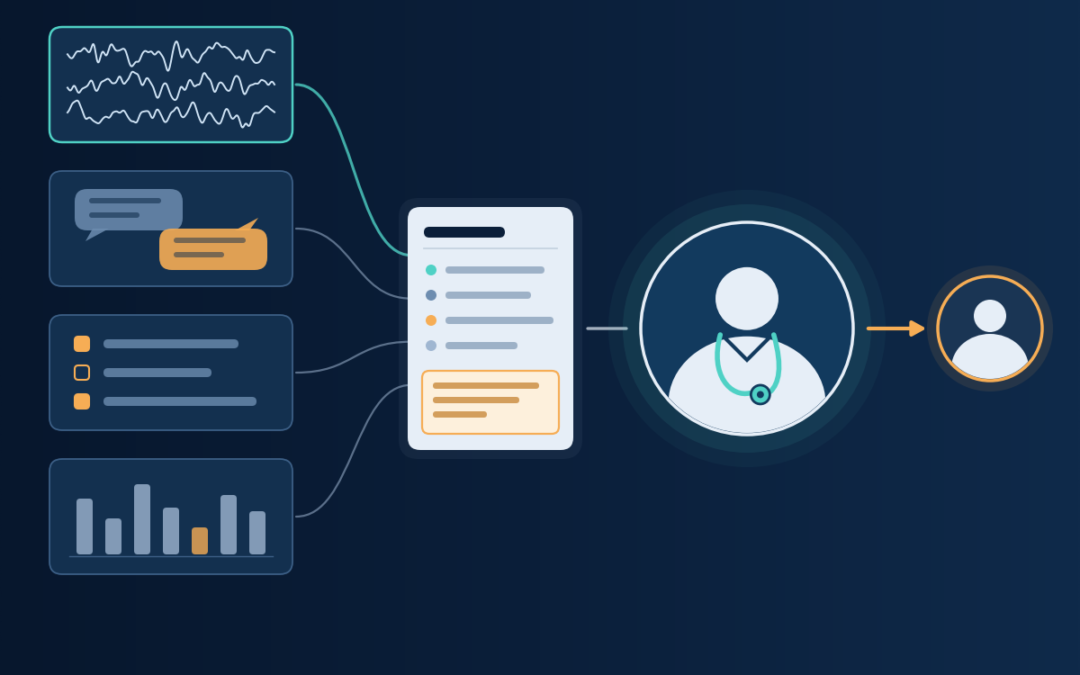
Synthetic patients come in many forms. Synthetic data sets that mimic real health records. Digital twins that model how a person might respond to treatment. Large language models that answer surveys “as” a 54-year-old woman with lupus. Persona bots built from thousands of transcripts and posts.
The pitch makes sense on paper. Faster research. Lower cost. Better privacy. A review in npj Digital Medicine lays out real benefits, including privacy protection and larger data sets for predictive analytics [1]. Regulators have accepted narrow uses, too. In 2022, the European Medicines Agency qualified a method that uses a prognostic model trained on historical patient data to sharpen the analysis of a randomized trial, and said the approach may reduce sample size when the calculation accounts for uncertainty [2].
Read the fine print, though. In that method, the trial still randomizes real patients to treatment and control. The agency called the external validity of the historical data “of paramount importance” [2]. Translation: the model only works when it reflects the real people in the trial.
My fear sits right there. I worry the lived patient experience loses out to a synthetic patient conglomerate. An averaged composite of millions of records and words, standing in for the actual person who cannot drive her kids to school on a flare day. The composite sounds right. It scores well on a dashboard. And it slowly replaces the human it claims to represent.
Averages erase the people who matter most
Researchers tested this directly. One team compared four large language models against 3,200 human participants across 16 demographic identities. The models misportrayed groups and produced answers “flatter than that of humans” [3]. The machines sanded off the edges.
In healthcare, the edges hold the unmet need. Rare disease lives at the edge. So do patients managing three conditions at once, and communities the system has underserved for decades.
The evidence keeps stacking up. AI models that read chest X-rays consistently underdiagnosed underserved patient groups, and the gap grew for patients at the intersection of two groups, such as Hispanic female patients [4]. A widely used care management algorithm used healthcare spending as a stand-in for health need. Because the system spent less on Black patients, the algorithm scored them as healthier than equally sick White patients. Fixing that bias would raise the share of Black patients flagged for extra help from 17.7% to 46.5% [5].
Sit with that last one. The model learned what the system spent. It never learned what the patient needed.
Synthetic data inherits every one of those flaws and adds new ones. Researchers writing in Nature Biomedical Engineering flagged concerns about software vulnerabilities and gaps in current policy as synthetic data spreads through medicine [6]. The npj Digital Medicine review warns that data quality and bias limit where synthetic data can safely go, and that re-identification risk remains [1].
Patients see what proxies miss
We already know what happens when someone else speaks for the patient. In a study of 163 people with lung cancer on chemotherapy, patients reported symptoms earlier and more often than their clinicians did. Patient reports also tracked daily health status more closely. Clinician reports did a better job predicting death and emergency visits. The authors called the two views complementary and argued for both in trial results and drug labels [7].
That study compared patients with their own doctors. Human proxies, in the same exam room. A synthetic proxy sits one more step away from the truth.
I lived that gap for 18 years. I knew my pain better than any form could capture it.
The FDA built a whole guidance series around this idea. Its patient-focused drug development guidance explains how stakeholders can collect and submit patient experience data from patients and caregivers themselves [8]. Our regulators asked for the real voice. We should hesitate before we hand them a simulation.
When the machine sounds more human than the human
Here is the part that worries me most. Synthetic voices sound good. Sometimes better than us.
In a 2023 JAMA Internal Medicine study, licensed healthcare professionals compared physician and chatbot answers to 195 patient questions posted online. Evaluators preferred the chatbot in 78.6% of evaluations. They rated 45.1% of chatbot answers empathetic or very empathetic, versus 4.6% of physician answers [9].
I read that as a warning about substitution, more than a verdict on doctors. If a model can out-empathize a physician in text, it can out-sound a real patient in a research readout. Fluent empathy makes the missing patient very hard to spot.
The decision loop is where it hurts
The stakes climb fast once models move from insight to decision. A 2024 U.S. Senate Permanent Subcommittee on Investigations staff report found that UnitedHealthcare’s denial rate for post-acute care prior authorization requests rose from 8.7% in 2019 to 22.7% in 2022. For skilled nursing facilities, the rate climbed from 1.4% to 12.6% [10]. The same report documented insurers building automated and machine-assisted review tools [10]. When a model decides what a typical patient needs, the atypical patient pays the bill.
The public senses this. In a Pew Research Center survey of 11,004 U.S. adults, 60% said they would feel uncomfortable if their own provider relied on AI to diagnose disease and recommend treatment. Fifty-seven percent said AI would make the patient-provider relationship worse [11].
People can tell when a system averages them out of their own care.
What industry can do now
We should keep building. Synthetic data and digital twins can extend what real patients tell us. The work is to keep the real patient at the center. Five moves, starting now.
1. Use synthetic patients to extend real patient input, never to replace it. Validate every synthetic cohort or persona against real people from the population it claims to represent. Report results for rare and underserved groups on their own, so the average cannot hide them.
2. Put patients on the design team, with pay and decision rights. The World Health Organization’s first principle for AI in health holds that humans should stay in control of healthcare systems and medical decisions, with valid informed consent [12]. Patients belong in that “human” category, at the table, from day one.
3. Define the context of use for every synthetic input. The FDA’s January 2025 draft guidance on AI in drug development asks sponsors to match the evidence behind a model to its risk and its specific context of use [13]. Apply that same discipline to every simulated patient. What question does it answer? For which population? What happens to a real person if it gets the answer wrong?
4. Keep a human reviewer, and a path for the patient, in every adverse decision. Denials, trial exclusions and eligibility calls deserve a person who can read the chart and hear the story.
5. Label the source. When a patient insight came from a simulation, say so in the deck, the protocol and the publication. Let decision makers weigh it for what it is.
The real patient still owns the experience
AI can widen access, speed research and catch what tired humans miss. I want all of that. But a model only knows the patients it has seen, and it tends to blur the ones it saw least.
The lived experience of illness belongs to the person living it. Build the digital twin if it helps. Then pick up the phone and call the real person behind it.
Author Bio