
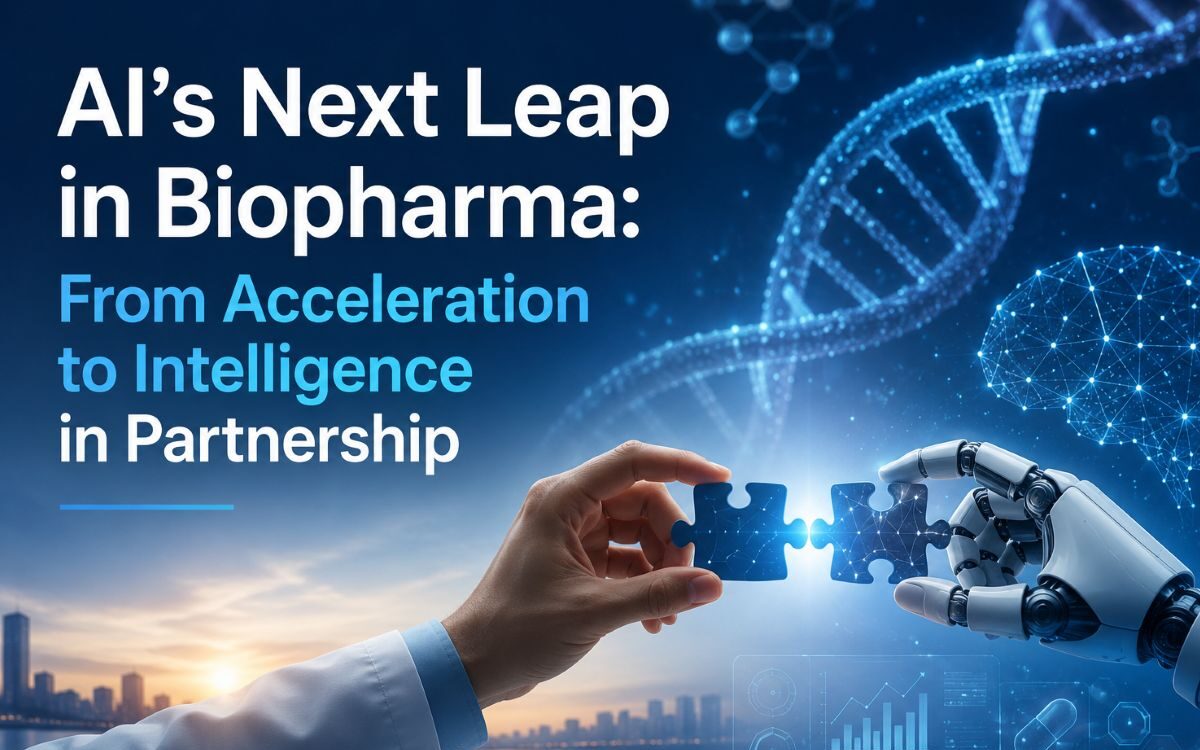
Artificial intelligence has already changed the rhythm of discovery in biopharma. Algorithms can screen millions of molecules, identify trial candidates, and forecast supply chains with extraordinary speed. Yet speed is not the same as progress. The next chapter of AI in medicine will not be about doing what we already do faster. It will be about expanding what is possible, reimagining the very relationship between intelligence and biology.
We are moving from an age of automation to an age of partnership, where AI becomes not only a tool for computation but a collaborator in creation. This evolution will transform how therapies are designed, how patients are understood, and how global health systems anticipate risk. It is the moment when intelligence, both human and artificial, begins to co-create the biological future.
Living Digital Twins Will Redefine Personal Biology
Digital twins have evolved dramatically since their early applications in organ simulation. By late 2024 and into 2025, major pharmaceutical companies and research institutions began deploying what might be called “multi-omic twins” that integrate layers of biological data previously considered too complex to synthesize in real time.
These advanced twins now incorporate genomic, proteomic, metabolomic, and microbiomic data alongside lifestyle, diet, environmental exposures, and even social determinants of health. Companies like Sanofi and partnerships between tech firms and academic medical centers are building platforms where these models update continuously as patients age, respond to treatments, or encounter environmental changes. The result is a dynamic reflection of the patient that learns in real time.
Recent advances in foundation models for biology have accelerated this field. Models trained on billions of molecular structures can now predict protein interactions, metabolic pathways, and drug responses with unprecedented accuracy. Physicians are beginning to use these digital representations to test therapies virtually before they are introduced to the body, predicting outcomes with precision that static clinical trials cannot match.
This shift allows medicine to move from snapshot diagnostics to continuous intelligence. Dosing, timing, and delivery can be adjusted not on a fixed schedule but in rhythm with the patient’s biological state. Every therapy evolves with its recipient. For biopharma, the old idea of “precision medicine” is expanding into something more fluid: an adaptive partnership between a patient’s biology and an algorithmic twin that learns alongside it.
Generative Biology Will Expand the Boundaries of Creation
The explosion of generative AI in 2023 and 2024 proved that algorithms could design novel proteins and small molecules. By late 2024, the next wave emerged: AI systems capable of proposing entirely new biological systems and architectures never before seen in nature.
Companies like Profluent Bio demonstrated AI-designed gene editors, while others used large language models trained on evolutionary data to generate functional enzymes from scratch. Research teams have created models that suggest how synthetic metabolic pathways might operate, or how programmable cells could be engineered for targeted repair inside the human body.
AlphaFold 3, released in 2024, extended beyond protein structure to predict interactions between proteins, DNA, RNA, and small molecules, fundamentally expanding what computational biology can see.
Generative biology is enabling the creation of self-assembling tissues that regenerate damaged organs, synthetic enzymes that adapt to changing environments, and cellular circuits that respond intelligently to disease signals. These are no longer distant dreams but active areas of laboratory research with early proof-of-concept results emerging throughout 2024.
This new form of discovery blurs the line between biology and computation. Laboratories increasingly resemble creative studios, where scientists and AI systems collaborate to design new forms of life with intent and responsibility. By learning from vast libraries of biological data, these models uncover hidden rules that govern how molecules cooperate, mutate, or self-organize.
For R&D organizations, the transformation is both creative and structural. The traditional linear path from idea to molecule to trial is collapsing into an iterative, co-creative process where hypotheses are generated, tested, and refined continuously in digital space before any experiment begins. The result is an unprecedented ability to design biology rather than merely discover it.
Behavioral Intelligence Will Bridge the Lab and the Living World
The story of biopharma has long been told through molecules and mechanisms. Yet the success of any therapy depends as much on human behavior as on biology. Throughout 2024, AI began making this connection explicit by merging molecular insight with behavioral understanding.
New models draw from psychological, social, and environmental data to predict how people engage with therapies in their daily lives. Platforms built on large language models can now analyze patient narratives, social media patterns, and real-world evidence to identify which patients need motivation, which need social support, and which face structural barriers to access. Recent studies have shown AI can predict medication adherence patterns months in advance by analyzing behavioral signals invisible to traditional analytics.
This evolution is pushing the industry toward a more human definition of success. Instead of focusing only on molecular efficacy, companies are measuring therapeutic impact through lived outcomes. Digital therapeutics platforms now routinely integrate behavioral AI to personalize interventions in real time based on engagement patterns and psychological states.
The boundary between clinical science and behavioral science is fading as AI integrates both into a unified model of health. For biopharma, value is no longer defined solely by biological endpoints but by the depth of behavioral insight that surrounds them. The future of medicine belongs to those who understand that healing is not only biochemical but behavioral, and that intelligence must engage with both.
Regulatory Intelligence Will Turn Oversight into Foresight
Regulation has always been essential to protecting patients, yet it often lags behind innovation. Throughout 2024, AI began changing that dynamic by transforming regulation from a process of review to a process of simulation.
The FDA has been piloting AI tools that analyze clinical trial designs before they begin, identifying potential flaws, demographic imbalances, or safety concerns. Models trained on decades of global trial data, adverse event reports, and demographic outcomes now allow both sponsors and regulators to test virtual versions of trials before enrolling a single patient. Companies can run digital rehearsals of Phase II studies, testing how different endpoints, populations, or dosing strategies might perform and be interpreted.
European regulators have similarly invested in AI platforms for submissions analysis. The EMA announced initiatives in 2024 to deploy machine learning systems that detect anomalies across therapeutic classes and accelerate review timelines for breakthrough therapies. These systems can identify patterns that human reviewers might miss across thousands of pages of documentation.
The outcome is a more collaborative system where oversight becomes foresight. Sponsors and regulators use a shared digital lens to evaluate risk, safety, and fairness before human lives are involved. Regulation is no longer merely a gate at the end of innovation but a partner at its beginning.
The most forward-looking benefit may be cultural. As AI helps expose ethical blind spots earlier, it encourages a shift toward more transparent and participatory science. Patient advocacy groups are beginning to use AI tools to evaluate whether trial designs adequately represent their communities, creating new accountability mechanisms.
Biosecurity Will Become Predictive, Not Reactive
The lessons of COVID-19 catalyzed a transformation in how the world thinks about biological threats. By 2024 and 2025, AI-powered biosecurity networks moved from concept to deployment, using environmental, genomic, and epidemiological data to detect anomalies that signal viral spillover before pathogens reach human populations.
Projects like the Nucleic Acid Observatory and partnerships between institutions like the Broad Institute and tech companies are building systems that continuously sequence environmental samples from wastewater, air, and animal populations. Machine learning models trained on viral evolution patterns can recognize molecular signatures of emerging pathogens and simulate how they might mutate under different conditions.
Vaccine platforms have been pre-trained on high-risk viral families. When a novel threat emerges, candidate vaccines can now be designed within days rather than months. Moderna and BioNTech have demonstrated platforms where AI designs mRNA sequences optimized for specific viral targets, drastically compressing timelines that once stretched across years.
This approach transforms biopharma from responder to sentinel. Companies are becoming active participants in global health defense, using AI to anticipate biological threats the way weather models anticipate storms. The public health value extends beyond pandemics to antimicrobial resistance monitoring, climate-driven disease spread, and cross-species transmission surveillance.
AI’s pattern-recognition power makes this predictive infrastructure not just possible but inevitable. What distinguishes leaders from laggards is not access to data but the vision to treat biosecurity as a continuous function of R&D, not a reactive one.
The New Paradigm: AI as a Biological Partner
The defining question of this decade is no longer whether AI will change biopharma, but how deeply we are willing to let it collaborate. As 2024 demonstrated across multiple domains, machines will not replace scientists, but they are reshaping the scope of scientific imagination. They can propose hypotheses that transcend human intuition and test them in silico at extraordinary scale.
To realize this potential, organizations must move beyond technical adoption toward cultural transformation. Leading institutions are building environments where human insight and algorithmic reasoning coexist and challenge each other. Data scientists, biologists, clinicians, and ethicists form interdisciplinary teams that think across both computation and compassion.
Trust remains the essential currency. Patients need confidence that data-driven medicine serves their well-being, not corporate expedience. Regulatory frameworks emerging in 2024 and 2025 increasingly emphasize algorithmic transparency and auditability.
Researchers need frameworks for accountability as algorithms begin proposing life-altering interventions, and organizations like the World Health Organization have begun issuing guidance on AI ethics in healthcare.
When these conditions align, AI ceases to be a digital assistant and becomes a true biological partner. It extends the reach of human empathy and creativity into realms of biology that were once inaccessible. The outcome is a biopharma ecosystem defined not only by innovation but by integrity – one that learns, adapts, and evolves with the same intelligence it seeks to understand.
The next leap in biopharma will not be measured in computational speed or data scale. It will be measured in humanity’s ability to work with intelligence, rather than against it, to design a future where science learns to heal at the same pace it learns to see.
Author Bio
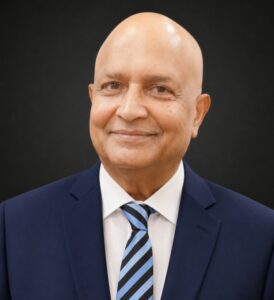
Matt Hasan, Ph.D., CEO of aiRESULTS
Matt Hasan, Ph.D.is CEO of aiRESULTS. He holds a Ph.D. in Quantitative Economics from Brown University, with postdoctoral training in behavioral marketing at Wharton and artificial intelligence at MIT. His work bridges AI, human behavior, and strategic innovation across healthcare, manufacturing, and ethical technology.
Farah Hasan, Ph.D., is an immunologist and biopharma research scientist. She earned her Ph.D. in Immunology from the M.D. Anderson Cancer Center and her bachelor’s degree in Biology from Brown University. Her research spans translational immunotherapy, therapeutic design, and prior roles at BioNTech, NYU Langone and Mount Sinai Medical Center in New York City.