
The therapeutic landscape has been undeniably transformed by monoclonal antibodies (mAbs). From oncology to autoimmune disorders and emerging infectious diseases, mAbs represent one of the most powerful modalities in modern medicine. However, the initial phase of bringing these molecules to life—preclinical antibody discovery—remains tethered to decades-old methodologies that are increasingly incompatible with the urgent timelines of global health.
Historically, discovering a functional therapeutic antibody has relied heavily on empirical, high-throughput screening of random libraries, such as phage or yeast display, or classical animal immunization protocols. While these foundational techniques have yielded blockbuster drugs, they are inherently limited by sequence space restrictions and high attrition rates.
Researchers frequently encounter a recurring set of bottlenecks:
- Astronomical Attrition Rates: Millions of candidate binders can be screened, yet only a minuscule fraction possess both the required binding affinity and the biophysical stability necessary for manufacturing.
- The “Developability” Blind Spot: Traditional screening optimizes primarily for binding affinity (KD). Crucial developability parameters—such as low aggregation propensity, thermal stability, solubility, and minimal immunogenicity—are typically evaluated late in the pipeline.
- The Hard-Target Problem: Complex biological targets, such as highly conserved epitopes, multipass transmembrane proteins (G-protein coupled receptors), and transient conformational states, often fail to elicit a robust immune response or yield functional binders through standard library screening.
To overcome these hurdles, the biopharmaceutical industry is undergoing a paradigm shift, moving away from random empirical screening toward rational, data-driven design.
Bridging the Gap: Academic and Industrial Insights
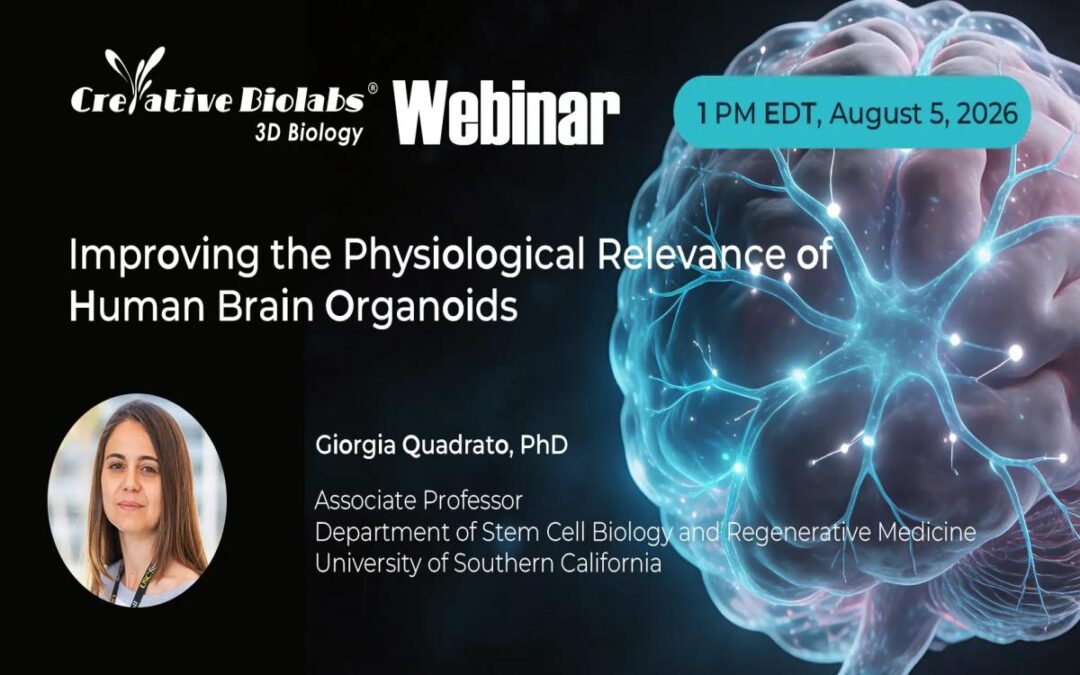
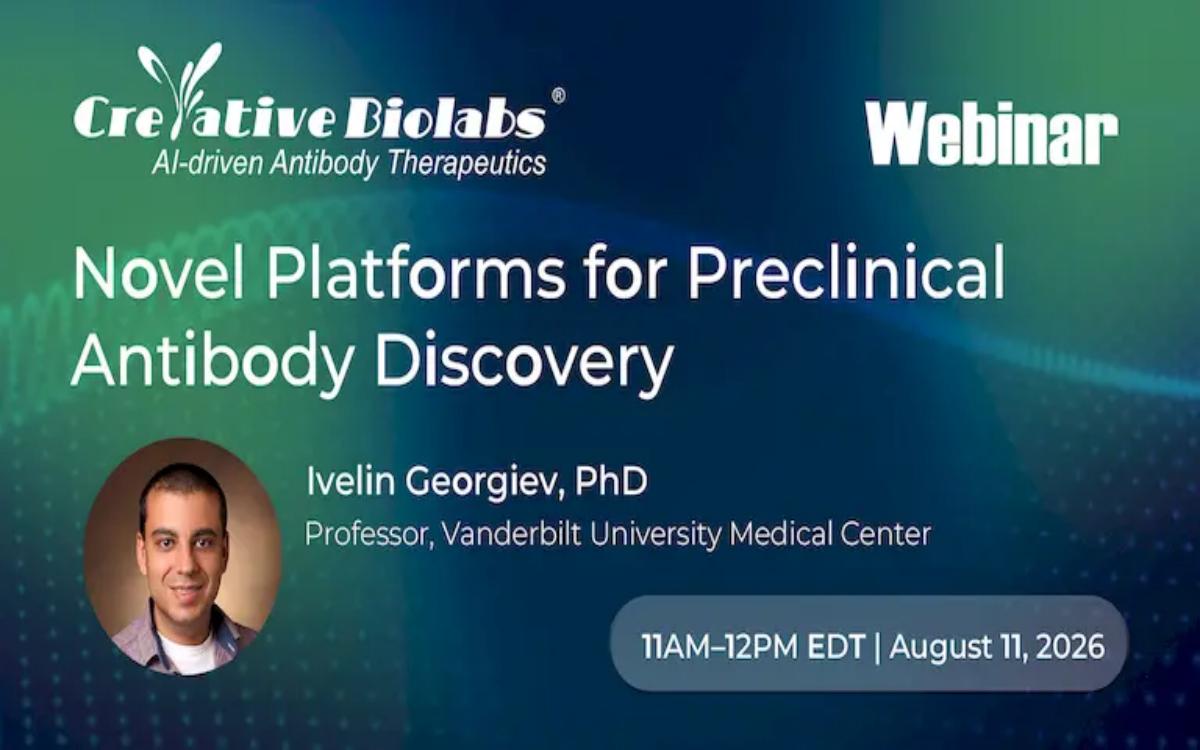
To foster deeper industry collaboration and address these persistent discovery bottlenecks, Creative Biolabs is hosting a complimentary educational webinar titled “Novel Platforms for Preclinical Antibody Discovery” on August 11, 2026, from 11:00 AM to 12:00 PM EDT.
The session will feature Dr. Ivelin Georgiev, Professor at Vanderbilt University Medical Center and Founding Director of the Vanderbilt Center for Computational Microbiology and Immunology. Dr. Georgiev, a recognized authority in structural bioinformatics whose research has been widely published in journals like Science, Nature, and Cell, will present his latest work on validating novel wet-lab and AI-based discovery platforms.
The webinar will explore how integrated experimental and computational approaches can be deployed to systematically identify antibody candidates with challenging phenotypes—including those difficult to obtain through conventional discovery workflows.
The Convergence of Generative AI and Wet-Lab Automation
The true evolution of preclinical discovery does not lie in replacing physical experimentation with computational models, but rather in establishing a closed-loop integration between the two. Generative artificial intelligence, deep learning architectures, and structural bioinformatics are redefining how sequence spaces are navigated.
Instead of screening a random library of 1010 variants in a physical lab, researchers can now leverage advanced computational infrastructure to generate targeted digital libraries in silico. Deep learning models trained on vast repositories of sequence and structural data understand the underlying evolutionary grammar of immunoglobulins. These models can predict specific amino acid substitutions within the complementarity-determining regions (CDRs) to optimize binding topology directly against a digital model of the target antigen.
However, computational prediction is only as good as its biological validation. The modern discovery pipeline relies on automated, high-throughput wet labs to synthesize, express, and functionally characterize these AI-generated candidates. The resulting wet-lab data (e.g., binding kinetics derived from surface plasmon resonance) is then fed back into the machine learning models. This iterative feedback loop can improve candidate prioritization and may shorten selected design and optimization cycles, although timelines vary by target, data quality, and validation requirements.
Engineering Beyond Affinity: Solving the Manufacturing Puzzle
Immunogenicity remains a primary concern. Even humanized antibodies can retain hidden T-cell epitopes that trigger an anti-drug antibody (ADA) response in patients, neutralizing the therapy or causing severe adverse events. To mitigate this risk, specialized algorithms are deployed to analyze sequence frameworks and identify non-human residues that require substitution while carefully maintaining structural integrity.
Furthermore, computational tools now predict and help mitigate potential manufacturing liabilities early in the design phase. Liabilities such as deamidation, isomerization, and oxidation can lead to chemical instability, while structural vulnerabilities can trigger physical aggregation during scale-up. By deploying a comprehensive screening protocol to scan candidates for these biophysical vulnerabilities before production, developers can systematically address selected risks before larger-scale production.
Looking Ahead: The Next Generation of Biologics
As therapeutic strategies become more sophisticated, the industry is increasingly looking beyond standard monospecific IgG molecules. Next-generation modalities, such as bispecific antibodies (BsAbs) and antibody-drug conjugates (ADCs), present even steeper engineering challenges. Designing a molecule that simultaneously binds two distinct epitopes or stably carries a cytotoxic payload requires precise spatial configurations and structural balance.
Navigating this hyper-complex design space is difficult to navigate efficiently using empirical methods alone. It demands sophisticated computational workflows capable of mapping precise epitope-paratope interactions, ensuring that advanced biologics remain stable, specific, and developable.
For research organizations navigating these shifting tides, access to robust technological infrastructure is paramount. Global contract research organizations, such as Creative Biolabs, have established integrated computational chemistry and automated wet-lab ecosystems to support developers through these intricate transitions.
Author Bio
Dr. Emily R. Coleman is a senior scientist at Creative Biolabs with a background in immunology, oncology research, and translational biotherapeutic development. Her work focuses on translating complex biological mechanisms into practical experimental strategies for next-generation therapeutic discovery, spanning both immune system biology and disease modeling platforms.
In addition to her core expertise in tumor immunology and antibody engineering, Dr. Coleman has contributed to cross-disciplinary research initiatives involving neurodegenerative disease modeling and human cell-based assay development. Her recent work includes supporting integrated preclinical research strategies that leverage advanced in vitro systems, including human-derived cellular platforms relevant to neurodegeneration research.
At Creative Biolabs, she provides scientific insight across multiple R&D domains, including antibody discovery and development, gene and cell therapy research, and translational assay design. She is particularly focused on improving the connection between mechanistic biology and predictive preclinical models to support more effective therapeutic development across complex disease areas, including neurodegenerative disorders and immune-related diseases.