
CagriSema, the once-weekly obesity therapy from Novo Nordisk, has spent more than a year as the most closely watched candidate in metabolic medicine. The combination of cagrilintide and semaglutide promised weight loss beyond what either molecule could achieve alone. Yet a run of phase 3 readouts, culminating in a direct comparison against Eli Lilly’s tirzepatide, has produced a more complicated verdict. The data are strong by any historical standard. They have not, however, settled the question that investors and clinicians keep returning to: can CagriSema beat the market leader?
The dual-hormone idea behind CagriSema
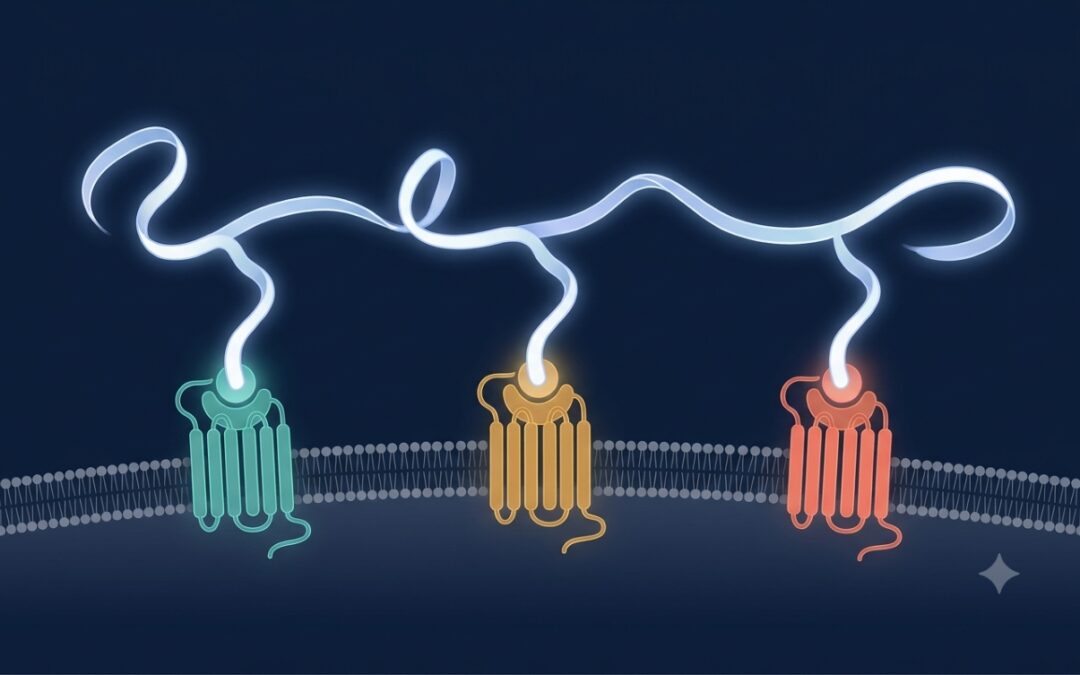
CagriSema is a fixed-dose combination of cagrilintide 2.4 mg, a long-acting amylin analogue, and semaglutide 2.4 mg, the GLP-1 receptor agonist already familiar as the active ingredient in Wegovy and Ozempic. The two molecules suppress appetite through complementary routes. Semaglutide acts on GLP-1 receptors to slow gastric emptying and reduce hunger. Cagrilintide mimics amylin, a pancreatic hormone that promotes feelings of fullness. Delivered together once a week by subcutaneous injection, they are designed to push appetite control further than GLP-1 biology alone. Novo Nordisk has positioned the therapy as a potential first-in-class product, because no GLP-1 and amylin combination has yet reached the market.
What the REDEFINE 1 and REDEFINE 2 data showed
The pivotal evidence came from two trials announced at the ADA meeting and published in the New England Journal of Medicine. REDEFINE 1 enrolled 3,417 adults with obesity or overweight and at least one weight-related complication, but without type 2 diabetes. Over 68 weeks, participants on CagriSema lost an average of 22.7 per cent of body weight when measured on the basis that all stayed on treatment, against 2.3 per cent for placebo. More than half reached a body mass index below 30, compared with roughly one in ten on placebo. The companion REDEFINE 2 trial, conducted in adults who also had type 2 diabetes, delivered close to 16 per cent weight loss.
These were transformative numbers historically, comparable in places to bariatric surgery. Discontinuation due to adverse events remained in single digits across both studies. Even so, REDEFINE 1 fell short of the 25 per cent reduction Novo Nordisk had publicly anticipated. That gap between expectation and result has shaped the market’s reading of CagriSema ever since. Martin Holst Lange, Executive Vice President and Chief Scientific Officer at Novo Nordisk, said, said the findings reinforced confidence in the combination while the wider trial programme continued.
CagriSema versus tirzepatide: the REDEFINE 4 verdict
The decisive test arrived on 23 February 2026. REDEFINE 4 was an 84-week, open-label trial that pitted CagriSema directly against tirzepatide 15 mg, Lilly’s dual GLP-1 and GIP agonist sold as Zepbound. Across 809 participants with a mean starting weight of 114.2 kg, CagriSema produced 23.0 per cent weight loss when all patients adhered to treatment, against 25.5 per cent for tirzepatide. Under the stricter treatment-regimen analysis, which counts results regardless of whether patients stayed on the drug, the figures were 20.2 per cent and 23.6 per cent respectively.
The distinction between those two measures matters. The first reflects the drug’s potential under ideal adherence; the second reflects real-world conditions. On both, CagriSema trailed. The trial therefore did not meet its primary endpoint of demonstrating non-inferiority to tirzepatide. In plain terms, CagriSema reduced weight effectively, but it did not match the incumbent in a head-to-head setting. Tolerability was reassuring, with gastrointestinal effects the most common adverse events and the majority rated mild to moderate, consistent with the wider GLP-1 class.
Market reaction and the regulatory path
Investors responded sharply. Novo Nordisk shares fell in premarket trading on the day of the announcement, extending a difficult run in which the stock had shed roughly half its value during 2025. The disappointment was magnified by expectation. As UBS analyst Colin White observed, REDEFINE 4 had been designed at a point when Novo Nordisk believed CagriSema might outperform Zepbound, which made the miss more striking.
Regulatory timing nonetheless remains on track. The company submitted a New Drug Application to the United States Food and Drug Administration in December 2025, based on the REDEFINE 1 and REDEFINE 2 results, with a decision anticipated late in 2026. If cleared, CagriSema would become the first injectable to combine a GLP-1 receptor agonist with an amylin analogue, a genuine mechanistic milestone regardless of the comparison with tirzepatide.
Strength in diabetes, and a deeper pipeline
The obesity narrative is only part of the picture. In the parallel REIMAGINE programme for type 2 diabetes, CagriSema has performed strongly. REIMAGINE 2, reported in February 2026, showed superior HbA1c reductions of up to 1.91 percentage points from a baseline of 8.2 per cent, beating both individual components on glucose control and weight. Further REIMAGINE results presented at the ADA meeting in June 2026 reinforced that signal across diverse patient groups. Novo Nordisk frames the therapy as a potential first-in-class diabetes option and intends to discuss a regulatory pathway with authorities. Two later studies, REIMAGINE 4 and REIMAGINE 5, will again test it directly against tirzepatide, this time in diabetes.
What comes next for CagriSema
Novo Nordisk argues that the standard 2.4 mg dose may understate what the combination can achieve. Two studies are designed to probe that claim. REDEFINE 11 will report full weight-loss potential data in the first half of 2027, while a higher-dose version pairing cagrilintide 2.4 mg with semaglutide 7.2 mg is due to enter phase 3 in the second half of 2026.
The competitive field, meanwhile, is crowding fast across the broader GLP-1 drug pipeline. Lilly’s triple agonist retatrutide has reported weight loss of up to 30% in phase 3, with the pivotal TRIUMPH-1 trial reporting 28.3% at 80 weeks in a population of more than 2,300 adults with obesity. CagriSema therefore enters the obesity market, if approved, as a strong therapy rather than the category leader its developers once envisaged. Whether higher doses change that calculus is the question the next two years will answer.