

China has overtaken the United States in the annual number of drug clinical trials. It is a sentence that would have seemed implausible a decade ago. Today, it is simply fact, and the implications for drug development, global pharma strategy, and geopolitical competition are still being absorbed.
The data leave little room for ambiguity. According to the World Health Organisation’s International Clinical Trials Registry Platform, China registered more than 7,100 China drug trials in 2024, compared with approximately 6,000 in the United States. Analysis published in the Journal of Clinical Epidemiology placed the gap wider still, recording 16,612 trials in China in 2023 against 9,100 in the US. As recently as 2019, the US maintained a healthy lead. Since then, China’s output has grown at approximately 8% per year, according to consultancy firm Citeline.
The significance of the reversal was brought into sharp focus at Arena International’s Outsourcing in Clinical Trials West Coast 2025 conference, where Revati Tatake, Global Head of Pharma Research, Analysis and Competitive Intelligence at GlobalData, told delegates that the US was no longer the global leader. The announcement drew visible surprise from the audience.
From Generics to Innovation
China’s rise in China drug trials is not simply a story of volume. The character of the research being conducted has transformed. A decade ago, Chinese pharmaceutical activity was dominated by generics and biosimilars. Today, the country’s biotechs are producing original, first-in-class candidates across the most technically demanding areas of modern medicine.
Chinese companies have added more than 4,100 innovative new drugs to their pipelines since 2022, accounting for approximately 31% of the global total. That places China second globally, just behind the US at 35%, according to BioPharma Dive. In oncology, the shift is especially pronounced. China now accounts for more than 50% of the global clinical pipeline in antibody-drug conjugates, bispecific antibodies, and CAR-T therapies, per Stifel data.
The defining example came when Summit Therapeutics announced that ivonescimab, a bispecific antibody licensed from China’s Akeso Biopharma, had outperformed Merck’s Keytruda in a head-to-head trial in advanced non-small cell lung cancer. The deal, worth a potential $5 billion, had originally been greeted with scepticism in the US, largely because the trial was conducted exclusively in China. The results were striking enough to send Summit’s market capitalisation from around $200 million to over $8 billion. But as subsequent global trial data would show, the scepticism was not entirely unfounded.
“When US drugmakers license compounds from China, they divert funds that might otherwise bolster innovation hubs such as Boston’s Kendall Square or North Carolina’s Research Triangle,” wrote Scott Gottlieb, former FDA commissioner, in an op-ed in STAT. “The US biotechnology industry was the world’s envy, but if we’re not careful, every drug could be made in China.”
Why China Drug Trials Run Faster and Cost Less
Several structural factors underpin China’s position as the world’s most prolific trial host. Labour costs are markedly lower. Patient recruitment moves faster, supported by a population of 1.4 billion and a dense network of large metropolitan research hospitals. The National Medical Products Administration (NMPA) operates on a default 60-day review timeline for investigational new drug applications, significantly shorter than equivalent processes in the US or Europe.
Regulatory reform has accelerated the shift. China joined the International Council for Harmonisation in 2017, aligning its technical standards with the FDA and European Medicines Agency. In September 2025, the NMPA implemented revised clinical trial guidelines that cut approval timelines by an estimated 30% and introduced adaptive trial designs allowing real-time protocol adjustments. Infrastructure has followed. Patents in pharmaceutical and medical technology increased by 379% over the past decade, according to a 2025 CBRE report. At the end of 2024, Beijing and Shanghai had more laboratory and research and development space under construction than any other markets globally, with Boston in a distant third place.
The Out-Licensing Boom
The growth of China drug trials has generated a corresponding surge in cross-border licensing. In 2025, Chinese biotechs signed a record $135.7 billion in outbound licensing agreements, representing roughly one-third of all global pharmaceutical licensing spend, according to investment bank Jefferies. In the first half of 2025 alone, US companies signed 14 China-sourced deals worth approximately $18.3 billion, up from just two comparable deals in the same period of 2024.
AstraZeneca has emerged as the most prolific acquirer of Chinese assets, signing nine agreements with Chinese companies worth around $20 billion in total. In January 2026, AstraZeneca struck a collaboration with CSPC Pharmaceuticals worth a potential $18.5 billion, covering eight programmes in obesity and type 2 diabetes. The Hang Seng Biotech Index rose more than 64% in 2025, reflecting growing capital market confidence in China’s pharmaceutical trajectory.
Investment bank Stifel projects that 37% of large pharma companies’ licensed molecules will originate from China in 2026. Tim Opler, a Managing Director at Stifel, captured the shift plainly:
“It’s kind of a watershed moment where the pharma industry is like, ‘We don’t really need to buy US biotechs necessarily. We will if it makes sense, but we can buy perfectly good biotech assets through licensing deals with Chinese companies.'”
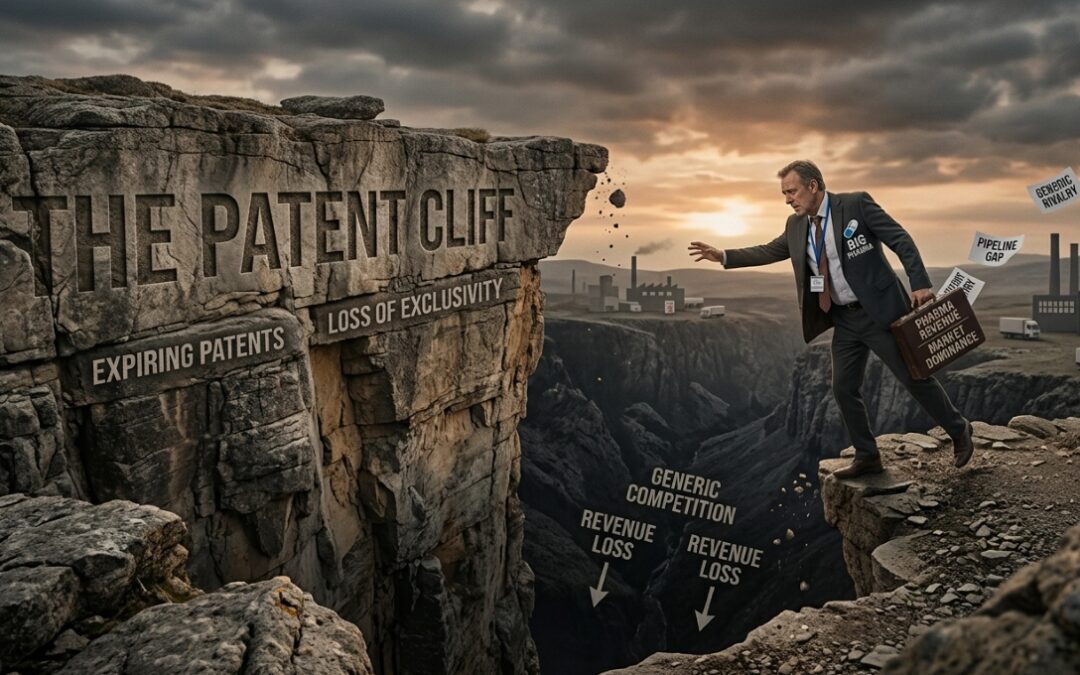
For European pharmaceutical companies, the calculus is equally pressing. With a substantial patent cliff looming across oncology and immunology portfolios through 2030, China’s pipeline depth and development speed offer a route to replenishment that organic R&D alone cannot match.
Quality Concerns and Regulatory Scrutiny
The expansion of China drug trials has not been without scrutiny, and the most consequential question remains unanswered: how reliably will Chinese trial data be accepted by Western regulators?
The FDA rejected several applications based on China-only trial data in 2022, including one from Eli Lilly, partly on the grounds that results from a single-country population cannot be safely extrapolated to global patients. Ethnic diversity, standard-of-care differences, and co-morbidity profiles all vary in ways that can affect how a drug performs. Ivonescimab illustrates the point precisely. Summit Therapeutics’ original landmark result, which showed the drug beating Keytruda in a China-only trial, was followed by a global Phase 3 study that met its progression-free survival endpoint but missed overall survival, the metric the FDA had explicitly told Summit it would require for approval. Western patients showed a meaningfully smaller benefit than Chinese patients, and Summit’s stock fell 25% on the data release. A biologics licence application was accepted by the FDA in January 2026 in a separate second-line indication, with a decision expected by November 2026, but the approval pathway remains genuinely uncertain. It is precisely the kind of outcome that illustrates why regulators in the US and Europe will need to see the gap between China-only and global trial data consistently closed before the full promise of China’s trial volume can be realised worldwide.
For the China drug trials boom to fully translate into globally approved medicines, this remains the critical regulatory hurdle. The NMPA has moved to address the underlying quality concerns. Its 2025 draft revision to Good Clinical Practice guidelines introduced a dedicated data governance chapter with mandatory metadata requirements and audit trails, expanded electronic system validation, and compulsory annual ethics committee reviews. Public registration of all trials and early release of results are now required. The number of multiregional clinical trials run by Chinese pharmaceutical companies is growing, though it remains lower than that of established multinationals, according to research published in ScienceDirect in 2025.
Geopolitics: The BIOSECURE Act
The deepening commercial ties between Chinese biotech and global pharma have prompted a significant legislative response. The BIOSECURE Act was signed into law by President Trump on 18 December 2025, as part of the National Defense Authorization Act for fiscal year 2026. It restricts US federal agencies from procuring biotechnology equipment or services from entities deemed “biotechnology companies of concern,” defined as companies subject to the control of a foreign adversary government.
The Act does not name specific companies. It incorporates the Department of Defense’s 1260H list, which currently includes BGI Group and its affiliates. WuXi AppTec and WuXi Biologics are not currently listed, though they remain subject to potential future designation. The Office of Management and Budget must publish a full list by December 2026. Existing contracts benefit from a five-year transition period, limiting immediate disruption.
The European Commission proposed an EU Biotech Act in December 2025, framing the issue in terms of strategic autonomy and supply chain security. The parallel response on both sides of the Atlantic signals that biotechnology has moved from a commercial to a geopolitical category, and that policymakers intend to act accordingly.
What This Means for the Global Industry
China’s rise in drug trials and pharmaceutical innovation is not a temporary correction in the global R&D order. It is a structural shift, built on a decade of government investment, regulatory reform, infrastructure development, and deliberate policy. The forces that produced it are durable.
For large pharmaceutical companies, the strategic conclusion is already being drawn. China is not simply a place to run trials more cheaply. It is now a primary source of innovative drug assets, and any business development team not actively sourcing from it is working from an incomplete map.
For Western biotechs, the challenge is more uncomfortable. The same companies that once had the advantage of proximity to capital markets and regulatory expertise now face competition from a system that moves faster, costs less, and is producing genuinely novel science.
The question is no longer whether China belongs at the centre of global drug development. It already does. The question now is how the rest of the world responds.