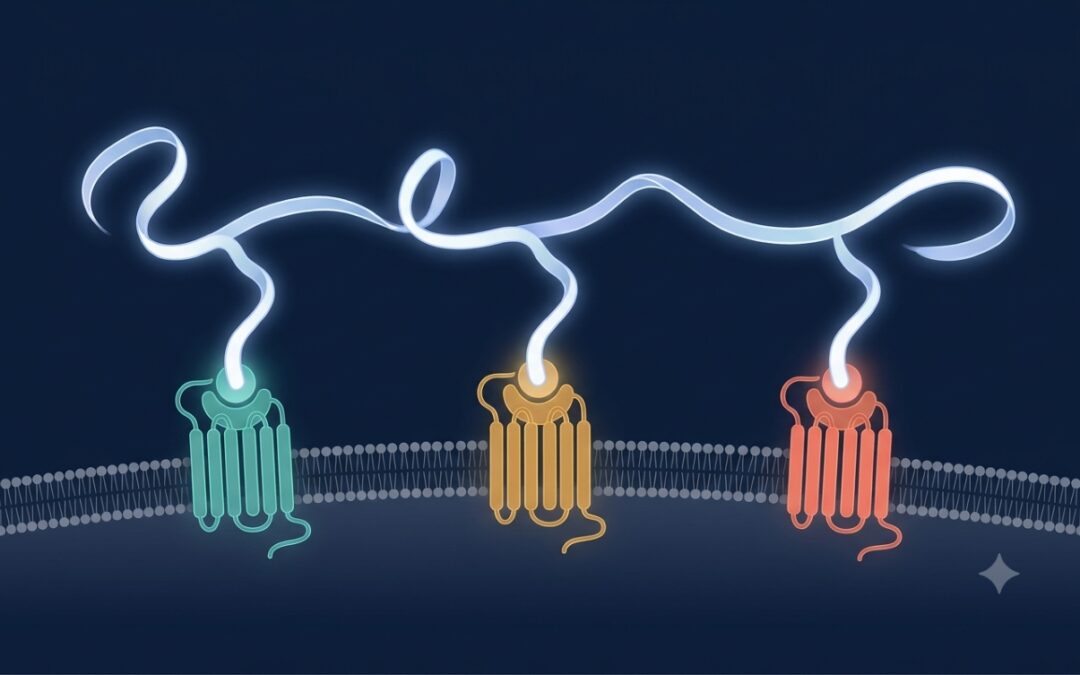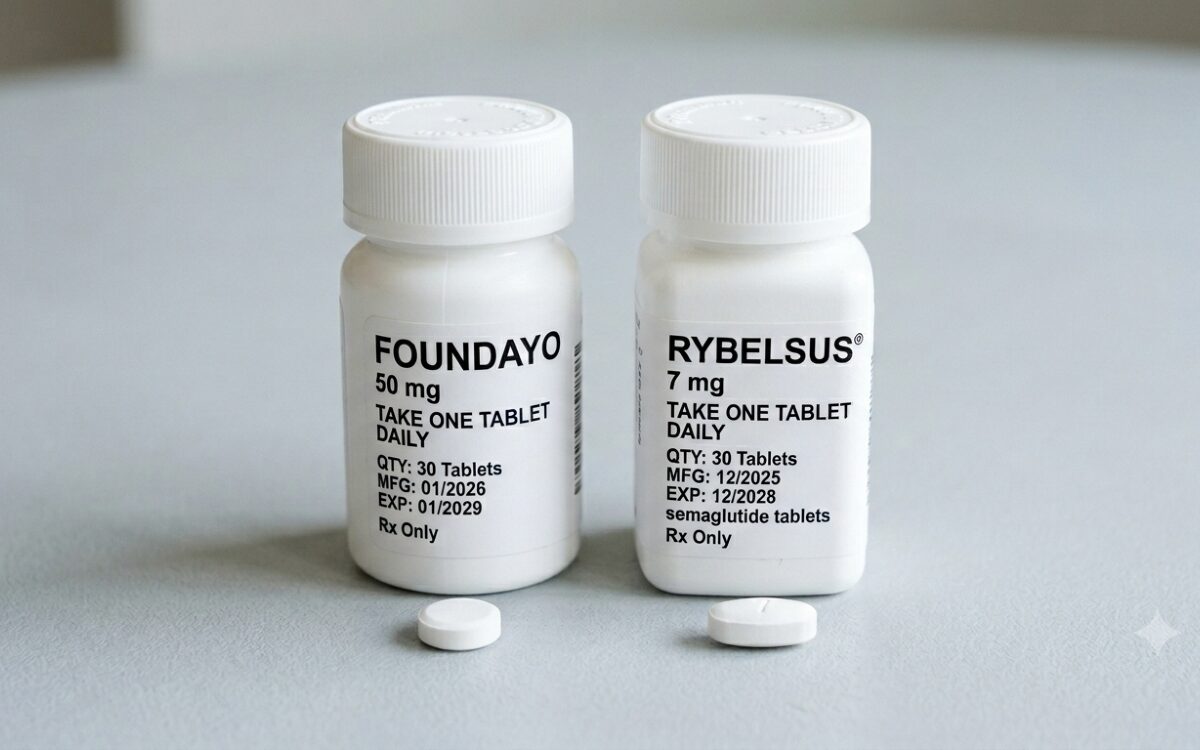
The oral GLP-1 market has changed faster in the past six months than in the previous six years. Where once Rybelsus stood alone as the only GLP-1 pill available, patients and clinicians must now navigate three distinct oral products, each with a different molecule, a different approved indication, and a different set of practical requirements. The confusion is understandable. The question of what separates Foundayo from Rybelsus is one worth answering carefully.
The short answer is this: Foundayo and Rybelsus are not competitors. They are designed for different patients. Rybelsus is a type 2 diabetes drug. Foundayo is a weight management drug. They share a class mechanism and a broadly similar side effect profile, but their approved uses, dose ranges, and molecular structures are meaningfully different. Understanding those distinctions is essential for anyone navigating this rapidly evolving space.
What Rybelsus is, and What it Does
Rybelsus contains semaglutide, the same active ingredient found in Ozempic and injectable Wegovy. At doses of 7 mg and 14 mg per day, it is approved as an adjunct to diet and exercise to improve glycaemic control in adults with type 2 diabetes, and to reduce the risk of major adverse cardiovascular events in adults with that condition who are at high cardiovascular risk. It is not approved for weight management in the absence of a type 2 diabetes diagnosis.
Because semaglutide is a peptide, it is highly susceptible to enzymatic degradation in the gastrointestinal tract. To address this, Rybelsus uses a co-formulation with salcaprozate sodium (SNAC), an absorption enhancer that facilitates uptake across the stomach lining. This technology works, but it demands strict conditions: the tablet must be taken on an empty stomach with no more than four ounces of water, followed by a 30-minute fast before eating, drinking, or taking other oral medications. Only around 0.4% to 1% of each dose is absorbed even under optimal conditions.
In diabetes trials, Rybelsus at its 14 mg dose has been associated with approximately 5% weight loss. That is a clinically meaningful secondary benefit for patients with type 2 diabetes, but it is not the same as the weight loss observed in obesity-specific trials at higher doses. The approved Rybelsus dose range was set for glycaemic management, not for obesity pharmacotherapy.
What Foundayo is, and Why it is Different
Foundayo contains orforglipron, a small-molecule, non-peptide GLP-1 receptor agonist. This is a fundamentally different type of compound from semaglutide. Because it is not a peptide, orforglipron does not depend on absorption enhancers to survive the gut environment. It can be taken at any time of day, with or without food, and with any volume of fluid. Eli Lilly’s FDA approval announcement on 1 April 2026 described Foundayo as the only GLP-1 pill for weight loss that can be taken without food or water restrictions, a formulation milestone that Lilly has described as removing a practical barrier which has complicated adherence to earlier oral GLP-1 options.
Foundayo is indicated for weight management in adults with obesity, or in adults who are overweight with at least one weight-related comorbidity such as hypertension, dyslipidaemia, or obstructive sleep apnoea. It is not currently approved for type 2 diabetes in the US, though Lilly has stated its intention to file for that indication during 2026. Orforglipron was originally discovered by Chugai Pharmaceutical and licensed by Lilly in 2018.
In the Phase 3 ATTAIN-1 trial, adults with obesity taking the highest approved dose achieved an average weight loss of 12.4% at 72 weeks compared with approximately 0.9% with placebo. The approval was granted under the FDA’s National Priority Voucher programme, making it the fastest new molecular entity approval since 2002.
The Role of Oral Wegovy
No comparison between Foundayo and Rybelsus is complete without acknowledging a third product: oral Wegovy. The FDA approved once-daily oral semaglutide (Wegovy) at 25 mg on 22 December 2025, making it the first oral GLP-1 approved specifically for chronic weight management in the US. It uses the same semaglutide molecule as Rybelsus but at a significantly higher dose, and carries approval for obesity treatment and cardiovascular risk reduction in adults with overweight or obesity and established cardiovascular disease.
Oral Wegovy is the direct head-to-head comparator for Foundayo in the obesity market. Both are once-daily pills targeting the same patient population. The clinical differences are real but modest. The OASIS 4 Phase 3 trial demonstrated a mean weight loss of approximately 13.6% to 16.6% with oral semaglutide 25 mg at 64 weeks depending on the analysis method used. Foundayo produced 12.4% at the highest dose over 72 weeks. Oral Wegovy currently holds a slight advantage on average weight loss outcomes, while Foundayo offers greater flexibility in dosing routine.
Novo Nordisk has been active in positioning its product. Data from the ORION study, presented at the Obesity Medicine Association’s 2026 annual conference, showed that oral semaglutide 25 mg was associated with significantly greater mean weight loss than orforglipron in a population-adjusted indirect treatment comparison. Lilly, for its part, has published ACHIEVE-3 data showing that orforglipron at its highest dose outperformed oral semaglutide 14 mg on both A1C reduction and weight loss in adults with type 2 diabetes, though this comparison involved the Rybelsus-equivalent doses rather than the obesity-approved dose levels.
Side Effects and Tolerability
All three products share the gastrointestinal side effect profile associated with GLP-1 receptor agonism: nausea, vomiting, diarrhoea, constipation, and abdominal discomfort are the most commonly reported adverse events, typically emerging during dose escalation and improving over time. The class also carries a boxed warning regarding the potential risk of thyroid C-cell tumours, applicable across all semaglutide formulations and extended to Foundayo in its prescribing information.
There are some differences in side effect distribution between Foundayo and oral Wegovy. Available data suggest oral semaglutide trends higher for nausea, vomiting, dyspepsia, and headache, while Foundayo trends higher for diarrhoea, constipation, abdominal pain, and fatigue. Novo Nordisk has also cited indirect comparison data suggesting that fewer patients discontinued oral semaglutide due to side effects compared with orforglipron, though the companies and independent commentators note the significant methodological limitations of such comparisons in the absence of a head-to-head obesity trial.
What This Means for Patients and Prescribers
The practical clinical picture can be summarised as follows. Rybelsus remains the appropriate oral GLP-1 choice for adults with type 2 diabetes seeking glycaemic control without injectable therapy and able to follow the fasting protocol. For this indication, it is well established, with cardiovascular outcomes data to support its use.
For patients with obesity or overweight and weight-related comorbidities, the choice now sits between oral Wegovy and Foundayo. Neither is yet available in the UK, where MHRA approval is still pending for both. In the US, both products launched at approximately $149 per month for self-pay patients. The decision between them turns largely on clinical priorities and patient circumstances. Oral Wegovy currently shows modestly higher average weight loss in trial data. Foundayo offers unrestricted dosing, which may support better adherence in patients who struggle with morning fasting routines. The profile of each product is explored in detail in the prescribing information published by the FDA.
Francesco Giorgino, MD, an investigator on the ACHIEVE-5 trial, offered a longer-term perspective on orforglipron’s potential in an interview published by Medscape Medical News, noting that its small-molecule structure makes it significantly easier to manufacture than peptide-based GLP-1 drugs. “Once it goes off patent, orforglipron will be easy to produce and relatively cheap, which is what we want for this class of drugs,” he said. That observation points to a potential inflection in access and affordability that could distinguish Foundayo from semaglutide-based options in the years ahead.
The oral GLP-1 category is now genuinely competitive, and its clinical boundaries are becoming better defined. Rybelsus for diabetes. Oral Wegovy and Foundayo for obesity. The molecules, indications, and practical requirements differ enough that conflating them does a disservice to patients who need clear guidance. For a deeper look at where the wider GLP-1 obesity pipeline is heading, including the emerging role of combination therapies, see our earlier analysis: CagriSema: what the phase 3 data shows.