
The Old Paradigm
For more than a century, cancer treatment has been defined by a straightforward objective: find the tumor and destroy it.
Surgery removes it, radiation damages it. Chemotherapy attacks rapidly dividing cells. These approaches have saved countless lives and remain essential tools in oncology. But a growing number of researchers are beginning to ask a different question, not simply “how do we destroy the tumor,” but “how do we get the immune system to recognize and remember it?”
That distinction matters more than it might seem. Destroying a tumor is a single act. Teaching the immune system to recognize cancer is potentially a durable one.
Why Immunotherapy Doesn’t Work the Same for Everyone
The rise of immunotherapy has shown that the immune system can be far more than a bystander in cancer treatment. In some patients, activating immune recognition has produced responses that would have been difficult to imagine a generation ago. But immunotherapy doesn’t work the same way for every patient or every cancer type, and one of the central challenges in the field is figuring out why.
Part of the answer lies in how cancer evades detection in the first place. Tumors don’t just grow, they actively suppress the immune response around them, creating a microenvironment where immune cells are present but unable to act. Nowhere is this more apparent than in liver cancer. Hepatocellular carcinoma, the most common form of primary liver cancer, often arises in livers already damaged by cirrhosis, tissue that is, by its nature, immunosuppressive. Even when systemic checkpoint inhibitors produce a response, a complete and durable remission has remained difficult to achieve.
A Different Approach: Treating From Inside the Tumor
This is the problem I’ve spent much of my work as an interventional radiologist trying to address, not by replacing immunotherapy, but by changing where and how it’s delivered.
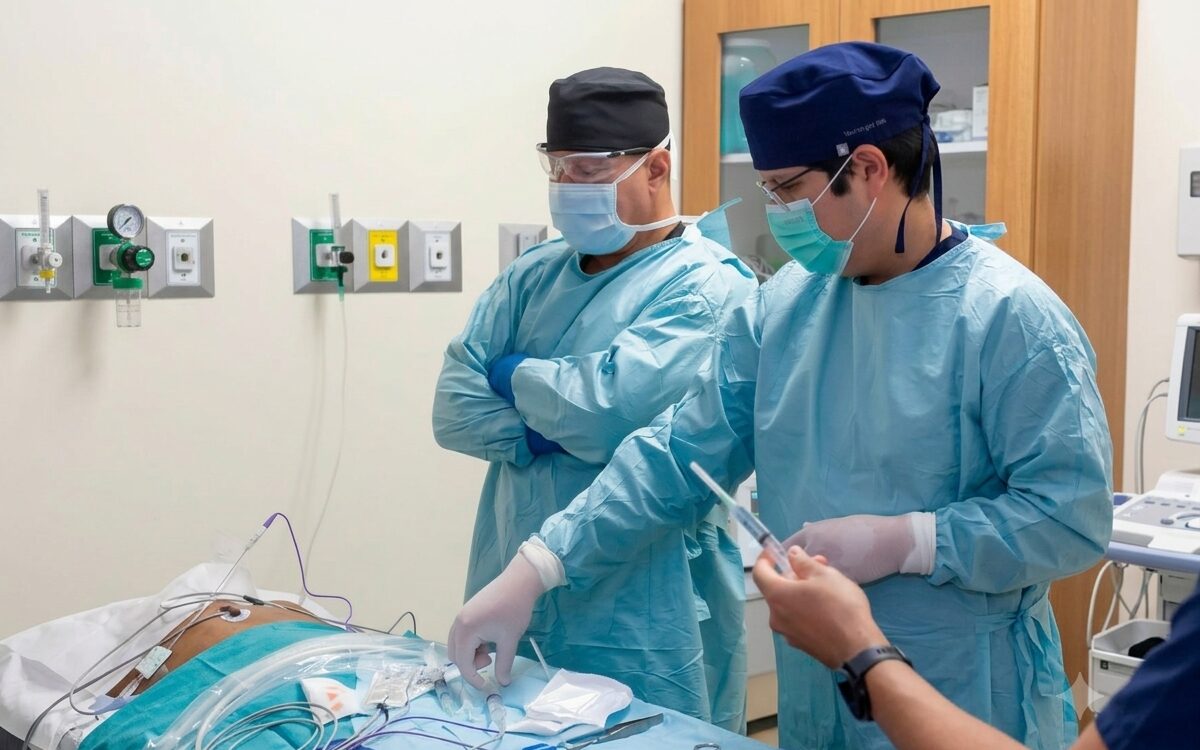
In a study my colleagues and I recently published in the Journal of Immunotherapy, we explored a different approach: rather than delivering immunotherapy systemically through the bloodstream, we delivered it directly into the tumor itself, paired with a nonthermal ablation technique called pulsed electrical field (PEF) ablation. PEF works by disrupting the membranes of cancer cells, causing them to release their internal antigens, the molecular fingerprints that allow the immune system to identify a cell as cancerous, while leaving those antigens intact for immune cells to find.
Building a Lymph Node Inside the Tumor
What we observed was something more specific than tumor shrinkage. PEF ablation appears to trigger the formation of tertiary lymphoid structures at the treatment site, small, organized clusters of immune cells that function similarly to a lymph node, assembling directly inside the tumor. In effect, the ablation zone becomes a temporary training ground, where immune cells can encounter cancer antigens in concentrated form and mount a more targeted response.
The Findings
In our small proof-of-concept cohort of three liver cancer patients, this combined approach led to tumor shrinkage and reduced metabolic activity on imaging, without high-grade treatment-related toxicity. One patient remains in follow-up more than three years later with a complete radiologic response and normal tumor marker levels, a result that would be considered rare using standard systemic approaches alone.
What the Limitations Teach Us
These findings are early, and they come with real limitations, which is part of why they matter. In one patient in our cohort, the focally treated tumor responded well, while a separate, untreated tumor elsewhere in the liver continued to progress. We believe this reflects something fundamental about how cancer behaves: tumors are not biologically uniform, even within the same patient. A treatment that successfully trains the immune system to recognize one tumor’s specific antigens may not automatically protect against a genetically distinct lesion nearby. This kind of tumor heterogeneity is one of the most significant unresolved challenges in cancer immunotherapy today, and it’s a problem that simply giving more systemic immunotherapy doesn’t necessarily solve.
Why This Matters Beyond Any Single Study
The implications extend beyond any single treatment approach or clinical trial.
Global cancer incidence is projected to rise substantially in the coming decades. According to the American Cancer Society and the GLOBOCAN database, new cancer cases worldwide are expected to climb from roughly 20 million in 2022 to more than 35 million by 2050, driven largely by population growth and aging. As healthcare systems prepare for that growing burden, researchers are focused not only on extending survival, but on reducing treatment-related toxicity and developing therapies tailored to the biology of an individual patient’s disease.
This is part of why immunotherapy has generated so much interest. The goal isn’t simply to attack cancer cells directly, but to help the immune system participate more effectively in the fight against disease, ideally producing responses that are more durable than tumor destruction alone.
The limitations we observed in our own study point to a related truth: cancer is rarely uniform. Different tumors, even different lesions within the same patient, can behave differently at a molecular level. Advances in genomic sequencing and biomarker testing have made that heterogeneity increasingly visible, revealing that two patients with the same diagnosis may have fundamentally different diseases underneath it. That understanding is pushing oncology away from one-size-fits-all treatment and toward strategies that are more individualized.
In many ways, the future challenge for oncology isn’t simply finding more treatments. It’s finding smarter ones: therapies that are precise, adaptable, and capable of working with the body’s own biology while minimizing unnecessary toxicity.
Where This Is Headed
This is where I think the field is heading: not toward a single universal immunotherapy, but toward localized, image-guided strategies that can be repeated and adapted as a tumor’s biology becomes better understood over time. Because these treatments are delivered directly into the tumor under CT guidance, dosing can be precisely controlled at the site of disease, often at levels far lower than what’s required systemically, which may help explain the favorable safety profile we observed.
Precision Medicine and Image-Guided Treatment
At the same time, advances in precision medicine are reshaping how physicians think about treatment more broadly. Genetic profiling and biomarker testing are increasingly used to characterize a tumor’s specific molecular behavior, and image-guided procedures offer a way to act on that information directly at the source, rather than relying solely on treatments distributed throughout the entire body.
The Role of AI
Artificial intelligence may also play a growing role in this shift. AI is already being used to analyze large volumes of clinical and molecular data, helping researchers identify patterns and treatment relationships that would be difficult to detect manually. While still early, this kind of analysis could eventually help predict which tumors are most likely to respond to a localized immune-activating approach, and which may require a different strategy altogether.
None of this suggests that surgery, radiation, and chemotherapy are going away. They remain essential. But the field is expanding beyond the idea that destroying a tumor is the only objective.
Increasingly, the question being asked in cancer research isn’t only “how do we remove this disease,” but “how do we get the body’s own immune system to remember it, recognize it, and respond to it again if it returns?”
That question, and the unresolved science behind it, may define the next era of cancer care.
Author Bio