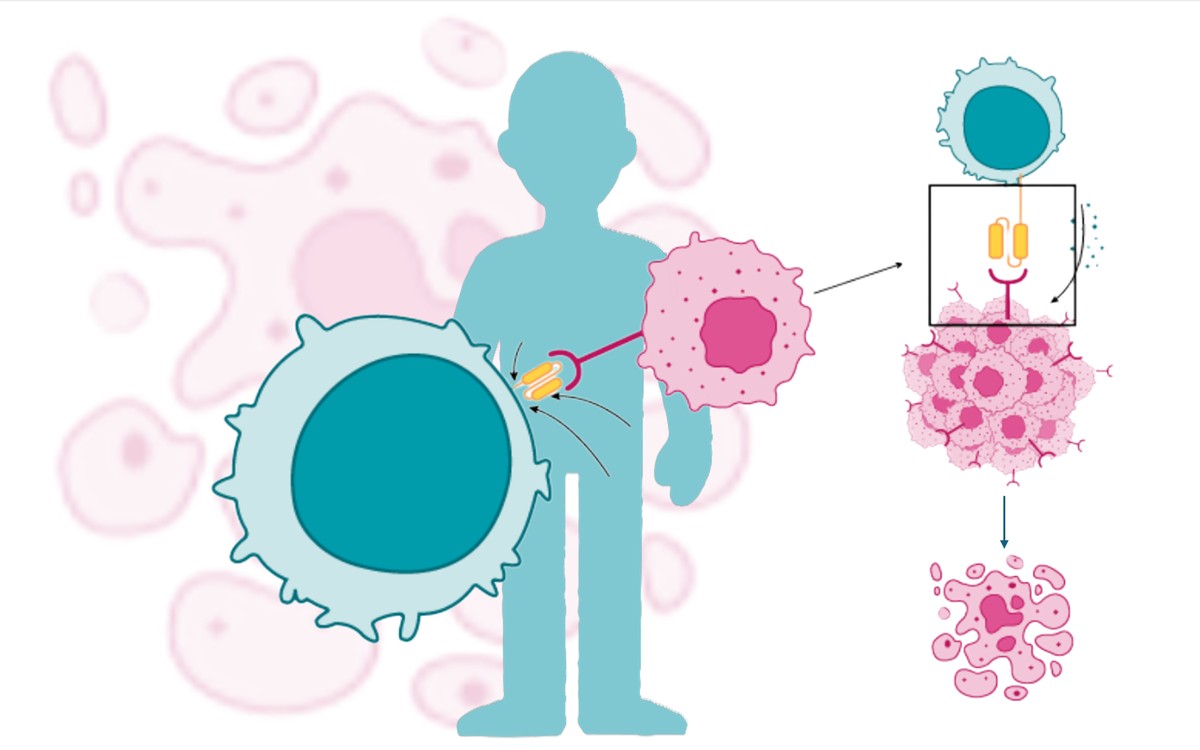
CAR T-cell therapy is revolutionizing cancer treatment and being applied to a variety of other indications, but the approach relies on engineering a patient’s immune cells to recognize and attack cancer. Producing those cells can involve a complex, resource- and time-intensive treatment and manufacturing process. A newer approach, in vivo CAR-T, carries out that engineering inside the body, which shifts the hardest part of the problem onto the delivery system.
Current CAR-T therapies require engineering T-cells outside of the body. Cells are collected from a patient before being isolated and modified. To create a one-and-done solution, cells are permanently modified, often using a lentiviral vector that permanently introduces a type of marker, a chimeric antigen receptor (CAR), allowing immune cells to recognize specific cancer cells. Edited cells are administered to the patient only after any remaining immune cells are destroyed through lymphodepletion, a short form of chemotherapy.
Researchers are exploring ways to generate CAR T-cells inside the body, in vivo, rather than engineering them outside it, ex vivo. This would vastly enhance the patient experience by eliminating the need for leukapheresis and lymphodepletion, improve accessibility, and streamline therapeutic manufacturing. However, it also places greater pressure on the delivery system to reach the right cells and perform as intended once inside the patient.
Moving the engineering problem inside the body
Ex vivo engineering provides some significant benefits: cells can be screened so that only correctly-modified cells are returned to the patient for autologous transplants, or they can be banked for allogeneic transplants to other patients. However, the process to get to this point is intensive in time, labor, cost, and risk.
In vivo approaches can remove some of the steps involved in ex vivo treatment, but they leave less opportunity to control the process once the therapy has been administered. The delivery system still has to reach the intended cells, limit off-target activity, and avoid immune responses that could affect safety or efficacy.
An ideal in vivo delivery system would have similar benefits to those for ex vivo therapies. However, permanent modification to cells, efficiency, and specific targeting are a significant challenge. Lentivirus can be used for in vivo as well as ex vivo and exhibits efficient transduction and permanent integration, although efficiently generating CAR T-cells in vivo requires modifications to the outer envelope of the virus, and integration can result in activation of cancer-causing genes. Other viral and non-viral systems can be used to facilitate CRISPR-based permanent modification, but this requires delivery of multiple components and the correct modification, which requires insertion via homology-directed repair or HDR, has very low efficiency. Finally, transposon systems provide non-viral delivery and permanent modification, but insertion is not targeted, specific delivery is problematic, and the system is less established in the CAR-T field.
Some delivery systems offer higher efficiency and targeting, but lack permanent integration. mRNA can be carried by nanoparticles and chemically modified to target immune cells and reduce innate immune recognition. While mRNA can be further modified to improve translation, its effects are transient and repeat dosing may be required. Additionally, AAV is a viral vector already well established in gene therapy and can offer low immunogenicity with high specificity, depending on the chosen serotype. However, there is extremely low incidence of permanent change to target cells, and repeat dosing is not possible with AAV due to the immune system’s recognition and neutralization on redosing.
Moving CAR-T generation into the body puts more focus on the delivery system. How well it performs will depend on the vector type and design, the immune response, and the biology of the cells being targeted.
A long road to delivery
A study by Nyberg and colleagues [1] illustrates an approach to addressing this engineering challenge using in vivo CRISPR modification. The researchers delivered primary CRISPR components as a ribonucleoprotein for direct editing using enveloped delivery vehicles (EDVs). Integration of the CAR-coding sequence required an HDR donor template, which was delivered by modified AAVs. The strategy was tested in a mouse model of B-cell acute lymphoblastic leukemia (B-ALL).
The results were encouraging. Up to 40% of target cells in the humanized mice became CAR-positive. CAR expression in target cells in the blood was high and homogeneous, and CAR T-cells were also identified in the bone marrow and spleen. The leukemia cell line was eliminated in those tissues, and 18 of 20 mice achieved complete responses without relapse following rechallenge with leukemia cells. The in vivo-generated CAR T-cells expanded after treatment and later contracted following tumor clearance.
What stands out in the study is how much attention went into the design of the delivery system itself. The researchers engineered the vectors around practical challenges including immune response, cell targeting, and efficient CAR expression.
Host immunity is one of the pressures any in vivo system has to withstand. An immune response can create safety concerns while also leading to degradation of a delivery vector before it reaches its intended target. Meanwhile vectors that are able to reach cells may not target their specific cells efficiently, for instance resulting in CAR expression in tumor cells instead of T-cells. Viral envelopes can be engineered, including through AAV capsid evolution which can alter targeting, enhance immune evasion, and/or improve transduction in target cells. Additionally, targeting molecules such as antibodies or single-chain variable fragments can be incorporated into delivery systems to enhance targeting. While these modifications require extensive preclinical testing, they present important opportunities to greatly improve the potential for in vivo CAR-T therapies.
Going beyond hitting the right target
The biological context of the target cells presents additional challenges in efficiently producing CAR T-cells. CRISPR-based approaches that require HDR are only capable of modifying cycling T-cells, which represent a limited pool in the bloodstream. This not only presents limitations in delivery, but also in design. During preclinical testing of a therapeutic system, humanized animal models are commonly used. Some methods used to humanize mice can stimulate T-cell proliferation and potentially make CAR T-cell generation appear more efficient than it would be in a human, limiting translatability.
The Nyberg study addressed this by incorporating an anti-CD3 single-chain variable fragment (scFv) in their EDVs. This enhanced targeting while also facilitating more controlled activation of native T-cells. HDR-mediated CAR T-cell generation was significantly higher when the anti-CD3 scFv was included than in unstimulated humanized mice.
After the researchers modified the AAV capsid and EDV, CAR expression was observed in up to 19.7% of splenic T-cells in vivo. Treatment also resulted in complete B-cell depletion, which is a hallmark of successful treatment in B-ALL. Characterization of the resulting CAR T-cells showed increased proliferation and activation, preservation of memory markers, underrepresentation of regulatory T-cells, and balanced ratios of helper and killer T-cells.
This study reinforces why delivery engineering has to be considered as part of the biological system. Reaching a T-cell is only part of the task: the delivery approach and specifics of the design must also create conditions in which successful, efficient engineering can occur.
Not there yet: early clinical variability
The clinical landscape for in vivo CAR-T remains in relatively early stages, although several approaches have begun to generate human data. A recent review of the field [2] identified a landscape still dominated by antigen-targeting, genome-integrating lentiviral approaches. Among the programs that had released clinical data, immune responses differed considerably.
CD3 is a common T-cell target across different delivery systems, particularly lentivirus, due to its wide expression across T-cell populations, while other targets like CD8 can confer greater specificity. The form of the CAR construct itself, including scFv, VHH, and CAR circRNA, varies across both viral and non-viral clinical candidates. For lentiviral vectors, envelope conjugation can enhance targeting and transduction, which combine with genomic integration and a large carrying capacity to present a strong option for the delivery modality. While clinical responses are promising for these and other viral programs [3] [4], results are too early and limited to support broad conclusions, and the concern over immune reactions persists. Non-viral vectors offer a more favorable profile with respect to immunogenicity as well as the potential for redosing, but variability and lower transfection efficiency present challenges in translation to the clinic. Whichever delivery modality is established, a system can generate a therapeutic response and still raise difficult questions about immune effects, specificity, or unwanted off-target activity.
Despite this, clinical responses were promising for all three programs, but results are too early and limited to support broad conclusions about how in vivo CAR-T will ultimately perform. They do show why delivery cannot be reduced to transduction efficiency alone. A system can generate a therapeutic response and still raise difficult questions about immune effects, specificity, or unwanted off-target activity.
Design for what comes next
As in vivo approaches progress, development will increasingly depend on finding systems with the properties required for a particular biological task.
AAV capsid evolution is one way to narrow down candidate serotypes with the properties researchers are looking for, such as better targeting or immune evasion. CRISPR screens can be used alongside this to identify the cellular factors that affect transduction, either across the whole genome or within selected pathways.
Once candidates have been identified, designs still have to hold up through validation and preclinical development. A thorough understanding of biodistribution becomes especially important because researchers need to know where a delivery system and its cargo travel after administration. These analyses can accommodate different delivery mechanisms and different types of cargo, giving researchers a way to assess whether targeting seen in development is reflected in vivo.
The broader lesson from in vivo CAR-T is that simplifying the treatment pathway does not necessarily simplify the underlying engineering.
Generating CAR T-cells in vivo could reduce the practical burden associated with conventional ex vivo workflows. At the same time, it asks much more of the delivery system. The vector must interact appropriately with the immune system, reach the intended cell population, and provide sufficient functional engineering to achieve a therapeutic effect.
As the field develops, progress will increasingly depend on designing delivery systems around the complete biological problem. Where, how, and how well genetic cargo is delivered will be a major part of whether in vivo CAR-T succeeds.
Author Bio