
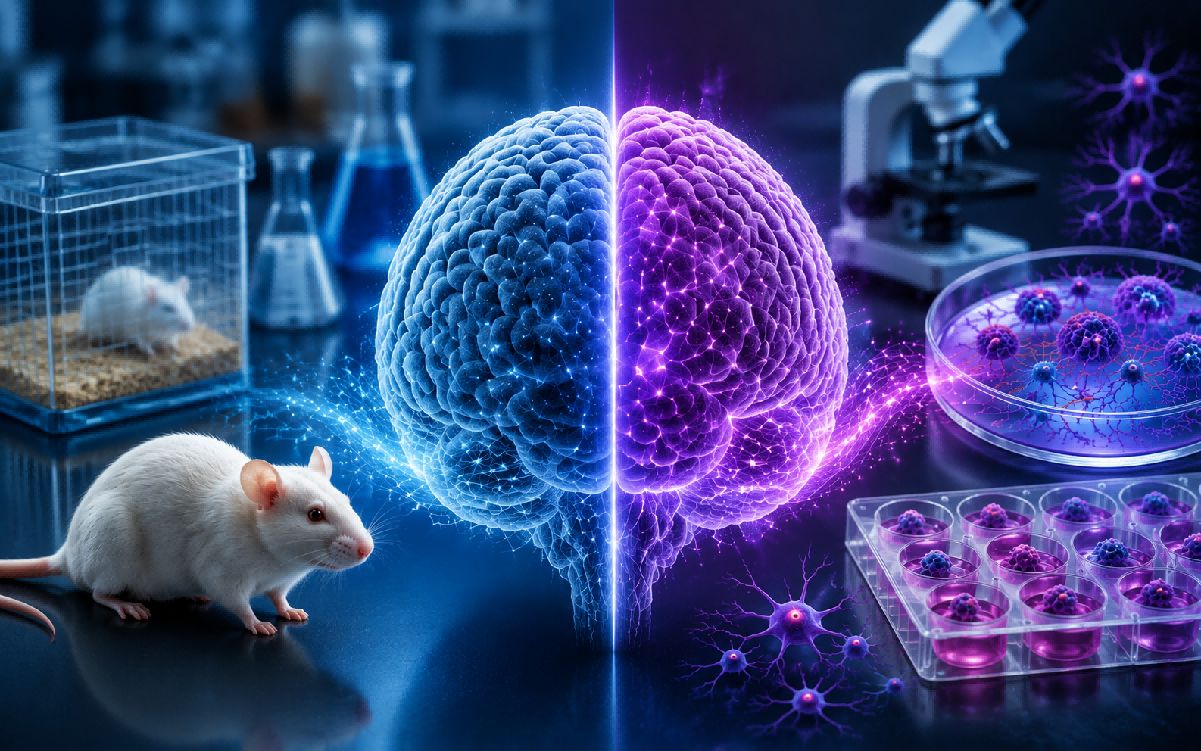
For decades, neurodegenerative research has relied heavily on animal models. While transgenic mice and rats have yielded fundamental insights into the architecture of the central nervous system, they consistently hit a translational roadblock when applied to human clinical trials. The human brain is a uniquely complex organ, characterized by highly specific genetic liabilities, cell-type compositions, and epigenetic landscapes that cannot be replicated in non-human species.
Today, the field of neurodegeneration is undergoing a paradigm shift, driven by human induced pluripotent stem cells (iPSCs) and advanced in vitro assay platforms. By capturing authentic human biology, these tools are decoding the precise mechanisms underlying susceptibility to disorders like Alzheimer’s disease (AD) and Parkinson’s disease (PD).
The Translational Failure of Traditional Models
The limitations of animal models in neurodegenerative research are glaringly apparent in therapeutic development. Hundreds of drug candidates that successfully cleared pathological hallmarks or restored cognitive function in rodent models have failed to show efficacy in human clinical trials. This high failure rate stems from several key biological divergence points:
- Cellular Diversity and Glial Function: Human astrocytes and microglia are vastly more complex and transcriptomically distinct from their rodent counterparts. In diseases like Alzheimer’s, where neuroinflammation and glial dysfunction act as central drivers, animal models frequently fail to reflect human disease progression.
- Species-Specific Genomic Landscapes: Key human genetic risk factors, such as the APOE4 allele, express themselves differently across species. The complex spatiotemporal dynamics of gene expression and alternative splicing that dictate human neurodevelopment and neurodegeneration are uniquely human.
- Pathological Spread: Human neurodegenerative processes involve a multi-lineage cascade—including cerebrovascular remodeling and blood-brain barrier (BBB) degradation—that standard transgenic mice do not fully recapitulate.
To overcome these barriers, modern neuroscience requires physiologically relevant human contexts that model key disease pathways at the molecular, cellular, and functional levels.
Decoding Susceptibility: Emerging Insights from Human iPSC Platforms
The advent of human iPSC technology enables researchers to reprogram somatic cells back into a pluripotent state. These patient-specific cells can then be differentiated into highly purified populations of cortical neurons, sensory neurons, microglia, astrocytes, and oligodendrocytes. Because these cells retain the exact genetic background of the donor, they provide an unprecedented look at how specific mutations dictate disease vulnerability.
To bridge the gap between foundational stem cell biology and translatable drug discovery, Creative Biolabs will host an in‑depth webinar featuring Joel W. Blanchard, PhD, titled “Decoding the Mechanisms Underlying Susceptibility to Neurodegeneration with iPSC‑Derived Human Brain Tissue,” on July 14, 2026. The session will focus on how patient‑derived human tissue models are reshaping our understanding of disease susceptibility and illuminating the biological factors that drive neurodegenerative risk.
By utilizing these multi-lineage, 3D human brain tissue systems, researchers have recently uncovered several breakthrough mechanistic axes:
- The Lysosome-Polyamine-Epigenetic Axis in PD: By studying iPSC-derived human tissues carrying rare genetic mutations associated with severe juvenile Parkinson’s disease, researchers uncovered a novel degenerative cascade. Functional assays revealed that cellular susceptibility is driven by a pathway linking lysosomal dysfunction to polyamine imbalance, which ultimately alters chromatin regulation and triggers aberrant gene expression patterns.
- APOE4 and Glial-Driven Co-Pathology: In Alzheimer’s disease, the APOE4 allele is the strongest genetic risk factor. Utilizing human iPSC-derived cellular systems, scientists have demonstrated that APOE4 actively promotes alpha-synuclein co-pathology through cell-type-specific glial dysfunction. This interaction illustrates that the boundaries between classic proteinopathies (such as AD tauopathy and PD synucleinopathy) are highly fluid when examined in human genetic backgrounds.
- Cerebrovascular and BBB Remodeling: Beyond neurons, APOE4 drives profound cerebrovascular remodeling. Advanced in vitro BBB models containing iPSC-derived pericytes, endothelial cells, and astrocytes have shown that this genetic variant compromises barrier integrity, leading to microvascular leaks that accelerate cognitive decline long before extensive plaque deposition occurs.
Industrializing the Platform: Validated Cells and Assay Services
While 3D tissues are indispensable for mechanistic discovery, drug development demands scalable, high-throughput in vitro phenotypic and functional assay platforms. Global contract research organizations are now industrializing these technologies to provide biotech and pharmaceutical innovators with ready-to-use biological tools and robust screening workflows.
As a pioneer in neuroscience support, Creative Biolabs has built a comprehensive ecosystem tailored for disease modeling and neuropharmaceutical screening. Their capabilities span two core pillars:
- Comprehensive iPSC Product Portfolio: To support standardized academic and industrial research, Creative Biolabs supplies an extensive selection of iPSC-derived cell products. This includes highly pure populations of human cortical neurons, dopaminergic neurons, and sensory neurons, alongside critical non-neuronal lines such as microglia, astrocytes, and oligodendrocytes. These cells allow researchers to replicate complex neuroinflammatory and neurodegenerative environments without cell-sourcing bottlenecks.
- Aβ-Validated In Vitro Assay Services: Understanding that each therapeutic candidate demands a unique validation framework, they offer full-service, customizable disease-model assays. Specialized in Alzheimer’s disease (AD) and other proteinopathies, their assay platform evaluates multiple phases of neurodegeneration at scale.
Target-Specific Pathological Assays
Modern in vitro platforms allow scientists to systematically isolate and target the distinct biochemical pathways of neurodegeneration. For Alzheimer’s disease, automated assays evaluate multiple phases of proteinopathy:
- Amyloid-Beta (Aβ) Kinetics: Comprehensive assay lines measure Aβ peptide oligomerization, toxic Aβ1-42 exposure, and aggregate determination to test the efficacy of candidate clearance molecules.
- Tau Pathological Cascades: Specialized workflows quantify tau phosphorylation, hyperphosphorylation, aggregation, and the more complex processes of cellular uptake, seeding, and degradation.
- APP Processing: Phenotypic screens evaluate how novel compounds modulate gamma-secretase or β-secretase activity to shift processing toward non-amyloidogenic pathways.
Beyond Alzheimer’s, these in vitro frameworks are adapted to measure α-synuclein degradation for Parkinson’s disease, mutant huntingtin (mHTT) lowering for Huntington’s disease, and stress granule formation or nucleocytoplasmic transport defects for Amyotrophic Lateral Sclerosis (ALS).
Functional Electrophysiology and Neuroinflammation
A primary advantage of utilizing mature human iPSC-derived neural networks is the capacity to measure physiological function, rather than relying solely on cell death endpoints.
Platforms incorporating Microelectrode Arrays (MEAs) and patch-clamp technology record central and peripheral neuronal firing patterns, mean firing rates, and network burst durations over extended periods. This functional data is critical for validating whether a drug candidate restores synaptic plasticity or normalizes network activity.
Furthermore, automated co-culture configurations allow for high-throughput profiling of neuroinflammation via cytokine release assays, nitric oxide detection, and lipopolysaccharide (LPS)-induced microglia activation assays, offering a holistic view of compound efficacy across multiple cell types.
Conclusion
The transition from animal-based neurodegenerative disease modeling to patient-derived human iPSC platforms represents a major leap forward for translational medicine. As highlighted in recent industry webinars and ongoing academic collaborations, accessing authentic human genetic backgrounds, cellular diversity, and functional complexity is finally unraveling the long-hidden mechanisms of neurodegeneration. For biopharmaceutical researchers, utilizing highly validated in vitro assay ecosystems bridges the gap between early-stage discovery and clinical success, paving the way for safer, more effective disease-modifying therapies.
Author Bio
Dr. Emily R. Coleman is a senior scientist at Creative Biolabs with a background in immunology, oncology research, and translational biotherapeutic development. Her work focuses on translating complex biological mechanisms into practical experimental strategies for next-generation therapeutic discovery, spanning both immune system biology and disease modeling platforms.
In addition to her core expertise in tumor immunology and antibody engineering, Dr. Coleman has contributed to cross-disciplinary research initiatives involving neurodegenerative disease modeling and human cell-based assay development. Her recent work includes supporting integrated preclinical research strategies that leverage advanced in vitro systems, including human-derived cellular platforms relevant to neurodegeneration research.
At Creative Biolabs, she provides scientific insight across multiple R&D domains, including antibody discovery and development, gene and cell therapy research, and translational assay design. She is particularly focused on improving the connection between mechanistic biology and predictive preclinical models to support more effective therapeutic development across complex disease areas, including neurodegenerative disorders and immune-related diseases.