The landscape of modern healthcare is increasingly reliant on the speed, accuracy, and accessibility of In Vitro Diagnostics (IVD). From rapid point-of-care infectious disease tests to complex oncology biomarker profiling, IVD assays play a central role in clinical decision-making. At the heart of these diagnostic platforms—whether they are enzyme-linked immunosorbent assays (ELISA), lateral flow immunoassays, or advanced microfluidic biosensors—lies a critical biological component: the antibody. This makes IVD antibody development central to how reliably a test performs.
For decades, the diagnostic industry has depended on antibodies to capture and detect target antigens. However, polyclonal preparations can present challenges for long-term reagent standardization because antibody composition may vary between production batches. Depending on assay design and antigen context, heterogeneous recognition profiles can also complicate specificity control.
The Bottleneck in Traditional Diagnostic Assays
Historically, polyclonal antibodies derived from animal sera were the standard for many immunodiagnostic tests. While they offer robust signal amplification by recognizing multiple epitopes on a single antigen, their inherent drawbacks are significant. Polyclonal sera are subject to severe batch-to-batch variability, limited supply, and a higher propensity for cross-reactivity, which can lead to false-positive results in clinical settings.
As regulatory bodies impose stricter quality control standards on IVD products, the diagnostic industry requires reagents that can support reproducible performance and long-term supply continuity. This necessity has driven the shift away from animal-dependent, variable reagents toward immortalized, sequence-defined antibody formats.
The Monoclonal Foundation and Technological Upgrades
Monoclonal antibodies originate from a single antibody-producing clone and therefore provide defined antigen-recognition specificity compared with heterogeneous polyclonal preparations. This consistency can facilitate assay standardization and reproducibility.
While conventional hybridoma technology has been the workhorse of mAb production since the 1970s, it is not without limitations, including prolonged development timelines and species-restricted profiles. Today, industry leaders are bypassing these hurdles by integrating advanced screening and cloning technologies. For instance, single B cell cloning allows researchers to directly harvest immunoglobulin genes from individual B lymphocytes.
In practice, IVD antibody development may combine single B-cell technologies with multiparametric screening to identify clones with binding and functional characteristics suited to specific assay formats. Creative Biolabs applies these approaches within its IVD antibody development workflows, where candidate selection can be aligned with downstream assay requirements.
Why Recombinant Antibodies Matter in Diagnostics
While monoclonal antibodies remain indispensable, the true frontier of diagnostic innovation is recombinant antibody technology. Generated in vitro through the expression of a defined genetic sequence, recombinant antibodies eliminate the need for continuous animal immunization and remove the risk of hybridoma cell-line drift. Once the genetic sequence of a high-performing antibody is secured, it can be sustainably manufactured with highly reproducible, sequence-defined production.
Furthermore, recombinant technology unlocks the ability to engineer antibodies into specialized formats that can be specifically engineered for particular assay requirements. These smaller, engineered fragments are solving some of the most persistent physical and biochemical challenges in biosensor design.
scFv (Single-Chain Variable Fragments): By linking the variable heavy and light domains with a short peptide, scFvs provide full antigen-binding capability in a fraction of the size of a full IgG molecule. Their smaller size can enable higher surface packing density and may improve antigen accessibility in selected biosensor formats.
VHH (Nanobodies): VHH antibodies are compact antibody domains that can exhibit favorable stability and can be engineered for diagnostic applications where reagent size, accessibility, or environmental robustness are important considerations.
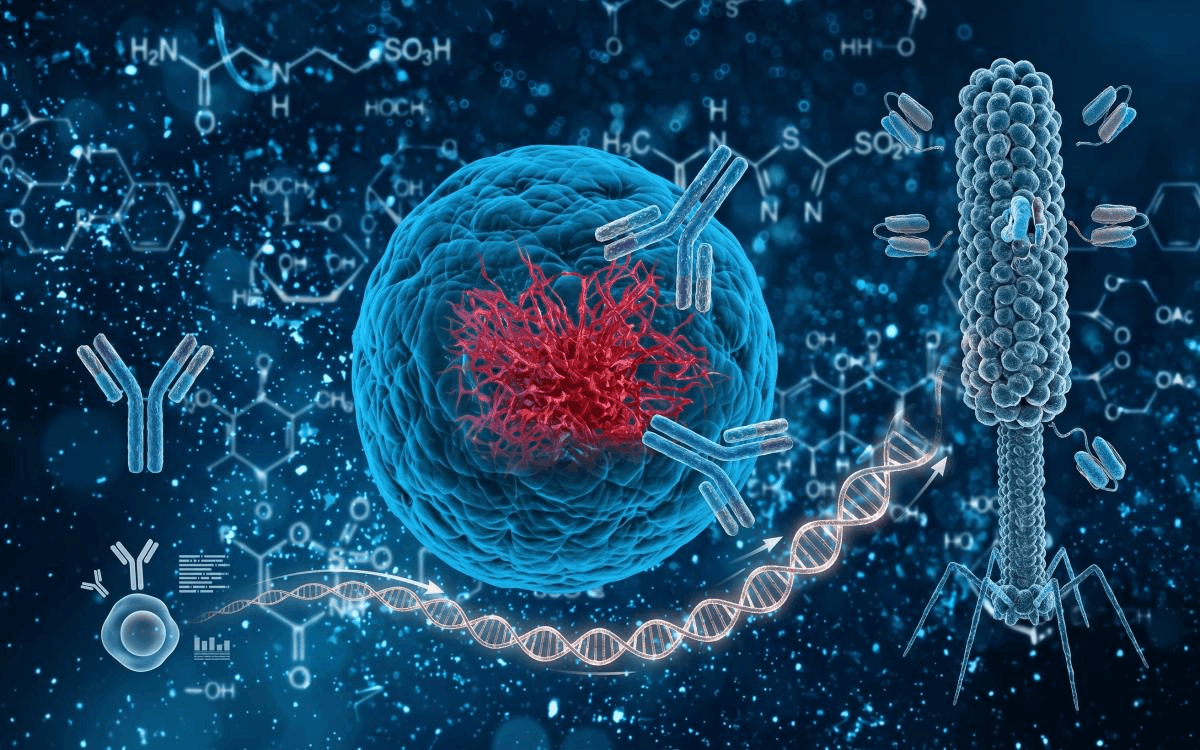
The isolation of these highly specific recombinant formats heavily relies on techniques like phage display. Large antibody libraries can be screened against diverse targets, including targets that may be difficult to address through conventional immunization.
Recognizing the transformative potential of these engineered molecules, specialized recombinant antibody development platforms have become highly sought after. Through optimizing expression systems—ranging from E. coli to mammalian CHO cells—and employing sophisticated antibody engineering techniques like affinity maturation, developers can fine-tune the kinetics of an antibody to better align antibody binding characteristics with assay requirements.
From Discovery to Assay Integration
Generating a high-affinity antibody is only the first step; its successful assay integration depends on immunogen design, functional screening, format-specific validation, labeling strategy, and manufacturing considerations. Integrated IVD antibody development workflows can help evaluate these factors earlier rather than treating antibody discovery and assay development as isolated stages.
As we move toward an era of personalized medicine and proactive disease management, the demands placed on in vitro diagnostics will only intensify. By adopting sequence-defined and engineerable antibody formats, diagnostic developers can improve control over reagent identity, assay reproducibility, and format-specific performance. The future of diagnostics is molecularly precise, and it is being built one antibody sequence at a time.
Author Bio
Dr. Emily R. Coleman is a senior scientist at Creative Biolabs with a background in immunology, oncology research, and translational biotherapeutic development. Her work focuses on translating complex biological mechanisms into practical experimental strategies for next generation therapeutic discovery, with particular expertise in tumor immunology and antibody engineering.
At Creative Biolabs, she provides scientific insight across multiple R&D domains, including antibody discovery and development, gene and cell therapy research, and translational assay design. She is particularly focused on improving the connection between mechanistic biology and predictive preclinical models to support more effective therapeutic development across immune related disease areas.
About Creative Biolabs
Creative Biolabs provides antibody development services for in vitro diagnostic research, spanning monoclonal, polyclonal, and recombinant antibody development, antibody pair generation, and discovery platforms including hybridoma technology, phage display, and single B cell cloning.