For nearly half a century, one problem has raised more capital, had more publications, and experienced more failed product launches than almost any other in medical devices: noninvasive glucose monitoring, or measuring blood glucose without breaking the skin. More than 200 research groups have pursued the goal since the 1980s. Apple has reportedly worked on it for over a decade inside its Exploratory Design Group [1]. Samsung, Google, and a long list of well-funded startups have tried and, so far, none has put a fully noninvasive glucose sensor in the hands of consumers with regulatory clearance to back it up.
That track record makes the current wave of activity in noninvasive glucose monitoring worth examining carefully. It doesn’t call for the breathless optimism that has characterized past hype cycles, nor the reflexive skepticism that dismisses real progress happening at the margins. The honest picture is somewhere in between: the physics problem remains unsolved in its purest form, but the field has fragmented into several distinct technical approaches, some of which are now producing genuinely useful, if not fully noninvasive, products.
Why This Is Hard
Glucose is a difficult molecule to detect through skin because its optical and electrical signatures are weak relative to everything else happening in living tissue. Near-infrared light, the most widely explored sensing approach, relies on the fact that glucose absorbs specific wavelengths in the 1,000 to 2,500 nanometer range [2]. The problem is that blood flow variation alone produces a signal roughly a hundred times stronger than the glucose signal itself, and it’s joined by noise from hydration, temperature, skin pigmentation, and motion. Extracting a clinically meaningful number from that noise floor, consistently, across diverse skin tones and physiological states, is where the field has spent fifty years and billions of dollars without a clean win.
Other approaches carry their own tradeoffs. Radiofrequency and microwave sensing, which measures the dielectric properties of blood and tissue, is less sensitive to skin tone but requires individual calibration and has limited validation outside controlled lab settings [2]. Transdermal fluid analysis, pulling biomarkers from sweat or tears via microfluidic patches or contact lenses, offers a more direct biochemical read but suffers from lag times of thirty minutes or more, low analyte concentrations, and motion artifacts that degrade signal quality during exactly the activities users most want tracked [3, 4].
The Regulatory Reality Check
Any serious accounting of this field has to start with what regulators have said. In February 2024, the FDA issued a safety communication stating that no smartwatch or smart ring measuring blood glucose noninvasively has ever been authorized, cleared, or approved [5]. The agency’s concern isn’t abstract: an inaccurate glucose reading feeding into an insulin-dosing decision can produce confusion, coma, or death within hours [5]. Belgian regulators have issued similar warnings [6]. That regulatory posture has effectively cooled the consumer marketing race even as engineering activity continues, and it has pushed the more credible companies in the space toward calling their outputs “wellness trends” rather than diagnostic numbers, an important distinction that gets lost in a lot of press coverage.
Where Real Progress Is Happening
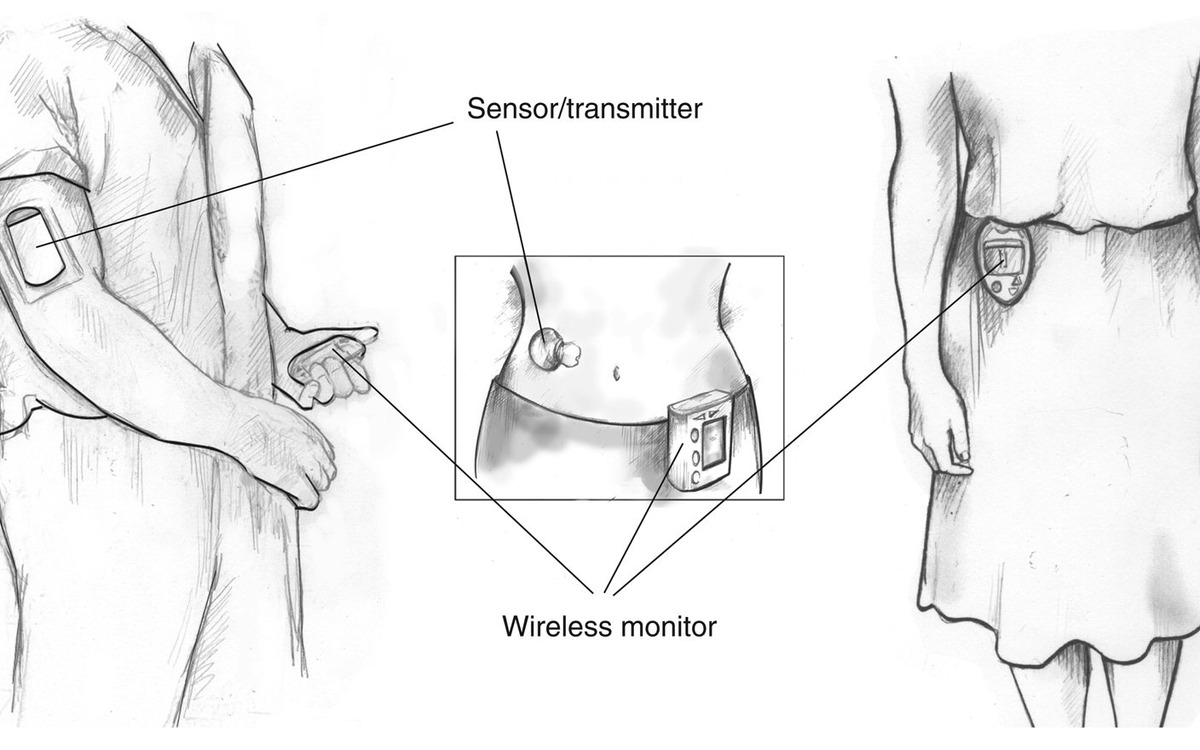
The most interesting development of the past two years isn’t a breakthrough in true noninvasive sensing. It’s the maturation of the “minimally invasive” middle ground. Companies like Biolinq have moved needle-free intradermal biosensors through FDA clearance, using microsensors that sit far shallower in the skin than a traditional continuous glucose monitor, though Biolinq’s device shows glucose ranges rather than numbers and is not cleared for insulin dosing [7, 8]. It’s a pragmatic compromise: not the fingerstick-free dream the field has chased since the 1980s, but a meaningful reduction in the burden of daily monitoring, with data quality that regulators can actually trust.
On the optical and electromagnetic side, companies including DiaMonTech, GlucoTrack, and Know Labs continue to report improving Mean Absolute Relative Difference (MARD) figures, the standard metric for glucose sensor accuracy, under controlled conditions, from around 11% [9] to roughly 20% [10, 11, 12], against the high single digits typical of cleared continuous glucose monitors [13]. That’s a meaningful engineering achievement and a long way from something a clinician would trust for insulin dosing in free-living, non-fasting patients. DiaMonTech’s shoebox-sized D-Base has been the platform for its clinical studies [10], while its more consumer-friendly D-Pocket remains in development with no launch date announced [14], a timeline that has already slipped before.
Newer entrants are, revealingly, hedging their bets on device form factor rather than sensing physics. At CES 2026, Singapore-based Sensura presented a two-pronged platform, a handheld spot-check device and a continuous wearable, built around the same core optical approach earlier companies have pursued, but explicitly framed around the observation that long-term user adherence, not just sensor accuracy, is one of the field’s central unsolved problems [15]. That’s a useful reframing: a technically imperfect device that people actually wear consistently may deliver more real-world value than a more accurate one that ends up in a drawer.
What My Own Work Has Taught Me About the Problem
My own research sits adjacent to this landscape rather than squarely inside the optical-sensing mainstream. Working on biosensor and microfluidic approaches to metabolic monitoring has reinforced a lesson that I think applies across the whole field: the hardest part of noninvasive glucose monitoring usually isn’t the headline sensing modality. It’s everything downstream of the raw signal. Calibration drift across individuals, the gap between lab conditions and free-living use, and the sheer difficulty of validating a device across the skin tones, hydration states, and activity levels of a real patient population are where promising lab results consistently go to die. Any new entrant to this space, including ones working at the university research level, runs into that wall quickly, and it’s a useful corrective to the assumption that a clever sensing principle alone constitutes a solution.
Where the Field Is Actually Heading
Three forces are likely to shape the next several years. First, regulatory bodies are unlikely to loosen their posture on noninvasive claims without population-scale validation data that, to date, no company has produced, meaning the credibility bar keeps rising even as engineering incrementally improves. Second, the market is quietly bifurcating: one track, aimed at people with diabetes who need dosing-grade accuracy, will likely continue to be served by minimally invasive devices such as next-generation CGMs rather than truly noninvasive alternatives, for the foreseeable future. The other track, wellness-oriented metabolic trend tracking for a broader consumer market, has much lower accuracy requirements and is where optical and RF wearables are most likely to find genuine commercial traction, provided marketing stays honest about what the devices can and can’t tell you.
Third, and perhaps most important, the companies most likely to succeed are the ones treating adherence, usability, and real-world validation as first-class engineering problems rather than afterthoughts bolted onto a sensing breakthrough. Fifty years of noninvasive glucose monitoring research has produced no shortage of clever physics. What it has mostly lacked is devices boring enough, comfortable enough, and validated enough that people actually keep wearing them. That, more than any single sensing modality, looks like the real frontier.
Author Bio