This page is the running record of obesity drug news at Life Science Daily News. It tracks what moved in the obesity and GLP-1 pipeline each month. Entries cover trial readouts, regulatory filings, approvals and label expansions. New entries are added monthly, with the newest at the top. The page is updated in place rather than republished, so the record accumulates on a single address. Older entries stay on the page as a dated archive.
How this tracker works
This page records movement, not mechanism. Four things earn an entry. The first is a Phase 2 or Phase 3 readout. The second is a regulatory milestone such as a filing, an acceptance or a target action date. The third is an approval or a label expansion. The fourth is a clinically material safety or supply event. Pricing and reimbursement moves sit outside that boundary. So do financing and deal stories, which belong to our biopharma coverage. Early preclinical work is also excluded. Entries in this obesity drug news log are short by design. Where a drug already has dedicated coverage, the entry points to it rather than repeating it. Readers who want the full map of candidates should start with our guide to the GLP-1 drug pipeline.
August 2026 obesity drug news
The month’s most consequential news came from London. The UK medicines regulator authorised an oral GLP-1 for weight management, ahead of every other European agency. Two large earnings disclosures then reshaped the competitive picture within the same week.
Approvals and label expansions
On 10 August 2026 the Medicines and Healthcare products Regulatory Agency authorised orforglipron, branded Foundayo, for weight management and type 2 diabetes. The MHRA said the decision made the UK the first country in Europe to approve the tablet. Authorisation covers adults with a body mass index of 30 or above. It also covers adults with a BMI between 27 and 30 who have at least one weight-related comorbidity. Treatment sits alongside a reduced-calorie diet and increased physical activity. A second indication covers glycaemic control in insufficiently controlled type 2 diabetes.
Julian Beach is the MHRA Executive Director of Healthcare Quality and Access. He said the agency was pleased to be “the first regulator in Europe to authorise this tablet.”
The tablet is taken once daily at any time of day. There are no food or water restrictions. Dosing begins at 0.8 mg and escalates through five further steps to 17.2 mg. Patients spend a minimum of one month at each dose level. The most common side effects are nausea, constipation, diarrhoea, vomiting, dyspepsia and abdominal pain. The medicine is not currently available on the NHS. Access there requires a separate evaluation by the National Institute for Health and Care Excellence. Lilly began UK supply on 24 August, through private prescription only. The company has indicated private pricing of £100 to £120 per month.
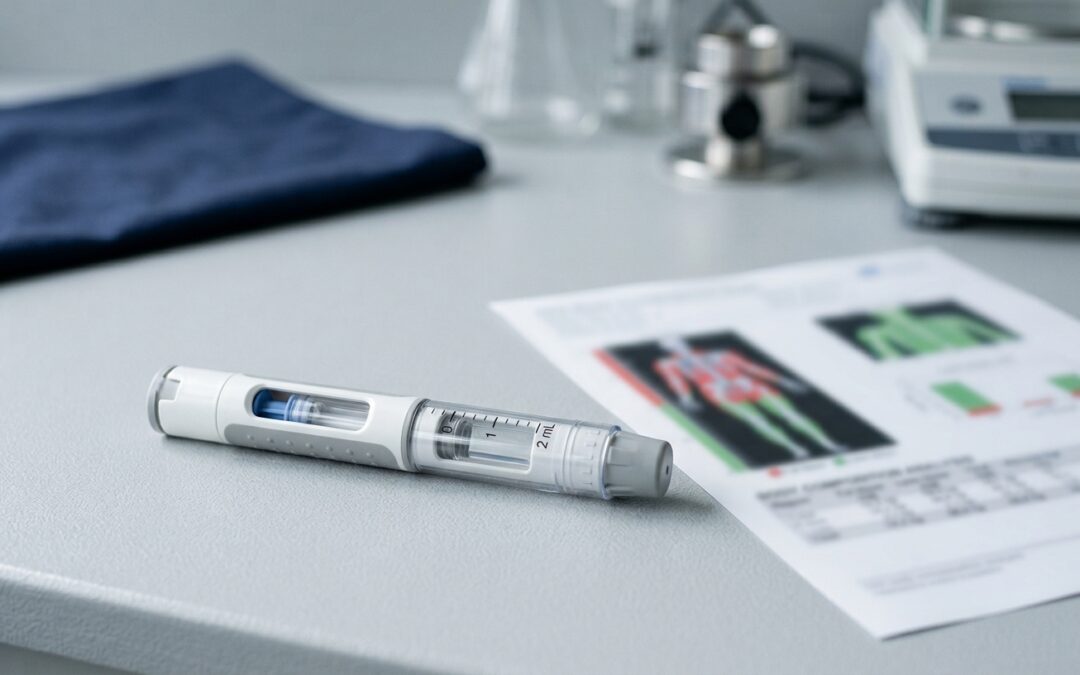
The route of administration is the point of difference here. Orforglipron is a small-molecule GLP-1 receptor agonist rather than a peptide. Peptide drugs such as semaglutide and tirzepatide are broken down in the gut. That is why they are normally injected. A small molecule survives digestion intact, which removes the injection barrier for patients who decline one. It also avoids the fasting window that oral semaglutide requires. This is the structural reason the approval registers as significant rather than routine.
Trial readouts
Novo Nordisk disclosed 68-week results from REIMAGINE 4 alongside its second-quarter figures on 4 August. The open-label trial compared CagriSema against tirzepatide 15 mg in adults with type 2 diabetes. It enrolled roughly 1,000 participants, inadequately controlled on metformin, with or without an SGLT2 inhibitor. Management reported 15.2% weight loss and a 1.9 percentage point reduction in HbA1c for CagriSema, both on the efficacy estimand. The comparator figures were 15.8% and 2.2 percentage points for tirzepatide. The combination met non-inferiority on weight loss but missed it on HbA1c. Both measures formed the dual primary endpoint, so the trial did not succeed on its stated terms. These figures were given in the second-quarter financial report rather than in a standalone data release.
Eli Lilly confirmed on 5 August that the retatrutide clinical data package is now complete. That followed positive topline results from TRIUMPH-2 and TRIUMPH-3, reported on 23 July. In TRIUMPH-3, adults with severe obesity and established cardiovascular disease lost up to 22.6% of body weight at 80 weeks. In TRIUMPH-2, participants with type 2 diabetes lost up to 20.8% at the same timepoint. The package supports global registration in obesity, obstructive sleep apnoea and knee osteoarthritis pain.
Regulatory milestones
Lilly said in its second-quarter results that it plans to submit retatrutide to the US Food and Drug Administration. The target is the first quarter of 2027. Lilly has said it intends to file a Biologics License Application rather than a New Drug Application, though the classification remains subject to unresolved litigation with the FDA. The agency determined that retatrutide is neither a protein nor a biological product. A district court vacated that designation but returned the wider question to the agency, and Lilly has appealed. The distinction carries different exclusivity consequences, twelve years against five, and merits separate attention. Lilly also submitted orforglipron for type 2 diabetes in the United States during the quarter. The FDA had approved the medicine for obesity in April 2026.
CagriSema remains under FDA review for weight management. Novo Nordisk filed its application in December 2025 and expects a decision by late 2026. Novo Nordisk has guided to a higher-dose CagriSema trial beginning in the second half of this year.
Pipeline and supply developments
Amgen discontinued development of AMG 513 on 4 August. The early-stage obesity candidate had been in Phase 1 testing. One Phase 1 study continues so that enrolled participants can be followed through to completion. MariTide is now the company’s only obesity asset in late-stage development. Its Phase 3 MARITIME programme spans chronic weight management, type 2 diabetes, cardiovascular outcomes, heart failure and obstructive sleep apnoea.
Illicit supply remained a live safety issue through the month. Eli Lilly has brought six US lawsuits against sellers of unapproved retatrutide, which is still investigational. Our full report on the retatrutide black market covers the claims in detail.
What to watch in September
The FDA decision on CagriSema is the largest pending event in obesity drug news. Novo Nordisk has guided to late 2026. A rejection or a narrow label would reset expectations for the amylin class. The Seventh Circuit hears oral arguments in Lilly’s appeal against the FDA on 24 September. The outcome determines which application type retatrutide can use and how long its exclusivity would run. The NICE appraisal of orforglipron remains open. NICE has requested further information from Lilly following its first committee meeting and has not set a date for a second review. The appraisal listing carries an expected publication date of 18 November 2026. Further readouts from the TRIUMPH programme are expected before the year ends. The higher-dose CagriSema trial is guided to start dosing in the second half of 2026.
The standing watchlist
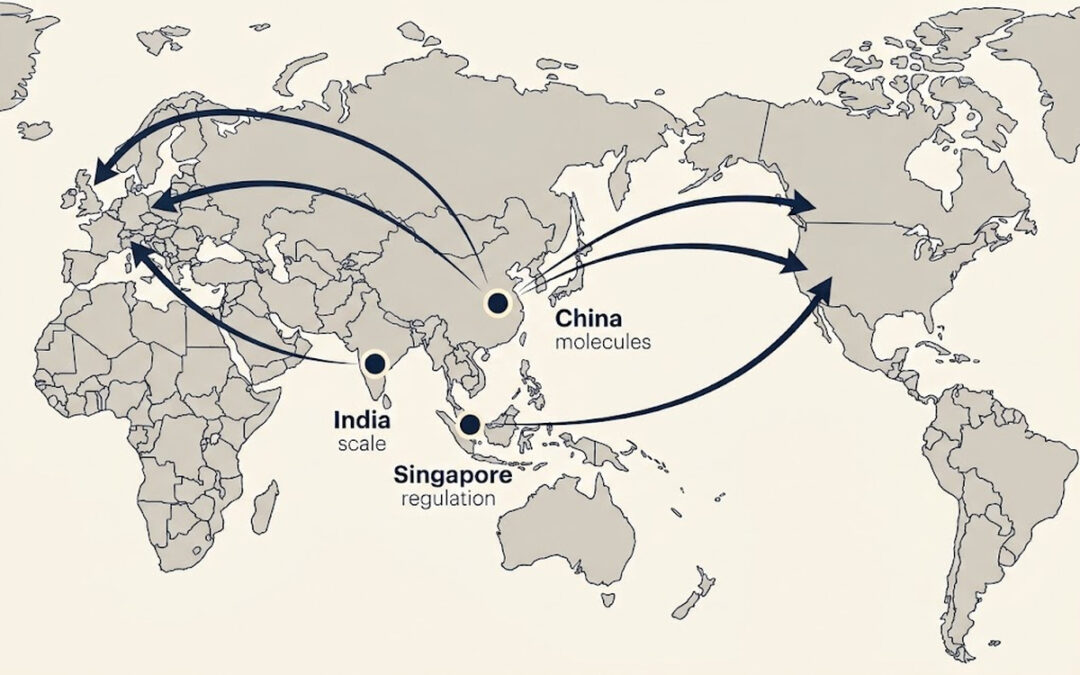
Each month’s review checks the same set of programmes. Semaglutide and tirzepatide are tracked for new indications and outcomes data. Orforglipron, CagriSema and retatrutide are tracked for regulatory progress. MariTide is tracked for extended-dosing data. Next-wave candidates include zenagamtide, formerly known as amycretin, alongside survodutide and pemvidutide. China-origin agonists such as mazdutide and ecnoglutide are tracked for approvals and data. Those entries are cross-referenced to our coverage of Asian biopharma innovation.
How this log is sourced
Every figure, approval and date in this log is attributed to a named source and dated. Regulatory claims are taken from agency publications. Trial figures are taken from company announcements or peer-reviewed papers. Where a company reports results in an earnings disclosure rather than a dedicated release, the entry says so. Cross-trial comparisons always state the timepoint, because weight-loss percentages are not comparable across different study durations. Estimand types are named where they affect the figure quoted. Corrections to any entry are made in place, and the updated date is changed to match. Readers assessing tolerability alongside efficacy should consult our review of GLP-1 side effects. Prescribing patterns by market are covered in our analysis of GLP-1 uptake by country.