
Oral GLP-1 manufacturing is now the binding constraint in obesity, not patient acceptance. The question is peptide capacity, tabletting lines and capital committed ahead of demand.
Two weight loss tablets have reshaped the obesity market in under a year. Novo Nordisk’s Wegovy pill reached United States pharmacies in January 2026. Eli Lilly’s Foundayo followed in April. The Wegovy pill has run well ahead of forecasts. Foundayo’s US launch was slower out of the gate before inflecting in late July. The central question in the category has shifted. It is no longer whether patients will accept a pill. It is whether oral GLP-1 manufacturing can keep pace with what they are asking for.
Demand has arrived fast, and unevenly
The scale of early uptake is unusual even by GLP-1 standards. Novo Nordisk reported more than five million cumulative US prescriptions for the Wegovy pill 30 weeks after launch. Weekly US prescriptions for the pill exceeded 265,000 in the week ending 17 July 2026. That is the company’s own count, which includes direct-to-patient and telehealth channels. The company estimates that roughly 1.5 million people are now on the pill globally.
Lilly’s launch has followed a similar trajectory. On the company’s second quarter call, management said active prescribers had reached 36,000. That compares with roughly 8,000 discussed on the previous quarter’s call. Lilly also said it retained full supply for sampling across that prescriber base.
International demand has been sharper still. Around 20 million adults in the UK live with obesity, according to Novo Nordisk. Before the tablet launched, roughly 1.6 million were on an obesity medicine. The company estimates that about 300,000 patients were on the Wegovy pill after three weeks. Its UK obesity market share moved from about 30% to 45% in the weeks that followed. The pill became broadly available there in early July. Emil Kongshøj Larsen, who leads international operations, attributed the response to pent-up demand.
Analysts expect the pattern to continue. J.P. Morgan Research estimates that around 25 million Americans will be using a GLP-1 by 2030. That compares with roughly 10 million in 2025. Global penetration remains low, at about 7% of diabetes patients and 2% of people living with obesity. Both tablets also sit within a much broader GLP-1 drug pipeline that keeps moving toward oral formats.
Why oral GLP-1 manufacturing is harder than it looks
A tablet looks simpler than a pen. The chemistry underneath tells a different story, at least for peptides.
Oral semaglutide has a bioavailability on the order of one percent. Almost all of each dose is lost before it reaches the bloodstream. The maintenance dose of the Wegovy pill is therefore 25 mg daily. Injectable Wegovy is given weekly at a standard maintenance dose of 2.4 mg. Each patient on the tablet consumes far more active ingredient than a patient on the pen.
That arithmetic lands directly on peptide capacity. Writing in The Medicine Maker, the chemist Achim Link of Solvias set out the industry benchmarks. Typical peptide processes consume roughly 13,000 kilograms of input for each kilogram of active ingredient. Small molecule processes average 168 to 308 kilograms. Many biologics sit at around 8,300 kilograms.
“The issue is not scientific novelty; it is manufacturing physics,” Link wrote. He described large-scale solid-phase peptide synthesis as capital intensive and solvent hungry. He also noted that efficiency gains from process intensification flatten sooner than in conventional chemistry.
Two molecules, two very different supply chains
The two approved oral products are not equivalent in production terms. Semaglutide is a peptide of 31 amino acids. Novo Nordisk produces the active ingredient before tabletting and packaging it. The tablet is co-formulated with an absorption enhancer, salcaprozate sodium, known as SNAC.
Orforglipron is a non-peptide small molecule. It is made by conventional chemical synthesis, without peptide synthesis or cold chain distribution. That difference explains why Lilly has sounded confident about supply from the outset. Small molecule routes are cheaper to run and easier to transfer between sites.
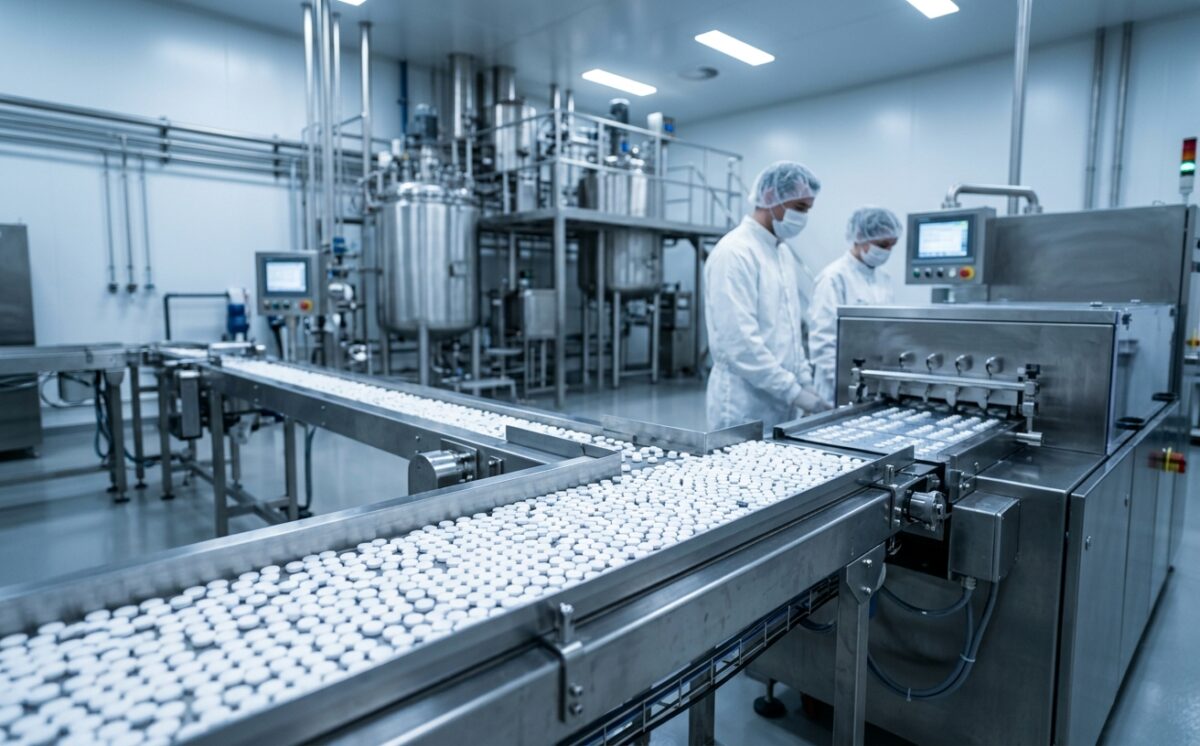
Both products meet the same downstream constraint. Novo Nordisk treats filling and tabletting as distinct stages of its supply chain. Tabletting and packaging capacity is a different asset base from sterile fill-finish. Much of what the industry built for injections does not convert to tablets.
Novo Nordisk retools for tablets
Novo Nordisk has been rebalancing its network accordingly. In March 2026 it announced a €432 million upgrade of its Monksland site in Athlone, Ireland. The 45 acre tabletting facility employs around 260 people. Construction will be finalised gradually from the end of 2027 through 2028.
Kasper Bødker Mejlvang, executive vice president for CMC and product supply, framed the investment plainly. He said the expansion strengthens the company’s ability to meet current and future demand outside the United States.
Within the United States, oral production runs on a separate track. Novo Nordisk’s Clayton campus in North Carolina includes a site producing the active ingredient for its oral semaglutide tablet. That product is marketed in the US as Ozempic pill. The company also runs an oral manufacturing and packaging site in Durham. The $4.1 billion fill-finish plant announced at Clayton in 2024 is not part of that chain. It will fill and package syringes and injection pens, capacity that does not transfer to tablets. Novo Nordisk has said the Wegovy pill is produced in its North Carolina facilities, without naming the specific site.
The transition has not been costless. The company’s half year report recorded one-off costs of around DKK 3 billion. Those costs related to right-sizing manufacturing capacity agreements. Adjusted gross margin fell to 78.2% in the second quarter, from 82.7% a year earlier. The company still expects capital expenditure of around DKK 55 billion in 2026.
Chief financial officer Karsten Munk Knudsen was more optimistic about headroom. He told analysts that a first product had been validated at a new active ingredient facility. Utilisation there remains very low. That spare capacity is earmarked for international Wegovy pill supply.
Lilly builds ahead of the curve
Lilly took the opposite approach: build early, then stockpile. Its 2025 annual report disclosed pre-launch inventory capitalised at $1.5 billion. Most of that related to orforglipron, months before the FDA reached a decision.
The build-out has been broad. In May 2026 Lilly committed a further $4.5 billion across two of its three Lebanon sites in Indiana. Total Indiana commitments since 2020 now exceed $21 billion. The Lebanon active ingredient site is planned to produce both Foundayo and retatrutide.
Europe features in the plan too. In November 2025 Lilly announced a $3 billion oral medicines plant at Katwijk in the Netherlands. The site is expected to bring 500 permanent roles and around 1,500 construction jobs. It is one of several selected to make orforglipron. A Puerto Rico expansion of more than $1.2 billion should begin orforglipron production by the end of 2028.
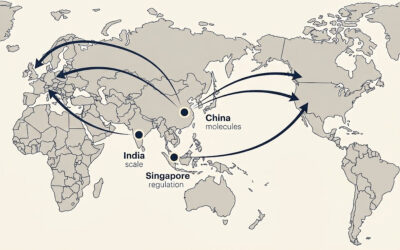
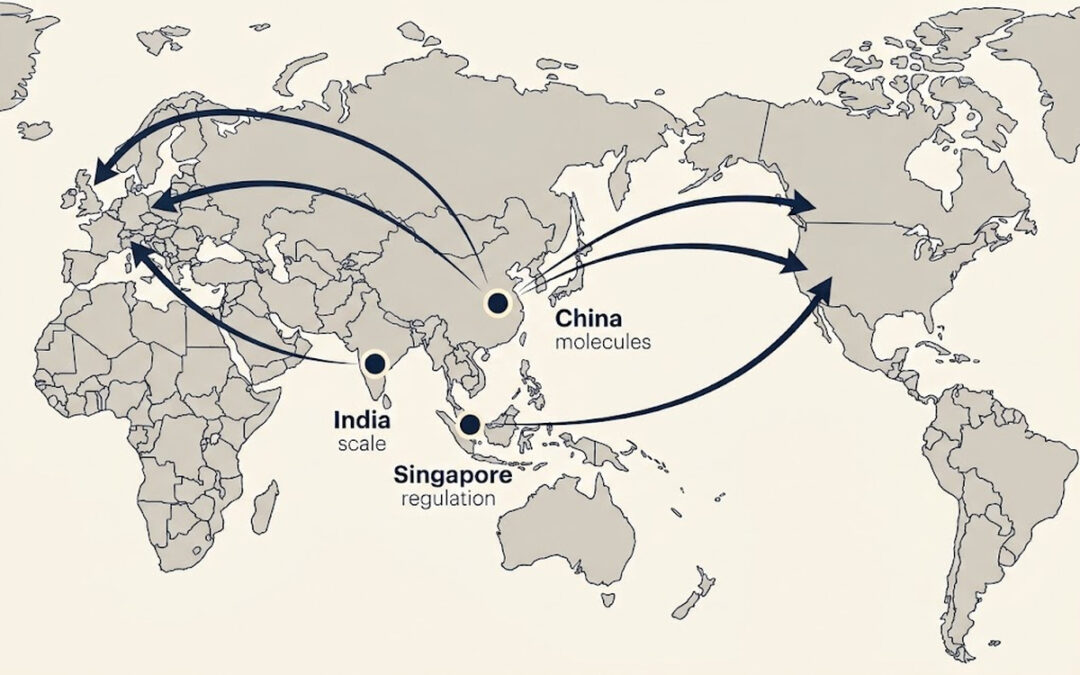
In March 2026 the company added a $3 billion, ten year commitment in China. That programme covers a localised production and supply system for oral solid dosage forms. It includes a $200 million agreement with the contract manufacturer Pharmaron.
Patrik Jonsson, president of Lilly International, was direct on the second quarter call. “We are extremely well positioned here in terms of supply,” he said.
Britain becomes the real international test
The UK has become an early proving ground for oral GLP-1 supply outside the United States. The MHRA approved the semaglutide tablet on 11 June 2026. It was the first GLP-1 receptor agonist tablet licensed for weight loss in the UK. The European Medicines Agency granted approval in July 2026. Launches are expected in select EU markets during the second half of the year.
Julian Beach is the MHRA executive director of healthcare quality and access. He said the tablet met the agency’s standards for safety, quality and effectiveness.
Access remains uneven. The tablet is available on private prescription while NICE conducts its technology appraisal. NHS availability depends on that outcome. Demand has nonetheless outrun the formal reimbursement process.
Lilly’s international rollout has been more staged, though it has just accelerated. Foundayo launched in the United Arab Emirates in early May 2026. On the second quarter call, management said Mexico and Saudi Arabia would follow next. Most remaining launches were expected during 2027. The UK arrived sooner than that. The MHRA authorised orforglipron on 10 August 2026. Britain was the first country in Europe to approve it, for both weight management and type 2 diabetes. It reached UK pharmacies on private prescription on 24 August. NHS access again depends on a NICE evaluation, which Lilly says it is working through. Britain is therefore no longer a single-product test of international oral supply. Two oral GLP-1s are now serving the same market from entirely separate tabletting networks.
Where the pressure could still build
Three risks stand out over the next two years.
The first is misallocation. The DKK 3 billion charge at Novo Nordisk shows what happens when capacity suits the wrong format. Building the wrong asset is now as costly as building too little.
The second is loss of exclusivity. Novo Nordisk reported semaglutide generics reaching India from late March 2026, when the compound patent there expired. By the second quarter it was reporting lower realised prices in Canada following loss of exclusivity. Volumes there remained broadly stable. Brazil has also seen generic entry. Peptide capacity cannot be bought off the shelf, so generic supply will scale slowly.
The third is the demand curve itself. Novo Nordisk puts global branded obesity market volume growth at 81% on a moving annual total basis to May 2026. It also reports reaching around 5 million people with its branded obesity medicines. An estimated 934 million people live with obesity worldwide. If treated share rises materially, tabletting capacity becomes the binding constraint across the sector.
The verdict for now
On the evidence available in August 2026, oral GLP-1 manufacturing is holding up. Neither company has reported a supply constraint on its oral product in public disclosures to date. Both have committed capital ahead of demand rather than behind it.
That marks a change from the period between 2022 and 2024, when injectable shortages defined the category. The lesson of those years appears to have been absorbed. Whether the capital proves sufficient depends on how far the market expands from here.