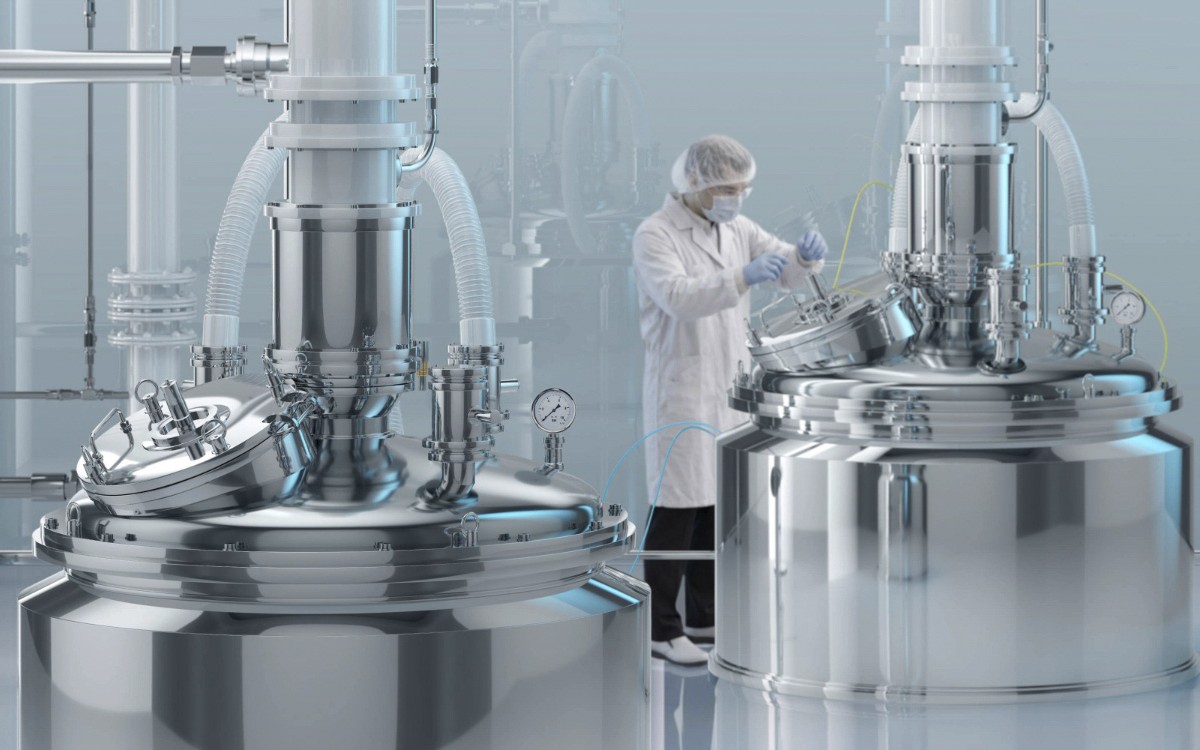
The rapid growth of biologics and other advanced therapeutic modalities is transforming pharmaceutical R&D and manufacturing. From monoclonal antibodies and oligonucleotides to cell and gene therapies, these products introduce a level of process complexity, technical specialisation and capital intensity that far exceeds that of many traditional small-molecule medicines. As companies look to bring increasingly sophisticated therapies to market faster and more efficiently, the ability to understand and control processes in real time, through process analytical technology (PAT), is quickly becoming a competitive advantage.
Until a few years ago, the pharmaceutical industry was dominated by small-molecule drugs, typically delivered as relatively simple tablets, capsules or liquid injections. Since then, the industry has moved into increasingly complex modalities, from peptides and oligonucleotides to cell therapies and gene therapies, alongside sophisticated drug-delivery technologies designed to get these therapies to the right place in the body.
As more biopharmaceuticals are being developed and produced, the sales of such products have been growing significantly. Small molecules still accounted for an estimated 55 to 60% of the pharmaceutical market in 2025, but biologics and biosimilars now represent roughly 40 to 45% [1], depending on the market definition and source. And the trajectory is clear: according to Evaluate’s World Preview 2026, seven of the top ten products forecast for 2032 are biologics or peptides [2].
PAT supports the growth of biopharmaceuticals
For developers and manufacturers, that growth represents a substantial opportunity to drive profitability. But biologics are not simply a higher-value version of the traditional pharmaceutical model, and capturing attractive returns is far from automatic. Multiple operational factors can potentially put pressure on returns on capital. For example, without the proper approach, biopharmaceuticals can be many times more expensive to develop and manufacture than small molecule drugs, in some cases costing patients over 20 times as much [3,4].
This is often due to the necessary high upfront investment as well as the complex processing involved and the potentially enormous cost of batch failures or out-of-specification products. These elements require R&D and manufacturing teams to have an in-depth understanding of each and every step. Thus, it is becoming increasingly crucial for organisations to find suitable ways to serve a rapidly growing market, while creating an operating model that can deliver attractive, sustainable returns on capital.
The most effective way to drive efficiency, quality and, in turn, profitability while cutting risk, is by shifting from Quality by Testing (QbT) to Quality by Design (QbD) approaches that are backed by a robust, science-based understanding of materials, processes and their interactions.
Process Analytical Technology (PAT) is what makes QbD actionable, as it integrates analytical technologies and data-driven predictive models to offer on-the-fly insights into process behaviour and product quality [5]. As a result, PAT can guide R&D and manufacturing activities alike by supporting the understanding, development and control of biologics processes.
More precisely, scientists leveraging PAT for biopharmaceutical development can rapidly evaluate process behaviour, identify critical process parameters (CPPs) as well as their relationship with critical quality attributes (CQAs) and build a deeper understanding of how changes in materials and operating conditions affect product quality. This knowledge can then inform process optimisation, scale-up and technology transfer [6].
Even more, QbD is actively encouraged by regulatory bodies, such as the United States’ Food and Drug Administration (FDA), the European Medicines Agency (EMA) and the International Council for Harmonisation (ICH) [7]. Besides, it can streamline regulatory approval by offering companies a way to provide agencies with detailed insights into how a drug is designed and how it works [7,8].
In full-scale manufacturing facilities, PAT is the enabler for responsive process control and continuous processing, allowing variability to be detected and addressed earlier rather than discovered through end-product testing. As a result, it can cut expenditure, especially the potentially enormous cost of batch failures or out-of-specification products, while enabling profitable regulatory-compliant real-time release testing (RTRT) [9].
PAT for AI-aided biopharmaceutical operations
PAT is also exceptionally useful to support the broader shift towards digital manufacturing and data-driven decision-making. This is particularly relevant as companies continue to invest in artificial intelligence (AI) for process optimisation, predictive monitoring, control and batch failure prevention. In such instances, the performance of algorithms depends heavily on the availability, quality and volume of data.
Offline data alone cannot provide the continuous streams of information needed to support many advanced analytics and AI applications, as without reliable, high-quality and sufficiently granular process data, organisations risk investing in sophisticated algorithms without addressing the underlying data challenge. PAT can provide this real-time visibility into the manufacturing process, creating an important foundation for more data-driven approaches to process understanding, optimisation and control.
Building a PAT strategy
While there is no one-size-fits-all approach to process analytical technology, a number of key considerations can help businesses maximise the opportunities PAT presents and build a strong foundation for success.
Firstly, it is important to have clear objectives on what activities PAT should support. In R&D and drug innovation, the framework’s value is primarily in its ability to generate an in-depth understanding of how the products should be made to offer a robust, consistent drug. In full scale manufacturing and generics production, PAT is a key asset to effectively scale up and drive the efficient production of on-spec medicaments.
Another important consideration is the maturity of the instrumentation used for PAT frameworks and their readiness for adoption. In effect, some technologies may be highly effective in discovery and product development but less suited to commercial manufacturing.
As an analytical setup moves from R&D into manufacturing, the requirements and expectations can change significantly, particularly around regulatory compliance, process robustness and the performance of sensors and analytical systems. For example, spectroscopic techniques, such as near-infrared (NIR) and Raman spectroscopy offer established and robust approaches for process monitoring. However, the requirements can differ significantly between upstream and downstream processing. Thus, while they can be valuable in upstream applications, their sensitivity and selectivity may limit their ability to meet the quality and verification requirements of some downstream processes.
This also highlights the importance of considering return on investment when selecting the components of a PAT system. Businesses need to assess not only the value a technology can deliver in its initial application, but also its potential to scale and transition into manufacturing.
From technology selection to full PAT implementation
A robust PAT strategy therefore starts with the product and process journey. One practical approach is to assess each unit operation individually, mapping the process parameters that need to be controlled against the critical quality attributes of the product. Businesses can then identify which available technologies are capable of measuring those attributes under the relevant process conditions.
Developing a PAT tool is only the beginning, though, as the system does not operate in isolation. Its data and analytical models need to integrate with systems such as laboratory information management systems (LIMS), manufacturing execution systems (MES), chemometric models and data historians. Understanding how these components work together and how they can be integrated is essential to create a comprehensive, robust digital infrastructure for modern pharmaceutical manufacturing operations.
Finally, successful implementation also depends on having the right organisational structure and capabilities. PAT sits at the intersection of several disciplines, including process engineering, analytical science, data science, automation and regulatory affairs. As a result, organisations can take different approaches to where PAT sits within their structure. In some organisations, it is part of the process engineering function, while in others, it sits within digital or analytics teams.
There is no single organisational model that will work for every business. However, because PAT draws on such a diverse range of expertise, effective collaboration across these functions is essential. This multidisciplinary approach is particularly important for organisations using the framework to embrace more automated, real-time decision-making. Process engineers may focus on using PAT to understand and improve a process, while analytical and regulatory specialists bring expertise in measurement science, control strategies and regulatory expectations.
Ultimately, the success of PAT depends on more than the technology itself. It requires an end-to-end approach that connects the analytical tool with the process, digital infrastructure, regulatory framework as well as people responsible for implementing and using it.
With the right strategy, technology and cross-functional expertise in place, process analytical technology can create a compelling opportunity for both manufacturers and end users. For industry players, it can establish more efficient and predictable processes that can support stronger productivity, competitiveness and profitability. For patients, the benefits can translate into a shorter and more reliable journey from innovation and development to the availability of medicines.
Author Bio

Dr Anna Codina is Senior Director of Strategy and Business Development at SciY. She is a business strategist with a track record of driving growth and more than 20 years of experience working in and for the biopharmaceutical industry. Dr Codina combines strong business acumen and customer focus with a scientific background in biotechnology, pharmaceutical sciences, analytical chemistry, and NMR spectroscopy. Throughout her career at Pfizer, Bruker and SciY, she has helped organizations adopt innovative technologies and approaches to improve productivity across R&D and manufacturing. Her current focus is enabling digital transformation, data-driven decision-making, laboratory automation, and AI readiness across the pharmaceutical and life sciences sectors.

Dr Atanu Sengupta is Senior Director, New Technology and External Collaborations at Dr. Reddy’s Laboratories, and a pharmaceutical R&D leader with more than 20 years of experience in advanced analytics, Process Analytical Technology (PAT), and data-rich measurement science. Based in Hyderabad, he leads enterprise strategy for next-generation analytics, PAT architectures, and external innovation partnerships that speed up product development.
He was previously Principal Scientist/Scientific Director at Merck & Co., USA, where he led data-rich measurement programs across vaccine platforms. Before that, he was Director of PAT at Enquyst Technologies, where he designed PAT platforms for biopharmaceutical manufacturing. Earlier, he spent nearly ten years at Dr. Reddy’s, where he built a GMP-compliant Advanced Characterization Center of Excellence that supported regulatory filings, technology transfers, and product launches. He began his career in the United States as principal investigator on NSF- and NIH-funded innovation grants. He was also a senior investigator on several federally funded small business innovation programs.
An early pioneer of surface-enhanced Raman spectroscopy (SERS)-based nanoplasmonic platforms for biosensing, Dr Sengupta has published widely in spectroscopy and chemical and biological sensing. He also holds patents in spectroscopic sensing devices. He earned a dual PhD in Chemistry and Nanotechnology from the University of Washington and a B.Tech from the University of Calcutta. He is a strong advocate for Pharma 4.0, smart laboratories, and “one-touch” manufacturing powered by real-time sensors and digital twins.