Depression care continues to evolve as researchers explore why people respond differently to treatment. One area drawing attention is the relationship between the gut microbiome and the brain. Could psychobiotics, which target this connection, offer additional support for people living with depression?
In our co-authored letter, “Psychobiotics as adjuncts in depression management: Mechanistic insights and clinical perspectives” [1], we explored the scientific rationale, emerging evidence and unanswered questions surrounding this approach. The discussion focuses on psychobiotics as a potential addition to established depression treatment.
Understanding the gut–brain connection
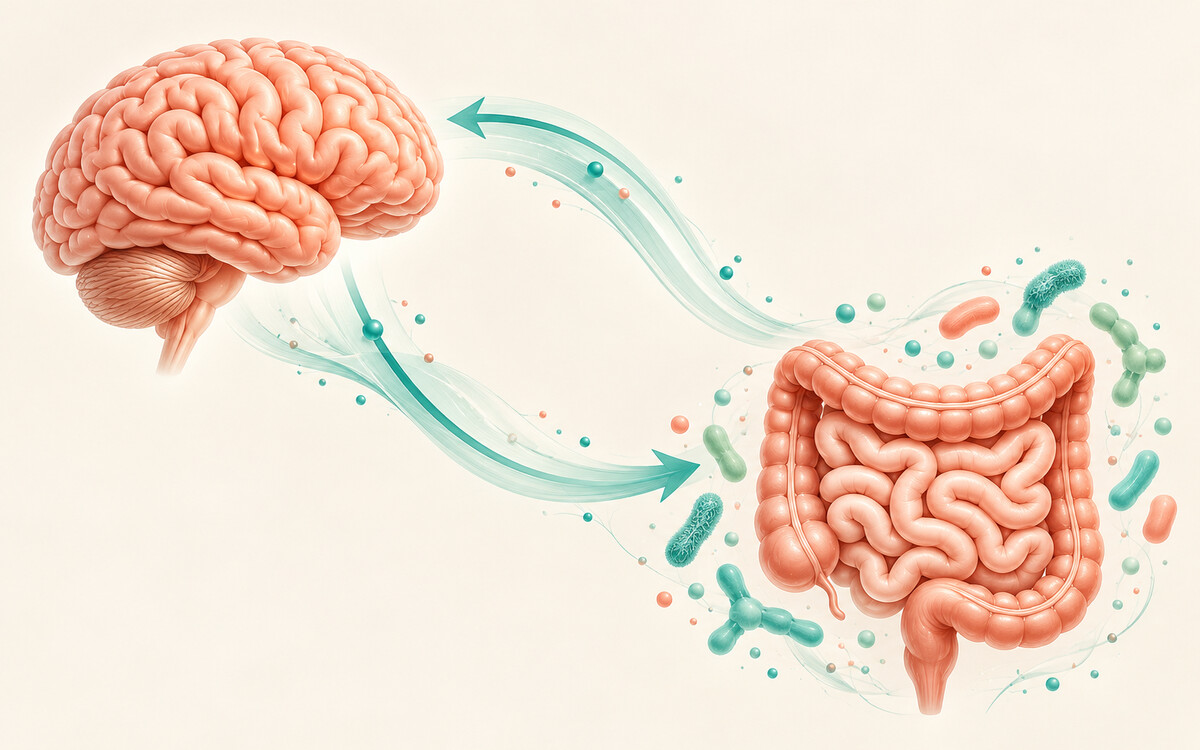
The gut and brain communicate through a network involving nerves, hormones, immune signals and microbial metabolites. This communication works in both directions: stress can affect digestive function, while activity within the gut may influence processes relevant to mood.
Psychobiotics are microorganisms studied for their potential mental health benefits through this connection. Researchers have investigated particular strains of bacteria, including members of the Lactobacillus and Bifidobacterium groups. However, a finding involving one strain or combination cannot automatically be applied to every probiotic product.
How might psychobiotics influence mood?
Our paper discusses several proposed pathways [1]. These include effects on stress-response systems, neurotransmitter-related processes, inflammation and the intestinal barrier. Microbial products, such as short-chain fatty acids, may also contribute to communication between the gut and the rest of the body.
These mechanisms offer reasons to investigate psychobiotics, but they require careful interpretation. Findings from laboratory experiments and animal models do not necessarily translate into meaningful benefits for people with depression. Understanding how a treatment might work is only one part of establishing whether it works.
What does the clinical evidence show?
Early human studies offer encouraging signals. A 2023 pilot randomized clinical trial published in JAMA Psychiatry examined probiotic supplementation in 49 adults with major depressive disorder who had an incomplete response to antidepressants [2]. Over eight weeks, participants receiving the probiotic showed greater improvement than those on placebo on several measures of depression and anxiety.
The study supported further investigation, but its size and pilot design mean it should not be treated as definitive proof of effectiveness. Larger trials are needed to establish how reliable and clinically meaningful these benefits are.
Not every trial has shown a benefit, and it is worth being clear about that. In a double-blind, placebo-controlled trial in 79 adults with low mood, Romijn and colleagues (2017) found no significant difference between an eight-week course of Lactobacillus helveticus and Bifidobacterium longum and placebo on any psychological outcome measure [3]. Chahwan and colleagues (2019) tested a multi-strain probiotic against placebo over eight weeks in 71 adults with mild to severe depressive symptoms: symptoms eased in both groups, but the probiotic group did not improve significantly more than placebo, and the only between-group difference was a reduction in cognitive reactivity [4]. The PROVIT trial (Reininghaus et al., 2020) compared a multi-strain probiotic with placebo over four weeks in 82 inpatients receiving standard antidepressant treatment, with both groups also given vitamin B7, and reported the same pattern: both groups improved, with no significant difference between probiotic and placebo [5]. A 2021 meta-analysis of seven randomized trials by Nikolova and colleagues reached a nuanced conclusion: probiotics showed a meaningful effect when used as an adjunct to antidepressants, but no significant benefit as a stand-alone treatment [6]. Taken together, these results suggest the effect depends on strain, dose, duration, and the treatment context, and that where probiotics help, they are more likely to help alongside standard treatment than in place of it.
The broader research discussed in our paper also highlights differences in bacterial strains, formulations, treatment durations and participant characteristics. Those differences matter when interpreting results and considering whether findings could apply to an individual patient.
What still needs to be answered?
Important questions remain about which strains may help, who is most likely to benefit, and how long any improvement lasts. Researchers also need stronger evidence on long-term safety, sustained remission and relapse prevention.
Although tolerability findings from small studies are reassuring, they do not establish that every product is suitable for every patient. Psychobiotics should not be presented as a proven replacement for antidepressants, psychotherapy or other established care. Anyone considering supplementation should discuss it with their treating clinician.
Looking ahead
Psychobiotics offer an interesting direction for research into more individualized depression care. Their value will depend on well-designed studies that connect biological findings with outcomes that matter to patients.
The opportunity is to investigate the gut–brain connection with both curiosity and care: recognizing promising findings while being clear about what remains uncertain.
Author Bio