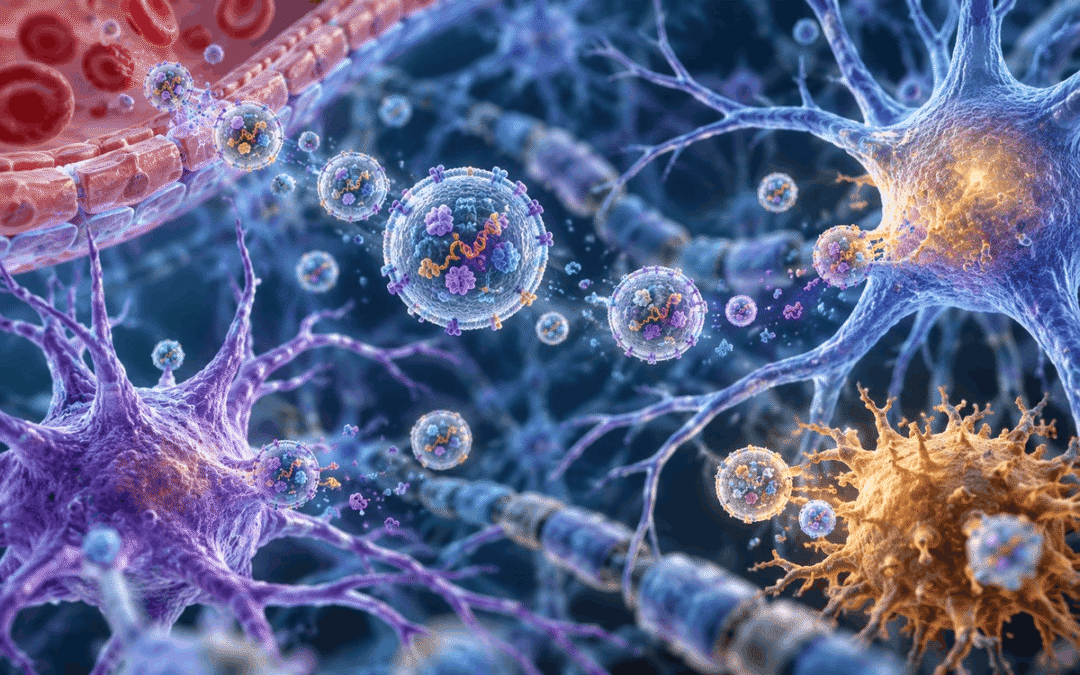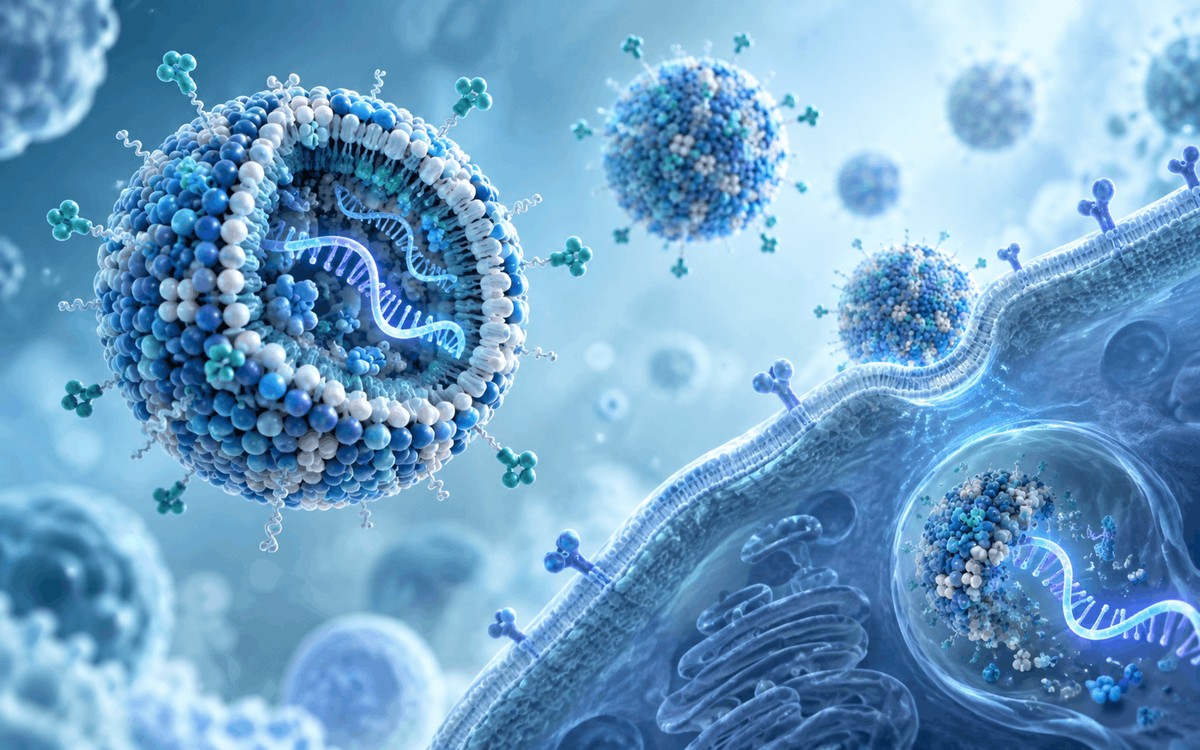
For RNA therapeutics, encapsulation efficiency is a formulation metric—not proof of functional delivery. The development of lipid nanoparticle (LNP) RNA delivery systems is entering a more demanding phase. As nucleic acid therapeutics expand beyond conventional siRNA and mRNA into self-amplifying RNA (saRNA), genome-editing cargos, and other complex modalities, researchers increasingly need delivery systems engineered around the cargo, biological destination, and desired functional outcome.
LNPs have already enabled clinically approved siRNA and mRNA products, demonstrating the potential of lipid-based technologies to overcome major barriers associated with nucleic acid delivery. But clinical precedent does not mean that one successful formulation architecture can be applied universally to new RNA cargos.
The emerging challenge is therefore not simply how much RNA a nanoparticle can encapsulate, but whether the complete cargo–carrier system can achieve functional delivery.
High Encapsulation Efficiency Is Only the Starting Point
A highly loaded nanoparticle is not necessarily an effective RNA delivery system. After administration, an LNP may need to remain sufficiently stable in a biological environment, reach the intended tissue, interact with relevant cells, facilitate cellular uptake and intracellular trafficking, and release intact cargo where it can perform its biological function.
This means formulation development needs to connect physicochemical properties with biological outcomes. Recent research has also highlighted the complexity of relationships among LNP composition, internal structure, morphology, heterogeneity, and biological efficacy. Consequently, rational development may require researchers to evaluate several interconnected parameters:
- Particle size and size distribution
- Encapsulation efficiency and cargo integrity
- Lipid composition and surface characteristics
- Formulation and storage stability
- Cellular uptake and intracellular trafficking
- Cargo release and functional biological activity
The implication is straightforward: an effective RNA delivery system should be optimized for functional performance, not for an isolated formulation metric.
Increasing Cargo Complexity Changes LNP Design Requirements
The optimal lipid carrier depends on cargo structure, target tissue, intracellular destination, and functional endpoint. Different nucleic acid cargos impose different constraints on delivery systems. RNA length, molecular architecture, chemical modifications, structural stability, dose requirements, and desired duration of activity can all influence formulation priorities.
This becomes particularly important as researchers investigate larger or more structurally complex cargos. For example, saRNA contains genetic machinery enabling intracellular RNA amplification and is generally larger and more structurally complex than conventional non-replicating mRNA. These characteristics can create additional challenges involving RNA integrity, nanoparticle formulation, cellular entry, and productive intracellular release.
Genome-editing systems introduce another layer of complexity. Lipid nanoparticles are being investigated for delivering nucleic acid-based genome-editing platforms, but formulation requirements can vary according to the editing components and biological application.
Rather than developing the therapeutic cargo first and addressing delivery afterward, these trends support a more integrated approach in which cargo design and carrier engineering inform each other from the beginning.
Extrahepatic Delivery Remains a Critical Engineering Frontier
Successful RNA delivery requires the right cargo to reach the right cells—not simply the formation of a stable nanoparticle.
The liver has been an important target for clinically successful LNP technologies, but expanding nucleic acid therapeutics to tissues and cell populations beyond established hepatic targets remains a significant challenge.
Extrahepatic delivery depends on more than particle stability or systemic exposure. Researchers may need to consider biodistribution, tissue access, cellular specificity, uptake mechanisms, intracellular trafficking, and endosomal escape.
This distinction is especially important when interpreting experimental results. Strong cellular uptake, for example, does not necessarily demonstrate productive delivery if the nucleic acid remains trapped intracellularly or fails to reach its required site of action.
For emerging RNA therapeutics, where functional delivery occurs can be as important as how efficiently the cargo is encapsulated.
LNPs vs. Liposomes: The Cargo Should Guide the Carrier
The question is not whether LNPs or liposomes are universally better, but which architecture best fits the development objective.
LNPs have become particularly prominent for nucleic acid delivery following their clinical application in siRNA and mRNA therapeutics. Their continued development is extending toward additional RNA formats and genome-editing applications.
Liposomes provide another adaptable lipid-based architecture. Lipid composition, particle size, charge, surface characteristics, and functional groups can be modified according to payload properties and intended biological applications.
Carrier selection should therefore begin with the development problem rather than the popularity of a particular technology.
Researchers can ask:
1. What Does the Cargo Require?
RNA length, structure, modification, stability, concentration, and desired duration of activity can influence lipid selection and formulation conditions. A carrier optimized for one nucleic acid format should not automatically be expected to perform equally well with another.
2. Where Must Functional Delivery Occur?
The relevant tissue, cell population, and intracellular destination should help guide formulation strategy. This consideration becomes particularly important for extrahepatic applications.
3. What Endpoint Will Define Success?
Particle size, polydispersity, surface characteristics, encapsulation efficiency, and stability provide essential characterization data, but they become more informative when connected with cellular uptake, intracellular delivery, protein expression, gene silencing, editing efficiency, or another functional endpoint.
Together, these questions provide a practical framework for moving from nanoparticle formulation toward delivery-system engineering.
Connecting Formulation Development With Functional Validation
The growing complexity of RNA therapeutics also changes what researchers may need from a lipid delivery development partner.
Rather than treating formulation, characterization, and biological evaluation as isolated activities, an integrated development workflow can connect:
cargo-specific formulation optimization → physicochemical characterization → cellular uptake and intracellular delivery → functional validation → formulation comparison and selection
Creative Biolabs applies this development logic through its LipoDrive™ lipid-based delivery platform, supporting LNP and liposome formulation, characterization, lipid modification, custom lipid development, and nucleic acid delivery research.
Such an approach can help researchers address practical development questions: Which formulation is most compatible with the cargo? Which physicochemical differences translate into biological differences? Does increased uptake improve functional delivery? And which candidate should move forward for subsequent investigation?
The objective is not simply to produce nanoparticles with favorable specifications, but to generate evidence that supports formulation selection and downstream research decisions.
From Successful Nanoparticles to Better-Engineered Delivery Systems
The clinical success of lipid-based nucleic acid delivery has established LNPs as an important technology platform. The next phase of development, however, is likely to depend increasingly on understanding how cargo properties, lipid composition, nanoparticle structure, biological targets, and functional endpoints interact. As RNA modalities become more diverse, the carrier can no longer be viewed as a universal container.
For next-generation RNA delivery, cargo and carrier should be treated as one integrated engineering problem. Researchers evaluating LNP or liposome strategies for nucleic acid delivery can explore Creative Biolabs’ lipid-based delivery development solutions, including formulation optimization, characterization, and cargo-specific delivery research: https://www.creative-biolabs.com/lipid-based-delivery/.
For researchers interested specifically in saRNA, Creative Biolabs also offers the educational webinar “Engineering saRNA Delivery Systems for Therapeutics,” featuring Anna Blakney, PhD, of the University of British Columbia:
Author Bio
Dr. Emily R. Coleman is a senior scientist at Creative Biolabs with a background in immunology, oncology research, and translational biotherapeutic development. Her work focuses on translating complex biological mechanisms into practical experimental strategies for next-generation therapeutic discovery, spanning both immune system biology and disease modeling platforms.
In addition to her core expertise in tumor immunology and antibody engineering, Dr. Coleman has contributed to cross-disciplinary research initiatives involving neurodegenerative disease modeling and human cell-based assay development. Her recent work includes supporting integrated preclinical research strategies that leverage advanced in vitro systems, including human-derived cellular platforms relevant to neurodegeneration research.
At Creative Biolabs, she provides scientific insight across multiple R&D domains, including antibody discovery and development, gene and cell therapy research, and translational assay design. She is particularly focused on improving the connection between mechanistic biology and predictive preclinical models to support more effective therapeutic development across complex disease areas, including neurodegenerative disorders and immune-related diseases.
About Creative Biolabs
Creative Biolabs supports biotechnology and pharmaceutical research through lipid-based delivery solutions spanning LNP and liposome development, formulation optimization, characterization, custom lipid development, and nucleic acid delivery studies.