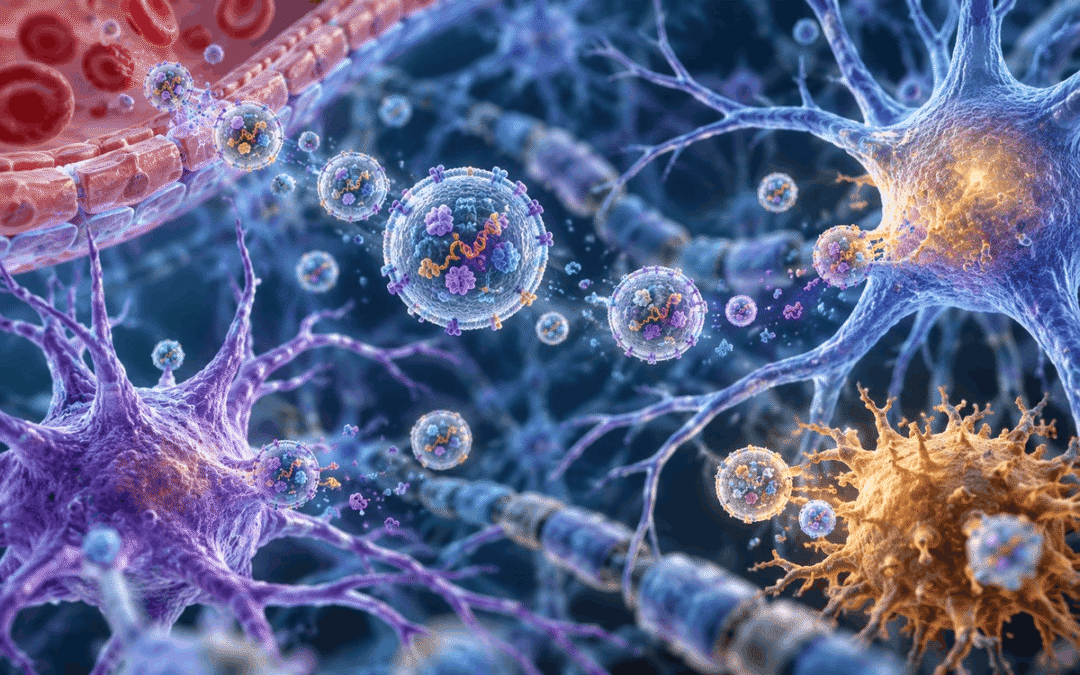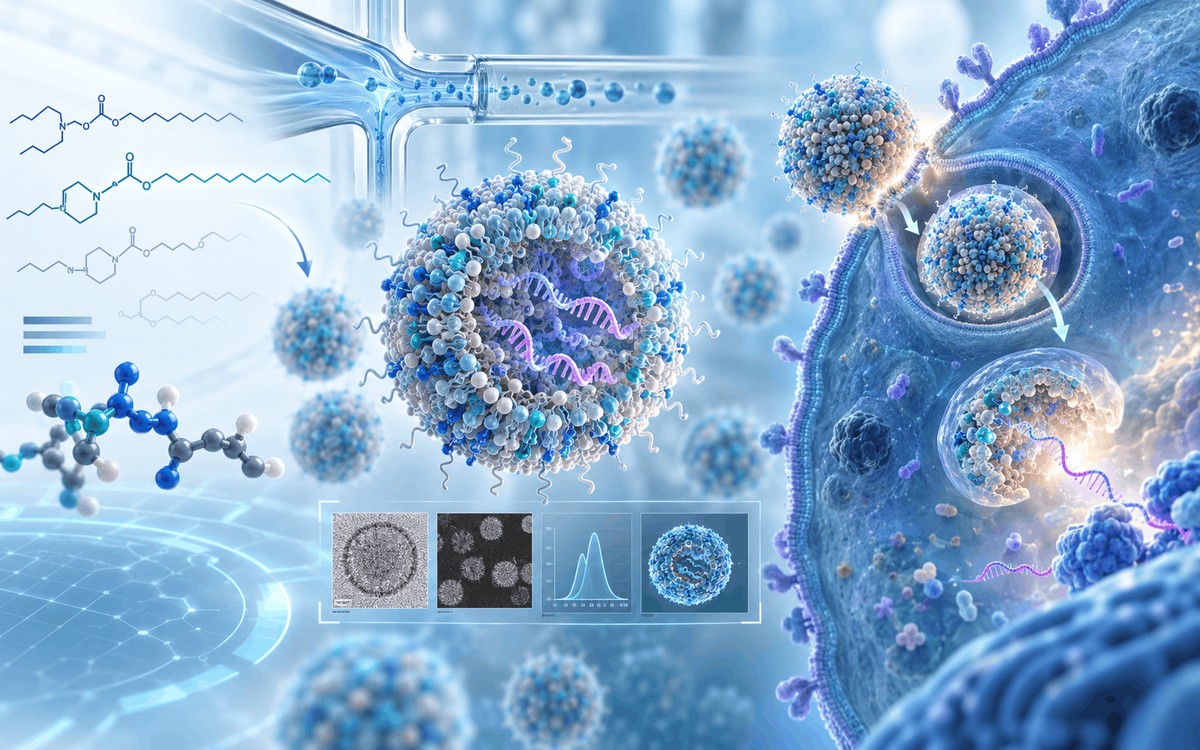
RNA delivery research is moving beyond conventional lipid nanoparticle (LNP) formulation toward a more systematic understanding of how lipid chemistry, particle organization, and intracellular trafficking influence delivery performance. As researchers confront challenges in endosomal escape, functional RNA delivery, and formulation reproducibility, Creative Biolabs supports research-stage RNA-LNP development through custom lipid synthesis, LNP formulation engineering, and analytical characterization.
RNA-LNP Development Is Shifting Toward Structure-Guided Engineering
Lipid nanoparticles have become established delivery platforms for RNA therapeutics, yet successful RNA encapsulation and cellular uptake do not necessarily translate into productive intracellular delivery.
A 2026 review in Nature Reviews Bioengineering describes how lipid composition, component ratios, and physicochemical characteristics influence RNA delivery efficiency, tissue distribution, and clearance [1]. These interdependent variables suggest that formulation development requires more than optimizing particle size or encapsulation efficiency independently.
Three emerging trends are shaping how researchers approach the design and evaluation of next-generation RNA-LNP systems.
Trend 1: Ionizable Lipid Design Is Expanding Beyond Conventional Structures
Ionizable lipids remain central to RNA-LNP engineering because their molecular architecture influences RNA complexation, interactions with cellular membranes, and intracellular release.
In September 2026, Xue and colleagues published a review in Nature Reviews Chemistry examining the structural evolution of ionizable lipids [2]. Through an assessment of published work involving combinatorial chemistry, rational molecular design, functional modifications, and machine learning-guided approaches, the authors identified a shift toward multifunctional lipids with potential applications in organ-selective delivery and stimulus-responsive systems.
Importantly, this literature review maps emerging design strategies rather than establishing universal performance advantages for individual lipid structures. Experimental validation remains necessary for each formulation and biological application.
For development teams, expanded molecular diversity also creates practical challenges involving synthesis feasibility, structural identity, purity, and formulation compatibility.
Creative Biolabs addresses these requirements through its custom lipid synthesis services, supporting tailored lipid headgroups, fatty acid chain modifications, functionalized lipids, and lipid conjugates.
Its published service portfolio also documents analytical approaches such as HPLC, mass analysis, and NMR for assessing synthesized lipid materials. A service-page case study includes HPLC-CAD purity assessment, mass analysis, and proton NMR characterization.
These capabilities provide a practical starting point for researchers seeking customized lipid candidates and supporting identity or purity data before comparative LNP formulation studies.
Trend 2: LNP Formulation Development Is Becoming More Application-Specific
RNA-LNP formulation development increasingly requires optimization around the intended RNA payload, cellular target, and experimental application.
The 2026 review by Arral and Whitehead [1] identifies four major components of conventional RNA-LNP systems: ionizable lipids, helper lipids, cholesterol, and PEG-lipids. Their chemical properties and relative proportions influence nanoparticle behavior, biological interactions, and delivery outcomes.
However, physicochemical formulation quality alone cannot establish functional RNA delivery.
In a 2025 Nature Communications study, Johansson and colleagues used live-cell and super-resolution microscopy to investigate intracellular trafficking and cytosolic delivery of siRNA and mRNA in MC3-based LNP systems [3]. They observed that only a small fraction of RNA was released from endosomes exhibiting membrane damage, while many damaged endosomes contained no detectable RNA cargo.
The findings demonstrate that cellular uptake, endosomal membrane perturbation, and productive cytosolic RNA release are distinct events. Although the study provides mechanistic insights into specific experimental systems, it does not establish an optimal formulation for every RNA modality or target cell.
These findings reinforce the importance of combining formulation quality measurements with application-relevant biological testing.
Creative Biolabs supports this process through its LNP delivery system development service, which includes customized lipid formulations, microfluidic preparation, and nucleic acid encapsulation.
The service supports mRNA, siRNA, and guide RNA, with DNA encapsulation available as a broader nucleic acid delivery application rather than the central focus of RNA-LNP engineering.
Depending on the project scope, formulation evaluation can include particle size, polydispersity index (PDI), zeta potential, encapsulation efficiency, morphology, and pH. Optional assessments include RNA integrity, transfection efficiency, and biological validation.
For researchers comparing candidate formulations, practical outputs may therefore include prepared LNP samples, physicochemical QC results, and optional functional testing data. These measurements can help distinguish formulation quality from actual biological delivery performance.
Trend 3: Structural Characterization Is Revealing LNP Properties Beyond Particle Size
While particle size and PDI remain important quality attributes, they cannot fully describe molecular distribution or internal organization within RNA-LNPs.
A 2025 study by Kotowska and colleagues in Communications Chemistry demonstrated the potential of advanced molecular depth profiling for investigating RNA-LNP organization [4].
Using cryogenic transmission electron microscopy followed by cryogenic Orbitrap secondary ion mass spectrometry (Cryo-OrbiSIMS), the researchers examined a model RNA-LNP formulation.
Their analysis detected PEG-related molecular fragments near the nanoparticle surface, while fragments associated with the lipid anchor appeared deeper, alongside signals corresponding to RNA-containing regions.
This label-free analytical approach provided evidence of molecular stratification within the investigated particles. However, the observations were obtained from a specific model formulation and should not be generalized to all LNP architectures without additional studies.
For formulation researchers, the broader implication is that particles exhibiting similar conventional quality measurements may still require complementary structural investigation to explain differences in behavior.
Creative Biolabs offers formulation analysis and characterization services covering structure- and composition-related measurements, including composition, lamellarity, phase behavior, morphology, particle size, PDI, and zeta potential.
The company’s published characterization workflow also describes sample preparation, analytical testing, and delivery of an analysis report.
These services can support investigation of formulation heterogeneity, structural consistency, and potential sources of variability. The appropriate methods depend on the formulation type and research objective, particularly when extending liposome-oriented assays to RNA-LNP systems.
The Cryo-OrbiSIMS study illustrates a broader scientific trend; it does not imply that Creative Biolabs offers that specific analytical technique.
Connecting Lipid Design, Formulation Quality, and Functional RNA Delivery
Across these three trends, an important principle is emerging: effective RNA-LNP development requires connecting molecular design and nanoparticle properties with biological performance rather than treating them as interchangeable indicators.
For example, a modified ionizable lipid may be structurally verified and successfully incorporated into an LNP formulation, yet still require cellular testing to establish functional RNA delivery.
Similarly, high encapsulation efficiency or substantial cellular uptake should not be interpreted as direct evidence of cytosolic delivery, endosomal escape efficiency, or successful RNA activity [3].
A research-stage evaluation strategy may therefore combine lipid identity and purity assessment, formulation quality measurements, and suitable functional readouts, such as mRNA expression or siRNA-mediated gene silencing.
Through its complementary synthesis, formulation, and characterization capabilities, Creative Biolabs can support different stages of this process according to project-specific requirements.
Researchers investigating new ionizable lipid architectures, optimizing RNA encapsulation, or examining inconsistent formulation properties can select relevant services and analytical parameters without assuming that one experimental workflow fits every application.
Upcoming Webinar: Deciphering RNA-LNP Structure–Activity Relationships
To explore the scientific questions behind these developments, Creative Biolabs will host a webinar titled From Molecular Synthesis to Supramolecular Structure: Deciphering the Activity of RNA Lipid Nanoparticles on October 27, 2026, at 11:00 AM EDT (15:00 GMT).
The session will feature Dr. Marshall Padilla of Stanford University, who will discuss research integrating modular lipid synthesis with high-resolution biophysical characterization.
Key topics include Branched Endosomal Disruptor (BEND) lipids, molecular branching strategies, LNP structural heterogeneity, and relationships between supramolecular organization and RNA delivery activity.
The webinar offers researchers an opportunity to examine how molecular-level changes can be investigated in the context of functional delivery.
Register for the October 27 RNA-LNP Webinar to explore current approaches to structure-guided lipid nanoparticle research.
Discuss Your RNA-LNP Development Project
For research teams developing new lipid candidates, refining LNP formulations, or investigating formulation variability, defining the right combination of synthesis, formulation, and analytical methods is an important early decision.
Creative Biolabs provides customizable research services that can be aligned with specific lipid structures, RNA payloads, formulation parameters, and analytical requirements.
Contact Creative Biolabs to discuss your RNA-LNP development project and explore suitable development workflows, characterization options, and project-specific service requirements.
Author Bio
Dr. Emily R. Coleman is a senior scientist at Creative Biolabs with a background in immunology, oncology research, and translational biotherapeutic development. Her work focuses on translating complex biological mechanisms into practical experimental strategies for next generation therapeutic discovery, with particular expertise in tumor immunology and antibody engineering.
At Creative Biolabs, she provides scientific insight across multiple R&D domains, including antibody discovery and development, gene and cell therapy research, and translational assay design. She is particularly focused on improving the connection between mechanistic biology and predictive preclinical models to support more effective therapeutic development across immune related disease areas.
About Creative Biolabs
Creative Biolabs provides customized biotechnology research services for pharmaceutical, biotechnology, and academic organizations, including lipid synthesis, LNP formulation development, analytical characterization, and specialized support for nucleic acid delivery research.