
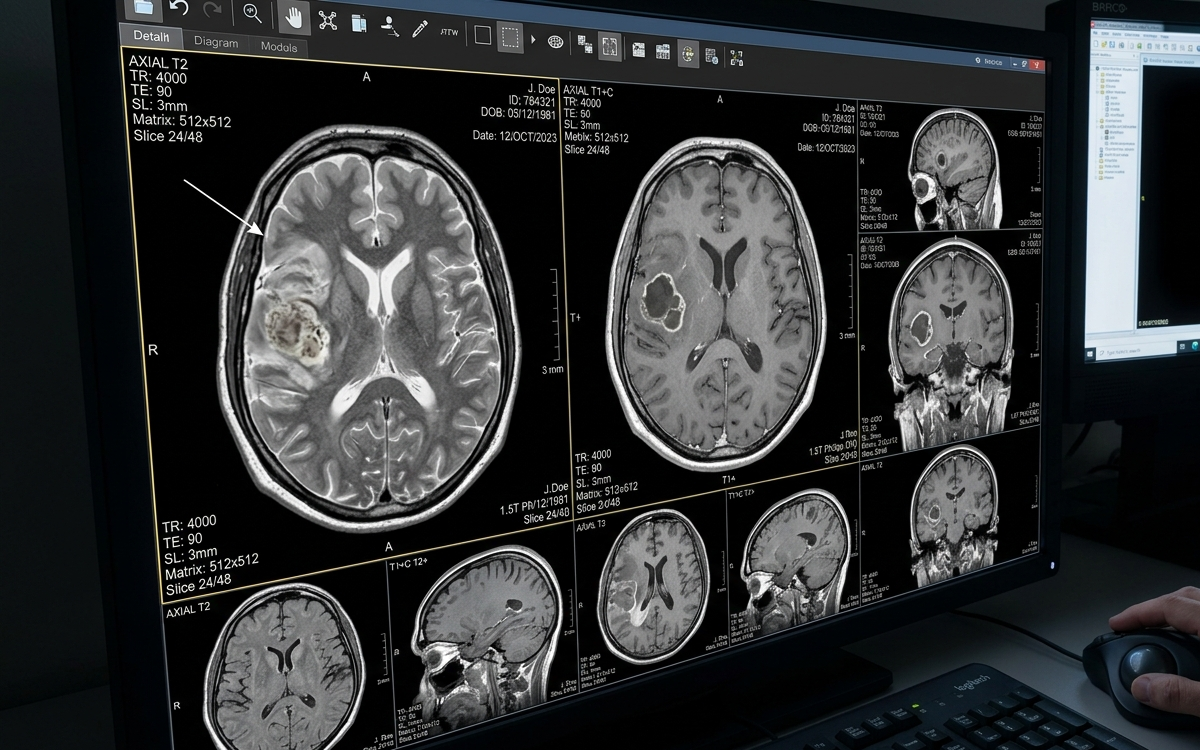
Radiation therapy is one of the important tools in the fight against cancer. About 50% of all cancer patients receive radiation therapy. Few modalities have had the same lasting impact across such a broad range of tumor types. In central nervous system (CNS) oncology, radiation therapy continues to play a critical role in the management of aggressive and difficult-to-treat brain tumors. Yet, conventional radiation delivery methods still present significant limitations for both clinicians and patients.
External Beam Radiation Therapy (EBRT) remains the most widely used form of radiation treatment today. While EBRT has improved survival outcomes for many cancer patients, it has limitations, especially in CNS oncology where precision is crucial. The brain is one of the body’s most complex organs, and even small amounts of unintended radiation exposure to healthy tissue can lead to serious side effects and long-term complications.
Because EBRT delivers radiation from outside the body, clinicians must carefully balance therapeutic effectiveness against the risk of damaging nearby healthy tissue. This often means lower radiation doses and patients frequently needing to undergo repeated treatment sessions over the course of weeks. Side effects such as fatigue, hair loss, skin changes, cognitive impairment, and loss of taste can significantly affect quality of life during and after treatment. According to the National Brain Tumor Society, while other cancers have seen major treatment advances over the past 45 years, survival rates for adult and pediatric brain tumor patients have not changed significantly during this time.
Targeted radiotherapeutics represent a promising advancement in oncology treatment today and offer hope for fighting CNS cancers and increasing survival rates. Instead of directing radiation toward a tumor from outside the body, targeted radiotherapeutics deliver radiation directly into or near the tumor itself through methods such as injection or ingestion. The result is localized treatment designed to maximize tumor-killing effects and minimize radiation exposure to healthy tissues and organs. Higher levels of targeted localization could represent a meaningful advancement for patients with CNS malignancies, particularly those facing recurrent disease where treatment options are limited and prior radiation exposure constrains future therapy decisions.
As innovation accelerates, targeted radiotherapeutics may redefine how clinicians approach some of the most challenging cancers, including glioblastoma and leptomeningeal metastases. These therapies have the potential to improve not only efficacy but also patient quality of life by reducing toxicity and limiting damage to healthy tissue.
Author Bio

Dr. Marc Hedrick, President and CEO at Plus Therapeutics, Inc
Dr. Marc Hedrick is the President and CEO at Plus Therapeutics, Inc. Previously, he served in a number of executive leadership roles including President, CEO, and Director at Cytori Therapeutics, Inc., and President and CEO of StemSource, Inc. Dr. Hedrick is a trained general, vascular, and plastic surgeon and former Associate Professor of Surgery and Pediatrics at the University of California, Los Angeles (UCLA). He also served as Co-Director of the Laboratory of Regenerative Bioengineering and Repair at UCLA.
Dr. Hedrick obtained his MD from the University of Texas Southwestern Medical School, Dallas and a MBA from The Anderson School at UCLA in 2005.