
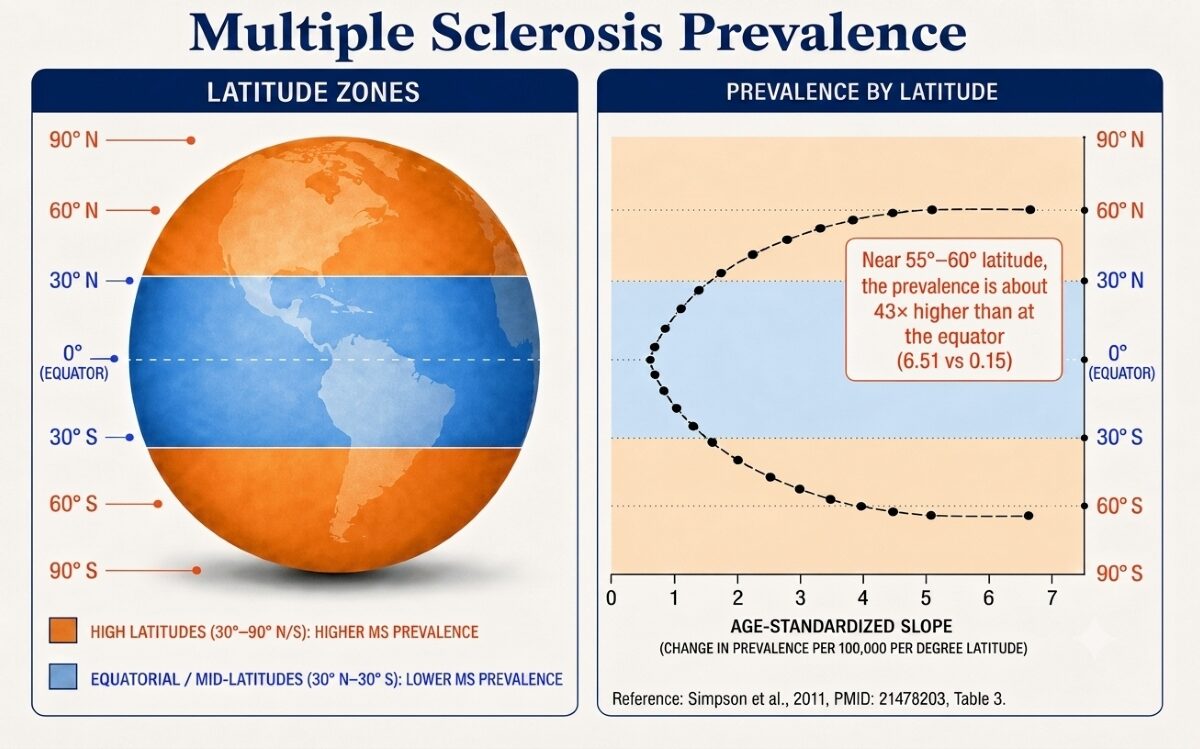
One of the most consistent epidemiological patterns in multiple sclerosis (MS) is its geographic distribution. Rates rise with distance from the equator, where year-round sunlight exposure is lower.[1] For decades, this has pointed to a role for environmental light in shaping immune function and disease risk.
Vitamin D has long been the leading explanation. But supplementation trials have produced inconsistent results and do not fully replicate the strength of the sunlight–MS association seen in population data.[2,3] This gap has driven a broader question: what else does sunlight do to the immune system beyond vitamin D?
Increasingly, UV light is being viewed as a biological signal rather than a simple environmental exposure; one capable of shaping immune activity through multiple overlapping pathways.
Phototherapy as a window into light biology
Narrowband UVB (NB-UVB) phototherapy offers one of the clearest ways to study this relationship. Used for decades in dermatology to treat inflammatory skin diseases such as psoriasis, it is known to reduce inflammatory activity and modulate local immune responses.
But the skin is not an isolated system. It functions as a major immune interface, capable of communicating environmental signals into broader physiological responses.
This becomes particularly relevant in modern life. Most people spend the majority of their time indoors, and in higher-latitude regions sunlight exposure can be severely limited for months at a time. The result is a significant reduction in a biological signal humans evolved to receive regularly. That gap has renewed interest in whether controlled phototherapy can help bridge these gaps.
The PhoCIS trial: testing UVB in early MS biology
The PhoCIS trial (Phototherapy for Clinically Isolated Syndrome) examined NB-UVB phototherapy in individuals with clinically isolated syndrome (CIS), an early condition often preceding MS. Participants received NB-UVB three times per week for eight weeks, alongside a standard-care control group. Blood samples collected before and after treatment were analyzed using broad inflammatory proteomics and a validated MS disease activity (MSDA) assay.
Across independent biomarker systems, a consistent pattern emerged: individuals receiving phototherapy showed reductions in inflammatory proteins associated with immune activation. These changes were not seen in the control group.[4] The MSDA score, a blood-based measure linked to neuroinflammatory disease activity and MRI lesion risk, also shifted in the NB-UVB group, indicating reduced overall disease activity and changes across immune-related pathways.[5]
While the study was small and exploratory, the convergence across multiple biomarker platforms suggests a coherent biological signal rather than isolated variation.
The SMILE (Sunlight-mediated Inter-organ Leukocyte Exchange) trial: Dives Deeper
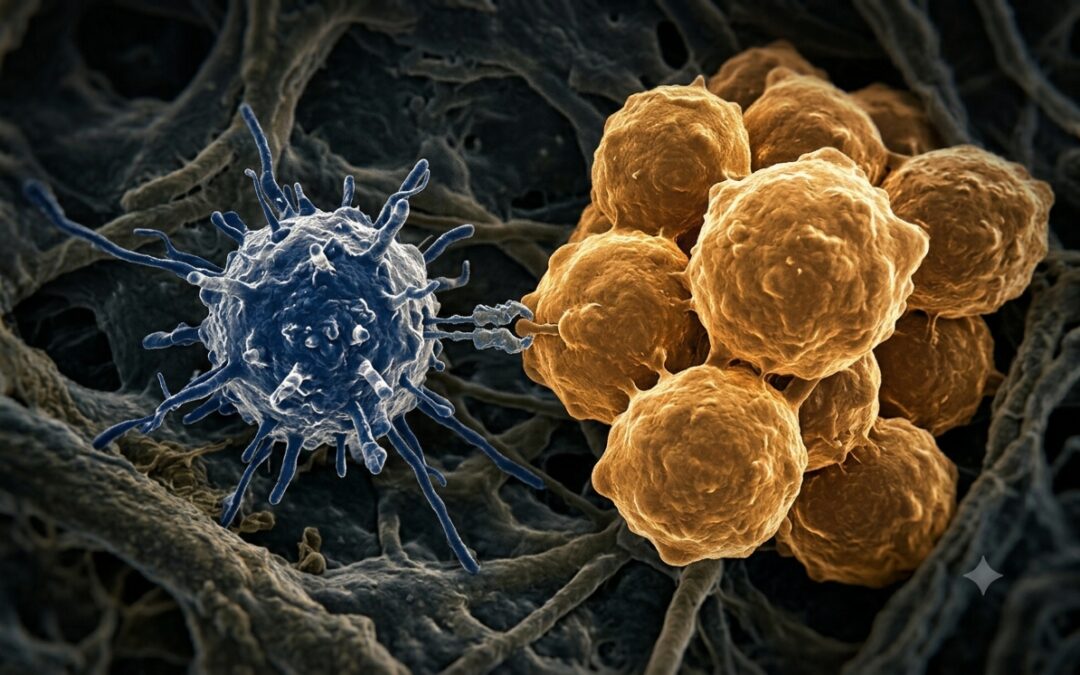
Published in June 2026, the SMILE trial used single-cell transcriptomics of immune cells from the skin, blood, and cerebrospinal fluid (CSF) to track the propagation of the photoimmune signal through the body. Patients showed an exaggerated cutaneous immune activation and blunted immune surveillance when compared to healthy controls. These findings add a further step in mapping the latitude-associated MS risk and highlight the potential for UVB and its downstream effects as a non-invasive therapy.[6]
What the biology suggests
These findings do not establish NB-UVB as a disease-modifying therapy for MS. Instead, they suggest something more fundamental: that controlled UV exposure can shift immune activity in early disease states. Importantly, the pattern does not resemble broad immunosuppression. It is better described as immune recalibration or movement toward balance in pathways that are dysregulated in autoimmunity. This distinction matters. In autoimmune disease, the goal is not to suppress immunity wholesale, but to restore regulatory control where it has been lost.
Modern proteomic tools now allow these changes to be observed earlier than traditional clinical endpoints such as relapse rates or MRI activity, providing a more immediate view of immune dynamics.
Beyond vitamin D
Vitamin D remains part of the sunlight–immune story, but it is unlikely to explain the full effect seen in MS epidemiology. UV radiation activates multiple biological pathways in the skin, including mechanisms involved in inflammation resolution and immune coordination. These broader effects may explain why sunlight exposure correlates more consistently with autoimmune outcomes than vitamin D supplementation alone. Sunlight, in this framing, behaves less like a nutrient and more like a regulatory input to the immune system.
The relevance of these findings is amplified by how we live today. Indoor work, artificial lighting, and reduced seasonal sunlight exposure mean many individuals receive far less UV exposure than in historical environments. This matters because immune systems evolved in the presence of daily environmental light cycles. In that context, phototherapy is not a far-fetched intervention; it is a controlled method of delivering a signal that is now largely absent from modern life.
NB-UVB phototherapy is already widely used in dermatology with a strong safety record under medical supervision. Its extension into systemic autoimmune disease represents a logical next step in understanding how environmental inputs shape immune regulation. Rather than replacing existing therapies, phototherapy is increasingly being explored as a complementary tool, particularly in early disease, when immune dysregulation may still be more responsive to environmental modulation.
From signal to clinical relevance
The PhoCIS findings add to a growing body of early evidence that narrowband UVB can influence systemic immune activity in autoimmune disease states. While preliminary, they align with a broader trend in photobiology: environmental light exposure produces measurable biological effects that extend beyond the skin.
The next phase of research is less about whether these effects exist and more about how they can be translated. That includes optimizing treatment protocols, identifying responders, and understanding how phototherapy may integrate with existing disease-modifying therapies. NB-UVB already has decades of clinical use in dermatology. Its application in systemic disease is still emerging, but grounded in an increasingly well-characterized biological foundation.
A shifting view of sunlight and immunity
The relationship between sunlight and immune function is moving from correlation toward mechanism. Advances in molecular profiling now allow researchers to observe immune responses to environmental signals in real time.
Multiple sclerosis remains one of the most informative conditions for studying this interaction due to its strong epidemiological patterning and immune-driven pathology.
While clinical conclusions are still ahead, the direction of research is becoming clearer. Light exposure is emerging not as a peripheral environmental factor, but as a meaningful regulator of immune biology. As this field evolves, light-driven immune modulation may become part of a broader shift in autoimmune research; one that integrates genetics, pharmacology, and environmental biology into a unified framework of disease.
Author Bio

John MacMahon is Co-Founder and CEO of Cytokind, Inc., a company developing phototherapy-based therapeutics for autoimmune conditions. His work focuses on the translational application of UVB light from dermatology to neurology, with a particular interest in addressing the latitude-associated risk gradient in multiple sclerosis. John MacMahon is a co-author of Hart et al. (2025), referenced in this article.