Under the ZW209 licensing deal with Zymeworks, Roche will receive exclusive global rights to develop and commercialise ZW209. In return, Zymeworks is due $55 million upfront and $40 million when a Phase 1b trial begins. It is also eligible for up to $718 million in further milestones, plus tiered royalties. Zymeworks announced the agreement on 23 October 2026. It has been signed but is not yet effective, because it still awaits US antitrust clearance.
ZW209 is an early-stage medicine. It is a trispecific T cell engager that targets DLL3, a protein found on small cell lung cancer cells. A Phase 1 study has started, according to Zymeworks. However, a search on 26 October 2026 found no reported clinical data for the molecule.
The ZW209 Licensing Deal Terms
Zymeworks set out the terms in a GlobeNewswire release datelined Vancouver. It also filed a Form 8-K with the US Securities and Exchange Commission. That filing dates the signing of the agreement to 22 October 2026. The Roche parties are F. Hoffmann-La Roche Ltd and Hoffmann-La Roche Inc.
Upfront, milestone and royalty components
The money is staged, and most of it is contingent. The only fixed sum is the $55 million upfront payment. The 8-K describes it as non-refundable and payable after HSR clearance. Next comes a $40 million milestone. It falls due when the Phase 1b trial for the first product begins. Beyond that, Zymeworks is eligible for up to $718 million in additional development, commercial and sales-based milestones.
Royalties sit on top of those payments. The release describes them as tiered, from high single digits to the mid-teens, on net sales. Its summary adds that the relevant patents extend into the 2040s. Taken together, the upfront and milestone sums reach $813 million. That figure is simply the arithmetic total of the stated components. It is not a price paid, and the release itself does not state a combined total.
| Term | Detail |
|---|---|
| Licensee | Roche (F. Hoffmann-La Roche Ltd and Hoffmann-La Roche Inc.) |
| Licensor | Zymeworks Inc. |
| Asset | ZW209, a DLL3-targeting trispecific T cell engager |
| Upfront | $55 million, non-refundable, payable after HSR clearance |
| Near-term milestone | $40 million on initiation of the Phase 1b trial |
| Further milestones | Up to $718 million (development, commercial and sales-based) |
| Royalties | Tiered, high single digits to mid-teens on net sales |
| Total announced value | Not stated as a total; components sum to $813 million |
| Expected effective date | Not disclosed; subject to the HSR waiting period |
| Status | Signed 22 October 2026; announced 23 October 2026; pending HSR |
Who Holds the Rights to ZW209 Now?
Under the release, Roche “will have the exclusive right to develop and commercialize ZW209 globally”. The ZW209 licensing deal sets out no regional carve-out in the announcement. Zymeworks keeps a working role in the first trial, however. It will conduct the Phase 1a monotherapy trial in collaboration with Roche. Roche will fund that trial and take on later global development and commercialisation.
The release does not mention co-promotion or opt-in rights for Zymeworks. Instead, its economic interest rests on the milestones and royalties. The 8-K adds two further points. First, the licence becomes effective on the first business day after HSR clearance. Second, Roche may terminate the agreement at its sole discretion, in whole or by product or country.
What Is ZW209 and What Stage Is It At?
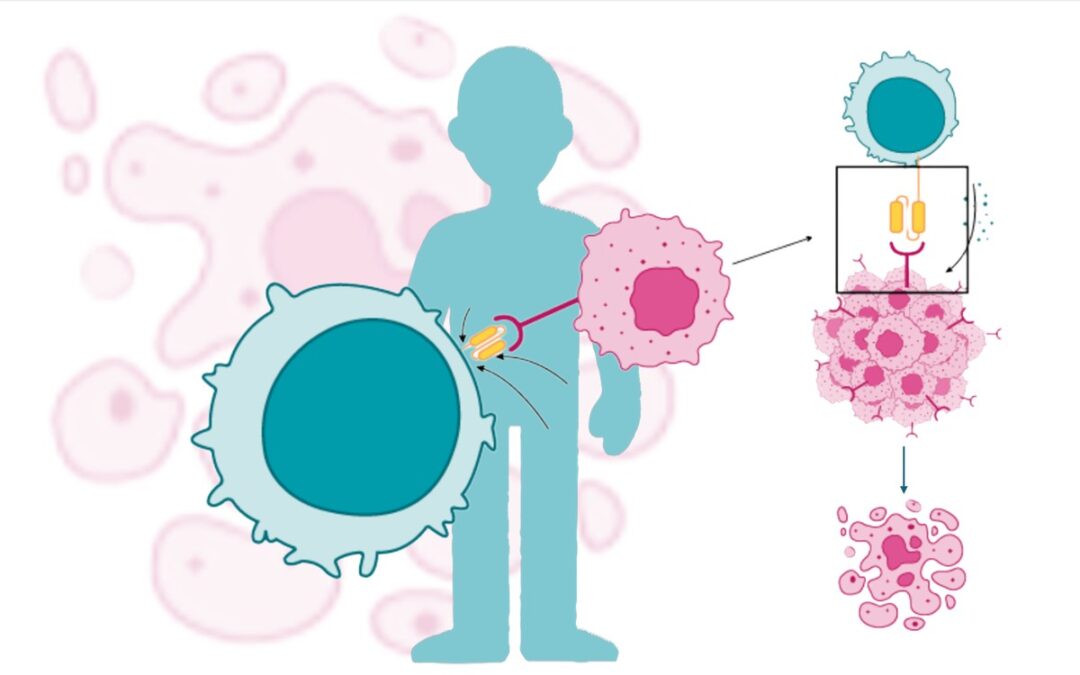
Zymeworks calls ZW209 a “novel trispecific T cell engager (TriTCE)”. It binds DLL3 on tumour cells. It also engages two receptors on T cells, CD3 and CD28. CD28 supplies a co-stimulatory signal to the T cell. The company describes that CD28 engagement as conditional. In its account, the design helps prevent unintended T cell activation.
Clinically, the programme is at the very start. The US Food and Drug Administration has cleared an Investigational New Drug application. A Phase 1, open-label, multicentre, global study has been initiated. It will assess safety, tolerability, pharmacokinetics and preliminary antitumour activity. Enrolment covers adults with advanced solid tumours. These include small cell lung cancer and other DLL3-expressing neuroendocrine tumours. The release does not give a trial registry number.
The preclinical case predates the deal. Zymeworks presented ZW209 data at the 2025 AACR Annual Meeting, using small cell lung cancer models. The company reported enhanced and prolonged tumour cell killing over repeated challenges. It made that comparison against other DLL3-targeted T cell engagers in development. It also reported favourable pharmacokinetics and safety after repeat dosing in non-human primates. These are company-reported laboratory and animal findings. Consequently, they do not show how ZW209 will perform in patients.
Why the Companies Say They Did It
Each party framed the deal in its own terms. Adam Schayowitz, Executive Vice President and Head of R&D, Zymeworks, spoke for the licensor. “This collaboration allows us to continue advancing ZW209 through its initial clinical development,” he said. He added that it would draw on “Roche’s complementary capabilities to accelerate and expand its development”.
Boris L. Zaïtra, Head of Corporate Business Development, Roche, gave the licensee’s view. He said ZW209 “represents an innovative approach that complements our ongoing efforts”. He linked it to efforts “to develop new treatment options for people living with lung cancer”. These are company statements. The release gives no sales forecast for the molecule.
For Zymeworks, the release places the deal within a “broader strategic initiative”. That initiative pairs internal development with selective partnering to share risk. Separately, a 28 September 2026 update confirmed that Zymeworks had completed its acquisition of Theravance Biopharma. In that update, the company described an “asset and royalty aggregation strategy”. The ZW209 licensing deal exchanges control of the asset for staged payments and royalties.
When Does the ZW209 Licensing Deal Take Effect?
The agreement has been signed, but it has not yet taken effect. The transaction “remains subject to the expiration or termination of the applicable waiting period under the HSR Act”. Other customary closing conditions also apply. Neither the release nor the 8-K gives an expected effective date. Moreover, the 8-K lets either party terminate if clearance is not obtained by a specified date.
Zymeworks has scheduled a call with investment analysts at 8:30am ET on 27 October 2026. Separately, the company plans to report third quarter 2026 results on 9 November 2026, after market close.
How the ZW209 Licensing Deal Fits the DLL3 Landscape
DLL3 already has an approved therapy in small cell lung cancer. Amgen’s Imdelltra (tarlatamab) is a bispecific T cell engager that binds DLL3 and CD3. The FDA granted it full approval on 19 November 2025. The approved use covers adults with extensive stage small cell lung cancer. Specifically, it applies to disease progressing on or after platinum-based chemotherapy. That decision converted an earlier accelerated approval.
Amgen is also testing Imdelltra earlier in treatment. At ESMO 2026 on 24 October, it reported Phase 3 DeLLphi-305 results in first-line maintenance. Amgen said adding Imdelltra to Imfinzi cut the risk of death by 58 per cent versus Imfinzi alone. That use is not yet approved.
ZW209 differs by design rather than by evidence. It adds CD28 co-stimulation to the CD3 binding found in bispecific engagers. Whether that design helps patients remains untested. No head-to-head clinical comparison exists. Moreover, the preclinical comparisons came from Zymeworks itself.
The ZW209 licensing deal also extends a busy month for Roche. On 19 October 2026, Hansoh Pharma announced its antibody-drug conjugate collaboration with Roche. Like that pact, this one is weighted towards contingent payments. Readers comparing headline figures may find the structure of upfronts, milestones and royalties useful. Here, only $55 million is fixed, and the rest depends on development and sales.
Trade coverage has largely restated the terms. PharmExec’s 23 October roundup, for example, reported the same components. By contrast, a search on 26 October 2026 found no readable report of a share price reaction.
What to Watch Next
The first marker is regulatory. Expiry or early termination of the HSR waiting period would make the licence effective and trigger the upfront payment. After that, Phase 1b initiation would release the $40 million milestone. Meanwhile, first clinical data from the Phase 1 study would offer the earliest test of the CD28 design.
Nearer term, the 27 October analyst call and the 9 November results may add detail. Until clearance arrives, the ZW209 licensing deal remains a signed agreement rather than an effective licence. Its value beyond $55 million also remains contingent on milestones that have not yet been reached.