Designing Resilient Health Systems That Endure

Sep 21, 2026 | Health Tech

Image Source: iStock, Just_Super
Partner Content
Written by: Dr Asma Al Mannaei, Executive Director of the Health Life Sciences Sector
On behalf of: Department of Health - Abu Dhabi

The most resilient health systems are not the ones that respond best in times of disruption, they’re the ones designed so that when disruption occurs, care continues and communities remain protected.

Systems continue to struggle with workforce shortages, delayed care, and rising chronic disease. The issue is not simply capacity. It is design. Systems that are built to detect risk early, coordinate response, and maintain continuity of care as conditions change are fundamentally different from those that mobilise only once pressure is already felt.

This distinction is increasingly urgent. As pressures on health systems grow, resilience now means planning ahead, not just reacting well. Good health and anticipation are becoming inseparable, shifting from reactive treatment to systems designed to operate with foresight, continuity, and adaptability. This shift is reflected in ‘To Sense is to Predict’, the 2026 theme for Future Health – A Global Initiative by Abu Dhabi, which frames health protection as a proactive process, connecting early signals to timely action, and insight to intervention.

Why resilient health systems start with sensing

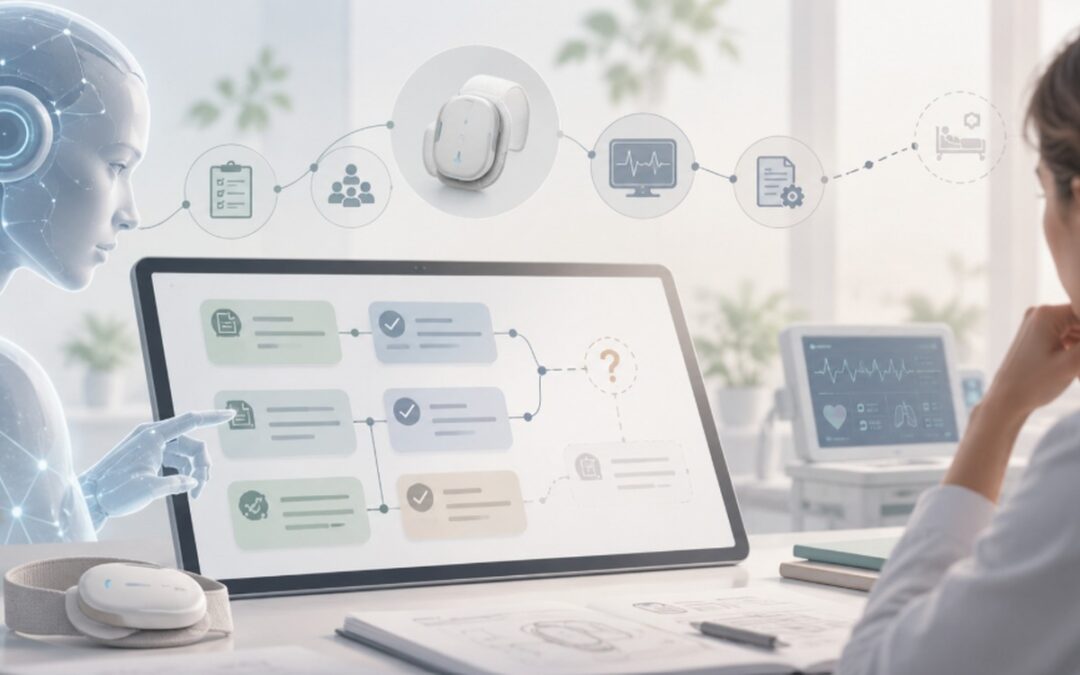
Health systems need the ability to spot early warning signs, interpret patterns, and intervene early. A broad sensing ecosystem includes not only the information from personal wearables, but also genomics, population-scale health monitoring, real-time data platforms, and AI-driven analytics that are transforming how we detect and understand health risk.

But the value of sensing is not in the data alone. It lies in what that data makes possible: modelling the likely impact of interventions, allocating resources more effectively, guiding policy that protects the community, and reducing pressure on hospitals and care teams. This is where resilience is built: when foresight becomes part of how health systems plan, govern, and act.

What this looks like in practice

Abu Dhabi is helping redefine health resilience by showing how this can work in practice. Rather than building isolated digital solutions, the emirate has focused on creating a connected ecosystem that links data, decision-making, and policy execution. The result is a more intelligent health system, designed to predict risk, prevent disease, and respond faster when people need care.

At the centre of this model is the Population Health Intelligence platform, developed by the Department of Health – Abu Dhabi in collaboration with Microsoft. Launched in 2025, it integrates diverse datasets from clinical, lifestyle, and environmental sources into a single, real-time view of population health. By also linking datasets such as the Emirati Genome Programme for population-scale genomic insight which identifies underlying genetic risk, the platform operates as the decision layer of the emirate’s intelligent health system, identifying high-risk communities or contributing risk factors, tracking the performance of health initiatives, and guiding prevention, staffing, and infrastructure planning.

Workforce and supply chains

A workforce strategy that considers these requirements is critical for health systems that are designed to prevent, manage, and respond to data-led insights. With a projected global shortfall of 10 million health workers by 2030, systems must shift to forward-looking capability development, aligning training and deployment with projected demand, and equipping professionals to operate in data-driven environments.

Supply chains represent another essential pillar. Investing in growth and local placement of supply chain hubs close to the point of requirement reflects a critical shift towards resilience across the entire health value chain.

Resilient health systems depend on coordination

Resilience also depends on coordination beyond the health sector. Governments, technology providers, research institutions, and investors all influence how quickly innovation is translated into practice.

Future Health was created to drive exactly this kind of coordination, a year-round platform that brings together international governments, innovators, researchers, and investors to shape the next generation of resilient health systems. Through sustained collaboration, global dialogues, and its annual flagship summit in Abu Dhabi, Future Health is ensuring that the shift from reactive to anticipatory health systems is not just discussed, but designed, tested, and scaled.

It begins on the drawing board, not in the emergency room. The future of health belongs to systems designed to sense, predict, and act, long before they are called upon to respond.

For more information on Future Health, A Global Initiative by Abu Dhabi, visit futurehealthinitiative.ae


Author Bio

    Dr. Asma Al Mannaei has over 15 years of experience at the Department of Health, she has led efforts to enhance the quality of healthcare outcomes, ensuring patient health and safety, building a patient-centric healthcare system, and strengthening Abu Dhabi's global position as a leader in healthcare quality. Throughout her career, Al Mannaei has held several positions, including Executive Director of the Research and Innovation Center and Director of the Healthcare Quality Department at the Department of Health. Al Mannaei has contributed to the development and acceleration of research and adoption of new innovations in healthcare, the evaluation of new drugs and technologies, and the provision of necessary support for their implementation, in addition to enabling the healthcare research and innovation ecosystem.
    References:
    1. World Economic Forum and Department of Health, Abu Dhabi. A New Era for Digital Health: Abu Dhabi's Leap to Health Intelligence. 16 January 2026. https://reports.weforum.org/docs/WEF_A_New_Era_for_Digital_Health_2026.pdf
    2. World Health Organization. WHO Director General's opening remarks at the WHA76 Strategic Roundtable. 23 May 2023. https://www.who.int/news-room/speeches/item/who-director-general-s-opening-remarks-at-the-wha76-strategic-roundtable---23-may-2023
    3. Abu Dhabi Media Office. Department of Health, Abu Dhabi unveils world's first AI powered Population Health Intelligence platform at GITEX Global 2025. 15 October 2025. https://www.mediaoffice.abudhabi/en/health/department-of-health-abu-dhabi-unveils-worlds-1st-ai-powered-population-health-intelligence-platform-at-gitex-global-2025/
    4. Abu Dhabi Media Office. Future Health, A Global Initiative by Abu Dhabi reveals 2026 theme as To Sense is to Predict. March 2026. https://www.mediaoffice.abudhabi/en/health/future-health-a-global-initiative-by-abu-dhabi-reveals-2026-theme-as-to-sense-is-to-predict/
    All content is published for informational purposes only and does not constitute medical, legal, or investment advice. For more information, see our Terms and Conditions

    Articles that may be of interest

    Hygiene Poverty and the Overlooked Toileting Needs of Women

    Hygiene Poverty and the Overlooked Toileting Needs of Women

    If you had to choose between food and toilet paper, what would you choose? A UK report from In Kind Direct and The Hygiene Bank found that 47% of people experiencing hygiene poverty had gone without toilet roll, making it the most common product people went without....

    read more
    What Are You Signing When the AI Wrote the Note?

    What Are You Signing When the AI Wrote the Note?

    Anyone who has finished an emergency shift knows the chart stack. The department is still loud, the next team has the board, and a column of unsigned notes waits on the workstation. You read each one, fix what's wrong, and sign. That signature has always meant...

    read more
    Interoperability Begins Where Data Exchange Ends

    Interoperability Begins Where Data Exchange Ends

    Standards and APIs can move information. True healthcare interoperability requires the governance, trust and workflow design that make the information usable. Healthcare has spent years treating interoperability as a problem of moving data. National exchange has...

    read more