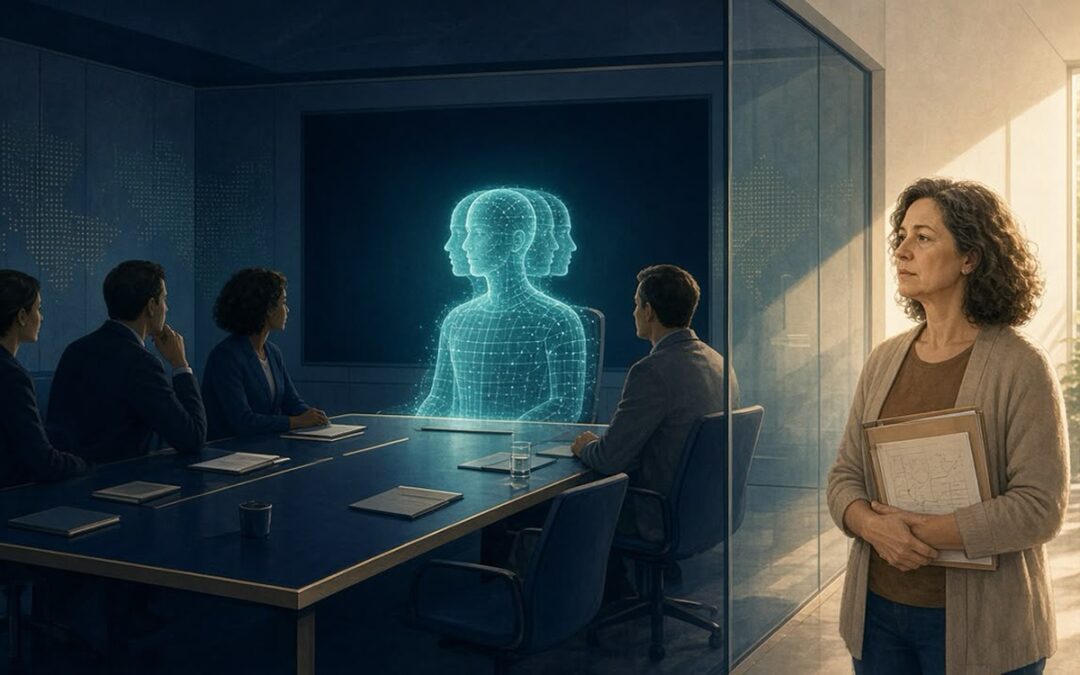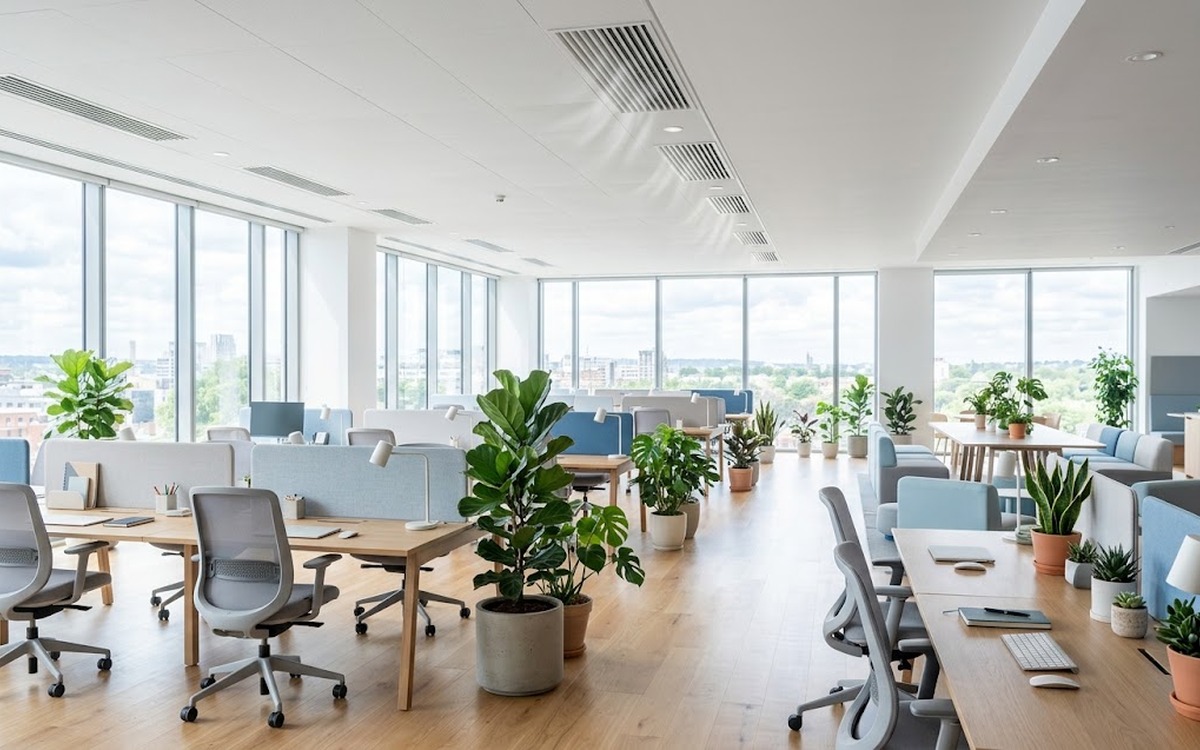
For property owners, management companies, and business leaders, few sights are more unwelcome than an empty office building. Indoor air quality may be part of the answer to filling it.
In the post-pandemic era, the home office has replaced the traditional workplace for many employees. The shift began with an airborne illness that not only spread a virus but also changed the way people think about the spaces where they work. Employees became acutely aware that the air inside a building could affect their health—and that awareness has not gone away.
Today, indoor air quality (IAQ) is increasingly part of the workplace conversation.
For decades, building owners and managers understandably focused on comfort: temperature, humidity, lighting, amenities, and individual environmental controls. Those remain important. But occupants are now asking a different set of questions:
What is in the air I am breathing? How clean is it? And what is the building doing about it?
Events such as wildfire smoke and other episodes of poor outdoor air quality have reinforced those concerns. For some employees, concerns about the indoor environment can become another reason to prefer working from home.
That presents both a challenge and an opportunity.
If we want people to return to the workplace, we need to create environments that are not only comfortable and productive, but also demonstrably healthy.
The Three Pillars of Indoor Air Quality
The science of creating good indoor air quality can be complex. Almost everything that happens in a building can influence its air: people and their activities, furnishings and building materials, cleaning and maintenance practices, pest control, HVAC systems, and contaminants entering from outdoors, neighboring buildings, or adjacent spaces.
Fortunately, the fundamental strategy is straightforward.
Early guidance from the U.S. Environmental Protection Agency identified three fundamental approaches to improving indoor air quality [1]: Source Control, Ventilation, and Air Cleaning.
These three strategies provide a useful framework for developing an effective building IAQ program.
1. Source Control
The first step is to control contaminants at their source.
We saw a dramatic example of this during the COVID-19 pandemic. Reducing occupancy reduced the number of people in a space—and therefore reduced one important source of airborne contaminants.
But people are only one source.
Occupants generate particles from skin and clothing. Building materials and furnishings can release volatile organic compounds (VOCs). Cleaning products can introduce chemicals into the environment. Moisture can contribute to mold growth. Bacteria and other microorganisms can be present on surfaces and in the air. Occupants can introduce viruses.
Outdoor contaminants can also enter a building through doors, infiltration, and ventilation systems.
The objective of source control is therefore to identify and minimize contaminants wherever practical before they become an indoor air problem.
2. Ventilation
Ventilation is another fundamental tool for managing indoor air quality.
Bringing outdoor air into a building and exhausting indoor air can reduce the concentration of many indoor-generated contaminants. Intelligently designed ventilation can also help manage building pressure relationships and reduce unwanted infiltration from adjacent spaces or the outdoors.
However, ventilation is not a one-size-fits-all solution.
The amount of outdoor air required depends on the building, occupancy, use, climate, and applicable codes and standards. Increasing ventilation can also significantly increase energy consumption because outdoor air must be heated, cooled, dehumidified, or otherwise conditioned before it enters the occupied space[1].
And there is another important consideration: outdoor air is not always clean air.
Wildfire smoke, industrial emissions, dust, pollen, and other pollutants can make outdoor air quality worse than the air we are trying to protect indoors[2].
This means that simply bringing in more outside air is not always the most effective or practical answer.
3. Air Cleaning
This is where air cleaning becomes an important complement to source control and ventilation.
Ventilation and air cleaning can work together to reduce contaminant concentrations and provide cleaner air to building occupants.
Traditional or passive air-cleaning systems typically require contaminated air to pass through a device where particles or other contaminants are removed. Mechanical filters are a familiar example. Electronic filtration and other technologies can provide additional approaches.
Active air-cleaning technologies take a different approach. Depending on the technology, they can introduce a physical or chemical mechanism into the occupied environment or air-handling system that interacts with contaminants.
One technology receiving significant attention is bipolar ionization. These systems generate ions that can interact with airborne particles and contaminants. Depending on the specific system and application, ionization can promote particle aggregation, potentially increasing the likelihood that particles are captured by filtration or deposited from the air.
Research has also investigated the effects of bipolar ionization and related reactive technologies on microorganisms, including viruses, bacteria, and fungi[3][4][5]. However, performance is highly dependent on the specific technology, installation, operating conditions, and contaminant, so these systems should be evaluated using independent test data and appropriate performance standards. Some ionization devices can also generate ozone or other by-products, so the EPA recommends choosing devices certified to UL 2998 for zero ozone emissions[6].
The larger point is that air cleaning gives building operators another tool for managing indoor contaminants—one that can complement, rather than replace, source control and appropriate ventilation.
Measure It, Manage It, Improve It
There is another principle that has become increasingly relevant to indoor environmental quality:
What gets measured gets managed.
Think about how many of us respond when our smartphone tells us that we have not reached our daily goal. Having the information makes the behavior visible—and what becomes visible is much easier to manage.
The same principle applies to buildings.
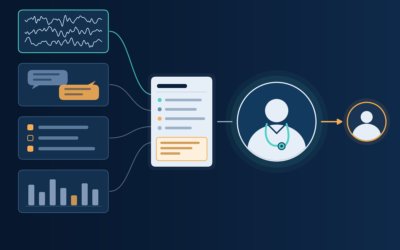
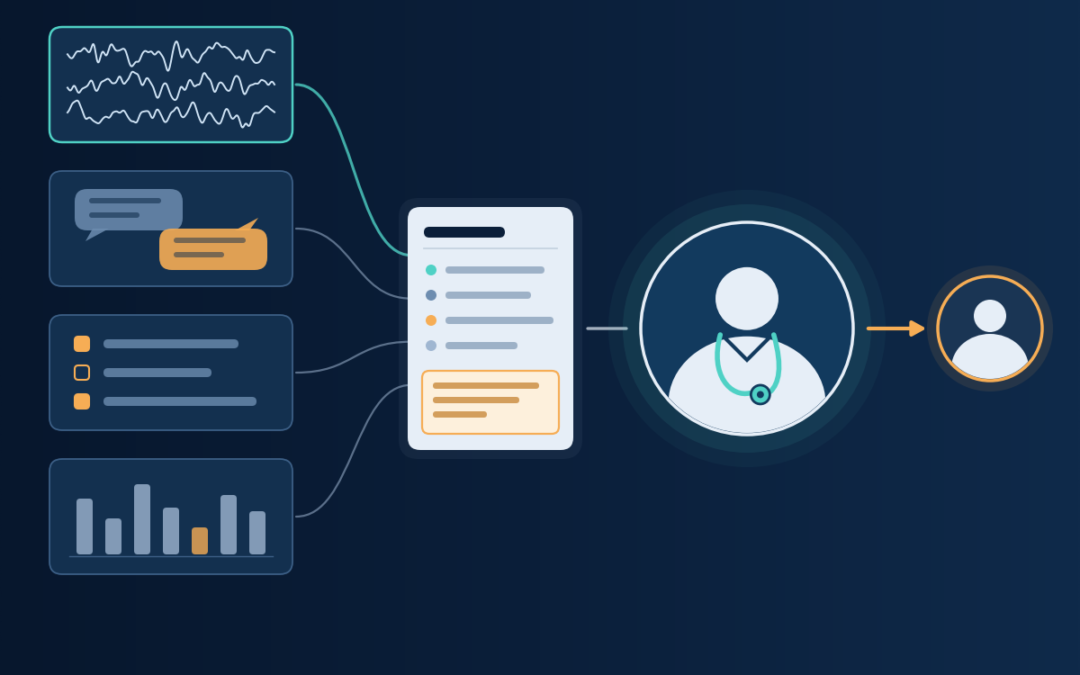
The availability of relatively low-cost indoor air quality sensors has expanded dramatically. Modern IAQ monitoring platforms can measure parameters such as particulate matter, carbon dioxide, temperature, humidity, and depending on the system, VOCs and other environmental conditions.
More sophisticated platforms can turn that information into dashboards, alerts, historical trends, and actionable insights.
This is increasingly important because occupants do not necessarily want to be told that their building has “good air.”
They want to see it.
Building operators can display real-time IAQ information on common-area monitors, digital signage, building dashboards, or mobile applications. Some systems can even provide indoor-versus-outdoor comparisons, allowing occupants to see how the building is performing relative to the environment outside.
That transparency can help build confidence.
The Building as an Intelligent System
We are also gaining a powerful new tool for managing building environments: artificial intelligence.
IAQ monitoring platforms can use AI and machine-learning techniques to analyze large volumes of environmental data, identify patterns, recognize unusual conditions, and help building operators respond to problems.
Over time, these systems can potentially learn how a building behaves under different conditions—occupancy changes, weather events, HVAC operating modes, and other variables—and use that information to support more proactive building management.
The result is a shift from reactive building management to predictive building management.
Instead of discovering a problem after occupants complain, an intelligent building system can identify an emerging trend and alert operators before the problem becomes significant.
The same data can potentially be used to improve both health and energy performance.
What Is Possible Must Also Be Practical
Of course, technology alone does not solve the problem.
Even the most advanced IAQ technologies will not be widely adopted if they are intrusive, expensive to install, difficult to maintain, or excessively energy intensive.
Energy is becoming an increasingly important consideration in building design and operation. As electricity demand grows—including from data centers and the expanding use of AI—the energy implications of building systems will become even more important.
This is one reason the traditional concept of “dilution is the solution to pollution” deserves a closer look.
Increasing outdoor-air ventilation can reduce concentrations of indoor-generated contaminants, but outdoor air must first be conditioned to the building’s temperature and humidity requirements. That requires energy.
And, as we have seen with wildfire smoke and other outdoor pollution events, outdoor air is not always “fresh air.”
In those situations, bringing in substantially more outdoor air may actually introduce additional contaminants unless that air is properly filtered or otherwise treated.
Air-cleaning technologies can provide another path. When appropriately selected and engineered, they can supplement ventilation and filtration, potentially allowing buildings to achieve desired indoor environmental conditions without relying exclusively on large increases in outdoor-air volumes.
ASHRAE Standard 241, Control of Infectious Aerosols, reflects this broader concept through its use of equivalent clean airflow (ECAi) as a performance metric[7]. The concept recognizes that equivalent removal of infectious aerosols can be achieved through a combination of ventilation, filtration, air cleaning, and other control measures, rather than simply by increasing outdoor-air ventilation, provided air-cleaning systems meet the standard’s effectiveness and safety testing requirements.
This provides building designers and operators with greater flexibility in developing strategies that balance indoor air quality, occupant health, energy consumption, and sustainability objectives.
The Opportunity in the Empty Office
The office has changed.
Employees have more choices about where they work, and their expectations of the workplace have changed with them. A comfortable chair, good coffee, and attractive amenities are no longer the entire equation.
People increasingly want to know that the places where they spend their working hours are safe, healthy, comfortable, and productive.
The good news is that we have more tools than ever before to address those expectations.
Source control can reduce contaminants at their origin. Ventilation can manage contaminant concentrations and provide outdoor air. Filtration and other air-cleaning technologies can remove or otherwise address contaminants. IAQ monitoring can make building performance visible. And AI-powered analytics can help operators understand and optimize that performance in real time.
The opportunity is to bring all these capabilities together into an integrated building strategy.
Because the future of the office may depend on more than filling empty desks.
It may depend on giving people a compelling reason to come back.
And one of the most fundamental reasons we can offer is something they cannot easily see—but can breathe: healthier indoor air.
Author Bio