In cardiology and diabetes, we no longer rely on single, in-clinic readings to diagnose complex conditions; instead, remote monitors are used to capture data over a period of time. We’ve seen that the standard of care across medicine is shifting from episodic...
The Microbiome: The Missing Layer in Modern Metabolic Care
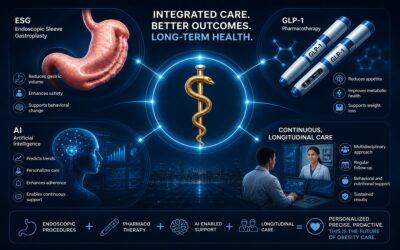
Over the last decade, obesity management has undergone a structural transformation. What was once a field dominated almost exclusively by bariatric surgery has evolved into a far more nuanced metabolic discipline. The rise of GLP-1 receptor agonists and dual incretin...
Rethinking the Male Factor in IVF: Why New Sperm Technologies Matter
For much of the history of in-vitro fertilisation (IVF), technological advances have focused overwhelmingly on the egg and the embryo. Advances in ovarian stimulation protocols, time-lapse embryo imaging, genetic testing and cryopreservation have dramatically improved...
Why Amazing Medical Technologies Fail (And How to Ensure Yours Doesn’t)
Have you considered what it means to have an FDA-approved, life-changing, medical product? It’s nothing short of amazing! However, let me add on to that question, have you considered what it means to have an FDA-approved, life changing, medical product WITHOUT a...
The Microbiome, as a Performance Regulator: Gut Integrity Under Physiological Load
In high-performance populations — elite athletes, tactical operators, founders, executives under sustained cognitive load — resilience is typically framed in terms of cardiovascular output, muscular strength, mitochondrial density or hormonal optimisation. Yet one of...
Why Health Platforms Built for Millennials Will Fail Gen Alpha
The first smartphone-native generation expects fundamentally different things from digital health and retrofitting won't work Gen Alpha (born roughly between 2010 and 2024) is the first generation to grow up entirely in a world where smartphones, AI assistants, and...
AI & Cloud Enabled R&D and Clinical Operations Surge in Life Sciences
Digital transformation is accelerating across the life sciences sector as more organisations adopt AI driven platforms and cloud computing to speed up drug discovery, streamline clinical trials and optimise operations. A recent industry overview from BioSpace...
A Milestone in Rare Disease Genomics
Why popEVE Matters Interpreting missense variants has long been one of the most persistent challenges in clinical genetics. These single–amino-acid substitutions can subtly alter protein structure or function, yet their effects are often context-dependent and...
Remote Stroke Surgery Breakthrough with New Robotic System
In a landmark development for stroke treatment, medical technology company Remedy Robotics has announced what it describes as the world’s first fully remote endovascular neurointerventional procedures using its N1 robotic system. The announcement, made on 6 October...
AI and Early Detection of Dementia: Advancing Life Science Frontiers
Dementia continues to pose a significant challenge in neuroscience and clinical care, affecting millions worldwide. Early detection is pivotal in slowing disease progression and implementing preventive interventions. Life sciences are increasingly leveraging...
AI Giants Nvidia, Microsoft and Google Drive Innovation in Pharma R&D
The intersection of artificial intelligence (AI) and pharmaceutical research is transforming drug discovery, clinical trials, and healthcare innovation. Leading technology companies Nvidia, Microsoft, and Google are spearheading this evolution, applying advanced AI...
Claude for Life Sciences – Major AI Pivot into Drug Discovery and Research
Artificial intelligence company Anthropic is making a significant move into the life sciences sector with the launch of Claude for Life Sciences, a version of its Claude language model platform tailored for scientific research, drug discovery and regulatory workflows....
Microsoft’s Copilot Set to License Harvard Medical School Content
Microsoft is reportedly preparing a major update to its Copilot AI assistant that will let it draw on licensed medical content from Harvard Health Publishing when responding to user queries about healthcare. The development signals a strategic shift toward embedding...
Hyperfine Banks on $17.5 Million Public Stock Offering
Medical imaging company Hyperfine, listed on the Nasdaq as HYPR, has announced the pricing of an underwritten public offering of 14 million shares of its Class A common stock at $1.25 per share, yielding gross proceeds of approximately $17.5 million before...