A patient arrived on my ward recently with a story I have heard so many times it no longer surprises me. Her blood sugar had crept back into the danger zone, her blood pressure was climbing, and the weight she had lost over the previous year was almost all back. The reason was simple. Her insurance had changed, the pharmacy no longer stocked what she needed, and the affordable compounded GLP-1 she relied on had been pulled from the market. She had spent a year getting healthier and a few months losing all of it. That single story captures the strange moment we are living through in obesity medicine, because we finally have drugs that work better than anything in the history of this field, and we have built an access system that seems almost designed to throw that benefit away.
What the drugs actually deliver
Start with the evidence, because both the hype and the backlash get it wrong. In the pivotal semaglutide trial, patients taking the real drug lost about 15 percent of their body weight over roughly a year and a half, patients on a dummy injection lost about 2 percent, and a third of the treated patients lost a fifth of their body weight [1]. Tirzepatide, which copies two gut hormones instead of one, went further still, and when the two drugs were compared head to head, tirzepatide produced about 20 percent weight loss versus about 14 percent for semaglutide [2][3]. The pipeline keeps climbing, with newer medicines in trials pushing past 24 percent and pill versions of the class on the way [4][5][6].
These are not cosmetic drugs, and this is the part many skeptics miss. In a trial of more than 17,600 adults with heart disease and obesity, semaglutide cut heart attacks, strokes, and cardiovascular deaths by 20 percent, and treated patients were hospitalized less often for nearly every reason, so treating 31 patients prevented one admission over three years [7][8]. The benefits keep spreading across whole organs: heart failure admissions fell sharply with tirzepatide, kidney disease slowed, sleep apnea improved, and severe fatty liver inflammation resolved in nearly two thirds of treated patients [9][10][11]. This is real medicine for real deadly disease, not a vanity shot.
The fine print
Honesty cuts both ways, and patients deserve the whole picture. These drugs suppress obesity rather than cure it, so when treatment stops, the body pushes back. In the follow-up to the semaglutide trial, participants regained roughly two thirds of the lost weight within a year of stopping, and their blood pressure, blood sugar, cholesterol, and inflammation all drifted back toward their old danger zone [12][13][14]. A 2026 tirzepatide analysis showed the same pattern, with the biggest regainers reverting almost exactly to their baseline health numbers [15]. Some of the weight lost on these drugs is muscle rather than fat, in some analyses as much as 40 percent of the total, which is why I push protein and resistance training with every patient I treat [16]. The plain truth is that this is lifelong therapy for most people, and a lifelong therapy priced beyond reach is not really a treatment, it is a lottery ticket.
The sticker price is a fiction
The list prices of these drugs are staggering, but they are also largely theater. The American Diabetes Association’s 2026 standards put the typical list price near 1,619 dollars a month for semaglutide and 1,304 dollars for tirzepatide [17], yet the secret rebates flowing through the supply chain mean the real net cost is closer to 700 or 800 dollars a month, and one analysis calculated that a month’s supply could be manufactured for as little as 40 dollars, profit included [18][19]. At current net prices, neither drug is cost-effective at the usual yardstick of 100,000 dollars per quality-adjusted life year, a measure of cost per year of healthy life gained. Tirzepatide would need a further 30.5 percent discount to reach it, semaglutide 81.9 percent, which tells you the price is a choice rather than a necessity [20].
The access wall
So the people who actually get treated are employees of large companies with generous benefits, some Medicare patients in a new pilot program, and anyone who can pay over a thousand dollars a month in cash. Everyone else is locked out, and the wall keeps getting taller. The share of large employers covering these drugs for obesity dropped from 72 percent in 2025 to 60 percent in 2026, about one in ten of the remaining large employers plans to drop the benefit next year, and only around a third of employers cover them at all [21][22][23]. Medicare excluded weight-loss drugs by statute for two decades under a rule written for a far weaker generation of medicines, and even covered uses now require prior approval from virtually every plan [24][25]. Medicaid is a patchwork where roughly one in five states covered obesity medications on its preferred list, while four in five covered the same drug when prescribed for diabetes [26]. That means a farmer with diabetes gets the drug, while his neighbor with the same body weight and no diabetes diagnosis gets a refusal letter. The people most likely to benefit are failing a financial test, not a medical one.
The shortage opened a door
Here is the part of the story I believe history will judge most kindly. Demand exploded so fast that the manufacturers could not keep up, and the FDA listed semaglutide and tirzepatide as in shortage in 2022, with prescriptions rising more than 400 percent in three years [27]. Federal law has long allowed licensed pharmacies to compound copies of drugs on the shortage list, and compounders did exactly that. Within two years, reported estimates put compounded GLP-1 products at somewhere between 8 and 33 percent of the US obesity medication market, typically at a first-month price of around 231 dollars against well over 1,300 dollars for the brand [28][40]. The cashier with severe obesity whose employer plan said no, the self-employed plumber, and the woman whose benefits were quietly cut the same month her doctor finally wrote the prescription all of a sudden had a lawful, medically supervised way to get the same medicine. It was likely the largest spontaneous expansion of obesity treatment access in American history, and it lifted overwhelmingly the people the insurance system had locked out.
Now for the honest part, because any fair telling includes it: compounded GLP-1 drugs are not FDA approved, and the compounding boom attracted careless operators along with careful ones. The FDA warned about dangerous dosing errors from mislabeled concentrations, and one safety analysis found compounded products carried higher reporting rates of hospitalization and preparation mistakes [29][30]. Patients deserve tested purity, accurate labels, and truthful advertising, the operators who faked those things deserved every enforcement letter they got, and I do not defend the corners that were cut. But the sins of the worst compounders do not erase what the legitimate ones did for patients who had nowhere else to go.
Washington is closing the door
Then the shortages were declared over, tirzepatide in December 2024 and semaglutide in February 2025, and the legal foundation for compounding copies disappeared [27]. What followed has been a steady, methodical shutdown. The FDA issued wave after wave of warning letters, more than fifty to compounders and telehealth companies in late 2025 alone, then thirty more in March 2026 and another twenty five that June [31]. At the end of April 2026, after tightening its enforcement policy, the agency proposed formally barring semaglutide, tirzepatide, and liraglutide from the list of substances that outsourcing facilities may compound at all [32][33]. Courts declined to block the campaign, Congress has advanced legislation to expand federal oversight of compounded GLP-1s, and several state pharmacy boards have already told compounders that shortage is no longer a permissible reason to prepare these drugs [34][35]. Some pharmacies now add vitamins to the formula to claim a legally distinct product, and a recent survey found more than half of weight-loss clinics in two states still selling such workarounds, so every time one loophole closes, another opens, and patients ride the whiplash [28].
Buried in the FDA’s own proposal is the sentence that should worry every patient advocate in America. Setting out how it assesses clinical need, the agency states that it “does not consider convenience in administering a particular compounded drug product (e.g., a ready-to-use form) or the cost of the compounded drug product as compared with an FDA-approved drug product when assessing ‘clinical need'” [33]. On paper that sounds tidy, but at the bedside it is a fiction, because for a patient whose claim was denied and whose pharmacy quote is a thousand dollars a month, the only clinical problem that matters is that the medicine she needs is out of her reach. Access is not separate from clinical need, and for the marginalized patient, access is the clinical need.
The trap that closes on everyone
The cruelest part is how the access system interacts with the biology I described earlier. Between half and two thirds of real-world patients stop these drugs within the first year [36]. In a 2026 national survey, the reasons given were cost at 36.1 percent, side effects at 33.3 percent, no coverage at 28.2 percent and having reached a weight goal at 26.1 percent, so cost is cited at least as often as side effects, and cost together with lack of coverage more often still [37]. A system that grants one year of coverage and then yanks it is not just rationing a benefit, it is manufacturing the exact rebound weight gain and metabolic crash that puts patients like the woman in my opening story back in a hospital bed, which is the most expensive possible outcome for everyone, including the insurer that saved money by saying no [12][17]. America’s obesity guidelines now say plainly that obesity is a chronic disease deserving continued therapy, yet our coverage rules still treat it like a twelve-week fad [17].
What a sensible path looks like
Nobody needs the wild west back, and the middle path already exists in law. First, treat these drugs the way we treat statins and blood pressure medicines, as chronic therapy covered at an honest net price rather than a fictional list one, without annual coverage cliffs that manufacture relapse. The recent federal pricing deal, which set a Medicare price of 245 dollars a month, proves lower numbers are achievable [38]. At that price, one analysis projects 73.9 billion dollars in new Medicare spending against 56.3 billion dollars in savings, a net cost of 17.6 billion dollars. Coverage reaches cost neutrality only at around 150 dollars a month [39]. Second, preserve the narrow, patient-specific compounding pathway that federal law has always allowed, one pharmacist, one documented medical reason, one patient, instead of closing even that channel for this entire class [33]. Third, enforce quality hard and market honestly, so that batch testing and truthful claims are the price of operating rather than marketing suggestions. Fourth, be honest about what closure does, because shrinking the legitimate channel does not make demand disappear, it pushes locked-out patients toward the actual gray market of unlicensed internet sellers who answer to nobody. Public health does not get to decide whether a desperate patient seeks the drug, only whether she finds a licensed pharmacist or a stranger with a website.
Back to the floor
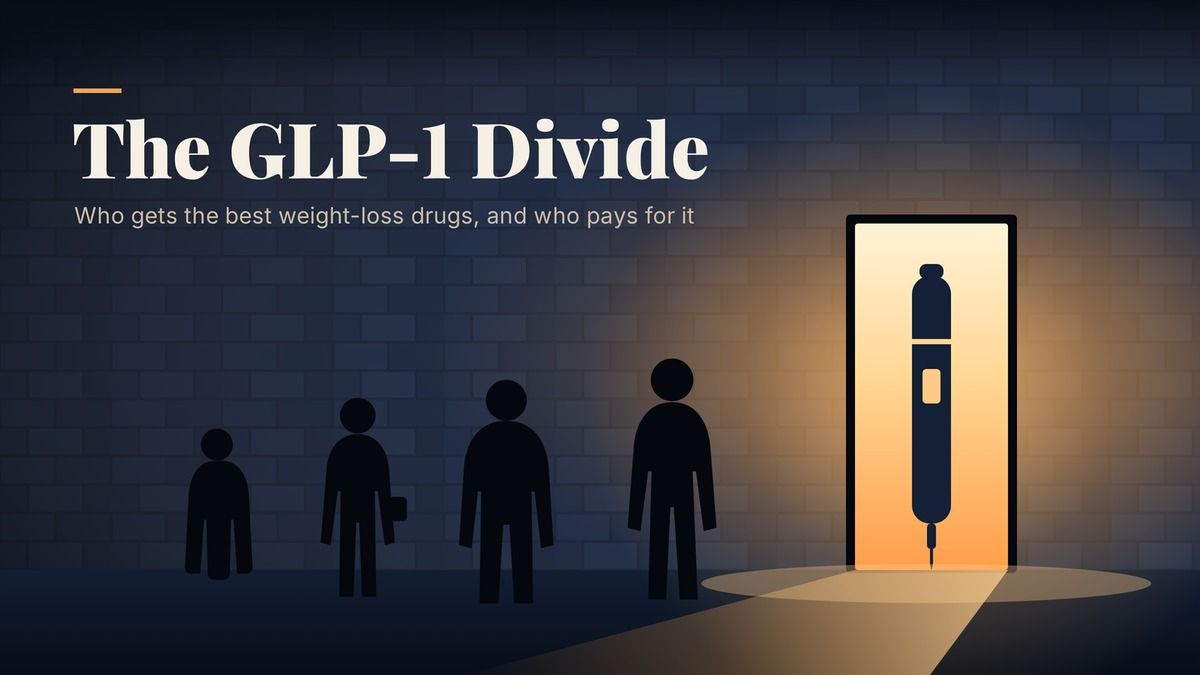
My patient went home without a prescription, although in 2023 or 2024 the shortage list meant a pharmacist could have prepared the real medicine for about two hundred dollars that month, and instead of that prescription she got advice. We are on track to build the most stratified obesity treatment system imaginable, where the well insured get lifelong therapy backed by huge trials and everyone else gets willpower. The compounding era, whatever its flaws, was the one period when that wall had a door in it. The proposals now sitting in Washington will decide whether that door gets bricked shut or left open, and I would ask the people making that choice to spend one afternoon in a hospital lobby, listening to what a denied claim sounds like in a real human voice, because it changes the meaning of the phrase clinical need.
Author Bio