If you are not aware of the statistics on diabetic limb loss, they deserve your attention. Prevention is an absolute necessity. We call this diabetic foot care, and the way podiatrists utilize these opportunities is moving into a more data-rich era. Remote temperature monitoring, digital wound assessment, pressure-sensing technologies, and adherence monitoring can identify change earlier and give clinicians a more continuous picture of risk outside the exam room.
There is plenty of promising technology in diabetic foot care. What matters clinically is whether the information it produces changes what we do for the patient. Does the information lead to timely action, fit into a real-world workflow, and reach the patients most likely to benefit? A temperature reading or wound photograph does not prevent an amputation. Someone has to see the information, decide what it means, and act on it to make it meaningful.
The Value of Seeing Trouble Sooner
For patients with diabetes and associated conditions like deformities or peripheral neuropathy, tissue injury often develops quietly. A patient may not feel increased plantar pressure, shear, trauma, or the early inflammatory changes that precede skin breakdown. By the time an ulcer is visible, the opportunity for a simpler intervention may already have passed, and costs to treat start to skyrocket.
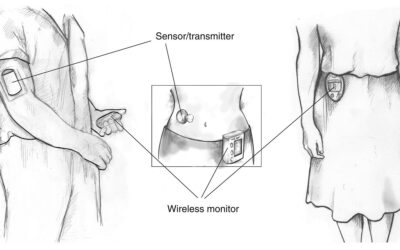
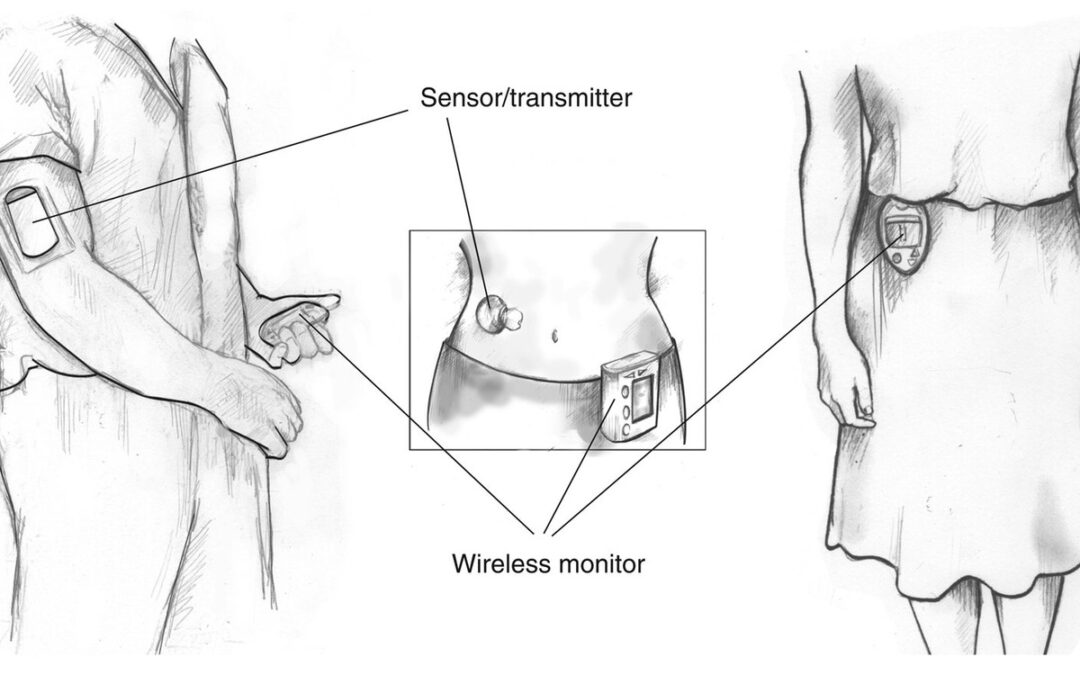
The attraction of remote monitoring is simple: it may give us a chance to intervene before the skin actually breaks down. Temperature monitoring is the clearest example of this concept. Localized increases in plantar skin temperature can reflect inflammation associated with problems like infection or repetitive mechanical stress. The concept is straightforward: compare corresponding sites on the two feet, identify a sustained temperature difference, and respond before tissue breakdown occurs.
The data is encouraging, but they do not justify saying that temperature monitoring prevents ulcers in every high-risk patient. The International Working Group on the Diabetic Foot recommends considering once-daily foot-temperature self-monitoring for people at moderate or high risk of ulceration. When a temperature difference of more than 2.2 °C (4.0 °F) persists for two consecutive days, the guideline recommends reducing ambulatory activity and contacting a trained foot-care professional (Bus et al., 2023). That distinction matters. A temperature difference does not tell you what is wrong. It tells you that something may be changing and that the patient may need to be evaluated.
Monitoring Only Matters if Behavior Changes
DIATEMP is useful because its results were mixed, which is probably closer to what clinicians should expect in practice. In the intention-to-treat analysis, enhanced at-home temperature monitoring did not significantly reduce recurrent ulcers at or adjacent to the monitored locations when compared with usual care. However, ulcer recurrence at any foot site was lower in the intervention group, and participants who detected a hotspot and responded with reduced ambulatory activity experienced substantially fewer recurrences, and fewer amputations. (Bus et al., 2021).
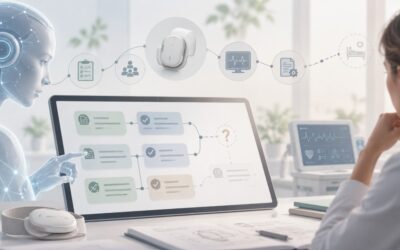
DIATEMP also showed the limitation of simply collecting data. The benefit appeared when patients actually changed their activity after detecting a hotspot. Patients need clear instructions about what an alert means. Education can cause change. Discussing items such as what activity should be modified, when they should contact the care team, and what should happen next must happen for this technology to be worthwhile. Clinicians need a workflow for reviewing data, triaging alerts, documenting decisions, and arranging a timely examination when needed. If nobody is responsible for reviewing the alerts, and contacting the patient, the practice has simply created another item for the inbox.
A multicenter post-market registry study of continuous temperature-monitoring socks reported lower rates of ulceration, amputation, hospitalization, and outpatient visits after patients entered a remote monitoring program (Shih et al., 2024). Those numbers are impressive, but this was a retrospective registry. Patients who enroll in a monitoring program may differ from patients who do not, so the study cannot tell us that the socks themselves caused the better outcomes. Programs that enroll motivated patients and are supported by engaged clinical teams often perform differently than routine implementation across broader populations. This is the challenge for all remote technologies working to reduce diabetic foot complications.
Digital Wound Assessment Needs Validation
Digital wound assessment is another fast-growing area of diabetic foot care. Smartphone photographs, calibrated imaging, three-dimensional measurement, thermal imaging, and algorithm-assisted segmentation are all being considered for the standardization of wound documentation.
Anyone who treats wounds knows how inconsistent wound measurements can be from one visit to the next. Lighting, camera angle, clinician technique, and documentation habits all affect what is recorded. A well-designed digital system can create a more reproducible record of the wound. Getting consistent objective data for area, tissue appearance, drainage, peri-wound changes, and healing trajectory are all needed for any of these to show effectiveness.
More consistent measurements would help researchers, but they may be even more useful in the clinic. A series of standardized photographs can make it easier to see when a wound has stopped progressing. This along with communication among care-team members, and a useful longitudinal record are of value to physicians.
This technology still has limits. An image cannot replace a comprehensive examination for infection, ischemia, ulcer depth, probe-to-bone findings. It also fails to fully appreciate perfusion, edema, pain, or systemic illness. It cannot ask the patient about dressing changes, using prescribed offloading devices, or whether social barriers are preventing adherence.
AI already has some useful applications in wound imaging, particularly segmentation and image classification. Whether those tools improve patient outcomes is a separate question. Recent studies demonstrate that AI systems can identify deformity, or classify and grade diabetic foot ulcers from images (Satheesh et al., 2026; Teoh et al., 2026). A model can perform well on a test image set, and still be frustrating or unreliable in an actual wound clinic.
Models are often built and tested using retrospective, single-center image sets. Performance may change substantially when images are obtained on different devices, in different lighting conditions, across varying skin tones, or from patients with different ulcer locations. Digital wound tools should demonstrate external validation, be clinically sensible with the alert thresholds, and present evidence that their use changes decisions or improves outcomes. If the extra measurements do not change a treatment decision, then we have given the clinician more work without giving the patient much benefit.
The Overlooked Data Point: Adherence
Offloading remains central to the treatment of plantar diabetic foot ulcers. Yet clinicians have long known that prescribing an offloading device and wearing it consistently are not the same thing. Conditions like this are where pressure and adherence-monitoring technology may offer its most useful applications. Smart insoles, wearable sensors, connected offloading devices, and activity monitors can help capture whether a patient is using a prescribed device, how much time is spent weight-bearing, and whether plantar loading is the issue.
In a prospective investigation of patients with plantar diabetic foot ulcers, better adherence to removable offloading devices was associated with improved healing (Crews et al., 2016). The obvious problem is that even the best offloading device does very little while it is sitting next to the patient’s bed.
Connected offloading systems can also measure adherence with reasonable accuracy. Park et al. (2023) evaluated a smart offloading boot paired with a smartwatch application and cloud dashboard. The system detected device use with 90.6% sensitivity, 88.0% specificity, and 89.3% overall accuracy. That tells us the technology can detect whether the boot is being worn. It does not tell us that using the system will make an ulcer heal faster.
The point is not to catch patients doing something wrong. If a patient is not wearing the device, the useful question is why? If data show that a patient is struggling to wear a device, the why is important. Does it involve fit, education, simplification of the regimen, assessment of fall risk, occupational demands, transportation barriers, or just need a different offloading strategy? Data become useful when they reveal a solvable problem.
Reimbursement and Equity Will Shape Adoption
These systems may work very differently in a well-funded specialty clinic than they do in a patient’s home, or when the patient has an old phone, poor internet access, or nobody available to help. Those who can afford devices, broadband access, smartphones, and the time required for daily self-monitoring will have obvious advantages. Medicare broadly covers remote patient monitoring for physiologic data in chronic and acute conditions (Centers for Medicare & Medicaid Services, 2026). However, getting Medicare to pay for remote monitoring is only part of the problem. The practice still has to enroll the patient, receive the data, review it, document the work, and decide who responds when something is abnormal. Remote monitoring requires appropriate device selection, patient onboarding, and data transmission. This needs to be followed by clinical review, patient communication, documentation, and billing compliance. Practices must determine whether the service can be delivered consistently, and whether reimbursement supports the staffing needed to make the data actionable.
The economic case is not settled. In a cost-effectiveness analysis conducted alongside the DIATEMP trial, at-home temperature monitoring reduced ulcer recurrence and lowered foot-care costs. However, it was judged at best equally cost-effective when compared with usual care (van Netten et al., 2024). The analysis raises an important point that is often missed in discussions of digital health. Does daily self-monitoring impose time and treatment burden, particularly for patients who never experience a recurrence?
A daily monitoring program may be difficult for someone with limited mobility, vision impairment, and low digital literacy. Problems like language barriers, financial insecurity, or inadequate caregiver support are complicating issues to consider. A connected device becomes another barrier if it assumes the patient has the time, connectivity, and confidence to use it without assistance.
Technology Must Serve Coordinated Diabetic Foot Care
I do not see these tools replacing clinical judgment. Their value is in giving the care team information between visits that we previously did not have. Remote temperature monitoring may identify inflammation before an ulcer develops. Digital imaging may make wound progression more visible and measurable. Pressure and adherence data may reveal why a wound is not healing. These are meaningful advances, but none can independently evaluate perfusion, manage Charcot osteoarthropathy, or correct mechanical stress.
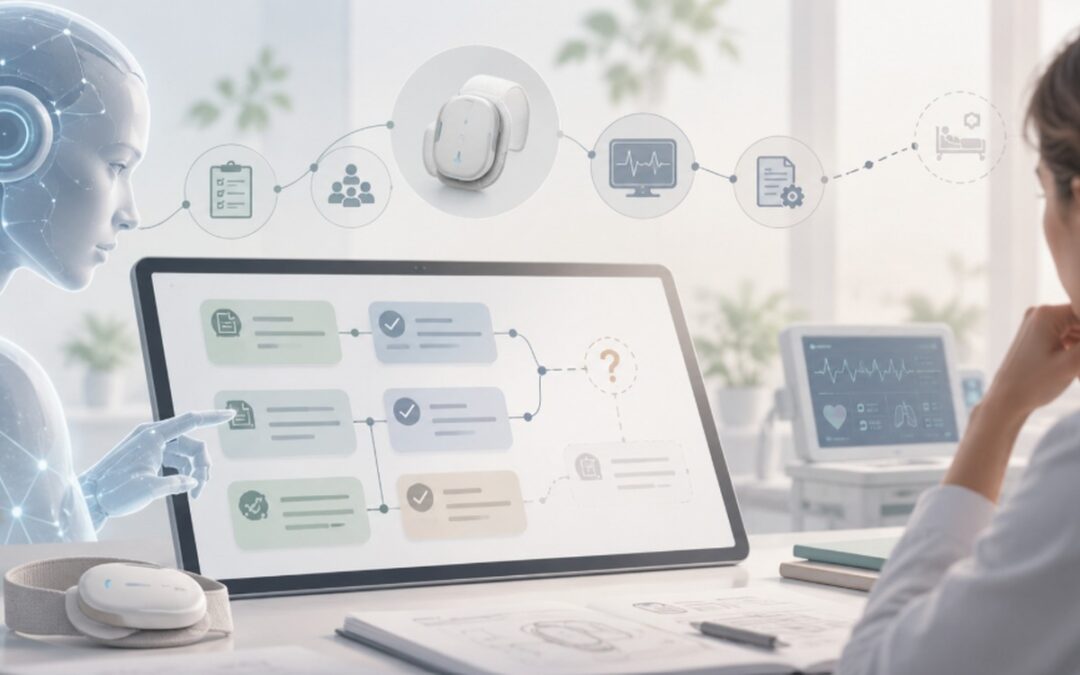
A useful system is much more concrete. An alert comes in, someone reviews it, and action is taken. Activity or offloading is changed if necessary, and the patient comes in when the findings warrant an examination. Think of a patient that receives an alert, a trained team reviews the relevant information, the patient is contacted, activity or offloading is adjusted, and an in-person evaluation is arranged when clinically indicated.
We already have devices capable of collecting enormous amounts of information. Collecting more is probably not the problem we need to solve. The harder question is whether we can trust the information, and whether somebody actually does something with it when a patient is getting into trouble. If the data lead to an earlier phone call, less walking for a few days, a change in offloading, or an earlier office visit, then the technology has probably earned its place in diabetic foot care.
Author Bio