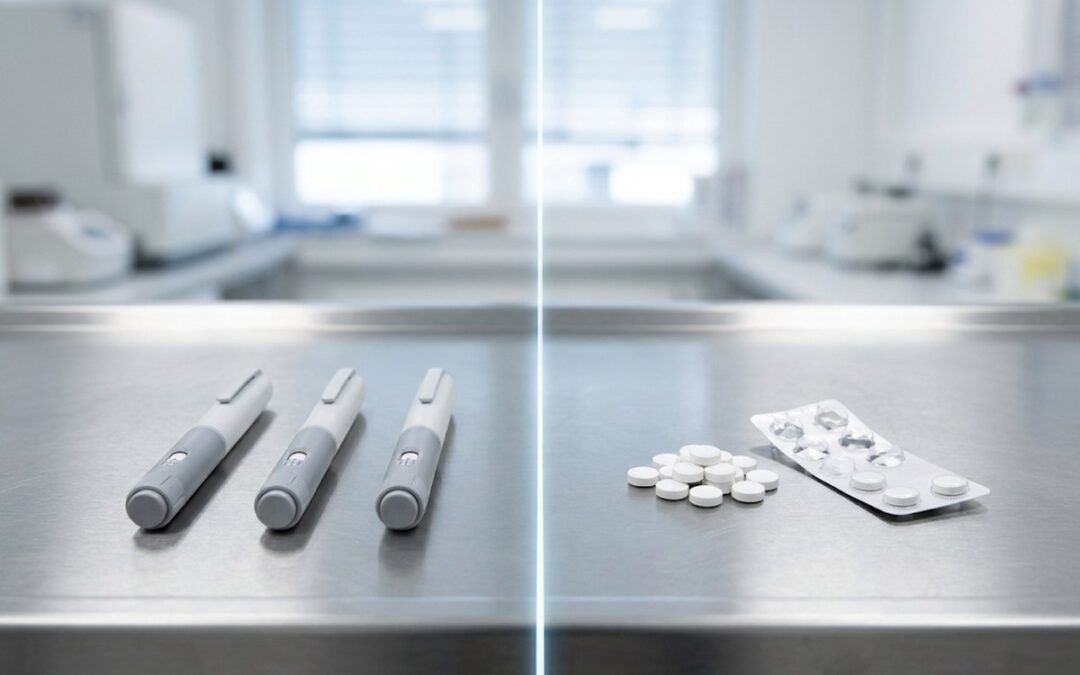
The first factor XIa inhibitor approved in the US is Bayer’s asundexian, sold as Sunharbo. It cannot yet be compared directly with milvexian, the rival from Bristol Myers Squibb and Johnson & Johnson. No head-to-head trial exists, and milvexian’s stroke results have not been reported. The US Food and Drug Administration (FDA) announced the approval on 9 November 2026.
What can be compared today is trial design, dosing, regulatory position and the published evidence. That picture will change once the milvexian stroke trial reads out. Bristol Myers Squibb and Johnson & Johnson said in November 2025 that topline data were expected in 2026.
What Is the First Factor XIa Inhibitor Approved For?
The FDA approved Sunharbo 50 mg tablets for use with antiplatelet therapy. The aim is to reduce the risk of stroke in adults after a recent mild-to-moderate non-cardioembolic ischaemic stroke. The indication also covers adults after a high-risk transient ischaemic attack (TIA). The agency described Sunharbo as the first factor XIa inhibitor for this use.
The drug is not approved for stroke prevention in atrial fibrillation, according to the FDA announcement. The applicant was Bayer HealthCare Pharmaceuticals Inc. of Whippany, New Jersey. The application received Fast Track designation and Priority Review. The FDA accepted the application under Priority Review in May 2026.
Hylton V. Joffe directs the FDA’s Office of Cardiology, Hematology, Endocrinology, and Nephrology. “Today’s approval represents a meaningful advance for patients and health care providers,” Joffe said. He linked the decision to clinicians “seeking a new option for secondary stroke prevention.”
What Did OCEANIC-STROKE Show?
The approval rests on OCEANIC-STROKE, a Phase 3, randomised, double-blind, placebo-controlled trial. It enrolled 12,327 adults within 72 hours of symptom onset. Every participant also received antiplatelet therapy, and the trial is registered as NCT05686070.
The FDA said ischaemic stroke fell by 26 per cent versus placebo. The median treatment duration was 14.2 months. The full results appeared in The New England Journal of Medicine, with Mukul Sharma as first author. There, ischaemic stroke occurred in 6.2 per cent of the asundexian group. The placebo figure was 8.4 per cent. The cause-specific hazard ratio was 0.74 (95 per cent CI 0.65 to 0.84).
Bleeding and Safety Findings
Major bleeding, the primary safety endpoint, occurred in 1.9 per cent with asundexian and 1.7 per cent with placebo. The hazard ratio was 1.10 (95 per cent CI 0.85 to 1.44). The FDA said overall major bleeding was similar to placebo. However, the agency said bleeding increased in patients older than 75 years. It also said bleeding increased during the first 90 days of treatment.
Gastrointestinal bleeding was more common with Sunharbo, the FDA added. Diarrhoea was the most frequently reported adverse reaction. In the published results, adverse events occurred in 69.3 per cent with asundexian and 70.1 per cent with placebo. Serious adverse events were 19.2 per cent and 19.5 per cent respectively.
The FDA also listed several limitations. Sunharbo is not recommended with combined P-gp and strong CYP3A4 inducers, such as carbamazepine. It is not recommended in moderate or severe hepatic impairment. Treatment should be withheld for at least 24 hours before elective surgery or invasive procedures. It should also be withheld for at least 24 hours after thrombolysis for acute ischaemic stroke.
How Does Asundexian Compare With Milvexian?
A direct comparison is not yet possible. Milvexian remains an investigational factor XIa inhibitor, developed jointly by Bristol Myers Squibb and Johnson & Johnson. Its secondary stroke trial, LIBREXIA-STROKE (NCT05702034), compares milvexian with placebo. Its primary endpoint is time to first ischaemic stroke, according to Johnson & Johnson’s trial listing.
A check of that listing on 11 November 2026 showed enrolment complete. It also listed a trial end date of 15 October 2026. ClinicalTrials.gov, last updated in July 2026, gives an estimated primary completion date of 11 November 2026. Both stroke programmes therefore use a placebo comparator and an ischaemic stroke primary endpoint. Even so, any comparison of their results will be cross-trial. Differences in population, follow-up and background therapy will matter.
Dosing is one visible difference. Sunharbo is a once-daily tablet. BioSpace, citing BMO analysts, reported that milvexian is dosed twice daily. BMO suggested that superior stroke reduction could still support premium pricing for milvexian. That view comes from one analyst note, and the data needed to test it are not yet public.
Atrial Fibrillation Is Where the Programmes Diverge
Bayer stopped its OCEANIC-AF trial in November 2023. An independent data monitoring committee found inferior efficacy of asundexian against apixaban in atrial fibrillation. The committee recommended continuing OCEANIC-STROKE as planned, Bayer said at the time.
Milvexian’s programme has had its own setback. In November 2025, the two partners stopped LIBREXIA-ACS in acute coronary syndrome. An interim analysis found the trial unlikely to meet its primary efficacy endpoint. No new safety concerns were identified, according to the companies. LIBREXIA-AF and LIBREXIA-STROKE continued as planned. Full results at the European Society of Cardiology Congress 2026 confirmed the miss. The primary endpoint was cardiovascular death, heart attack or ischaemic stroke. It occurred in 5.4 per cent with milvexian and 5.1 per cent with placebo.
BioSpace reported in July 2026 that the LIBREXIA-AF readout had been pushed back. It said then that LIBREXIA-STROKE findings were still expected by the end of 2026. On its 29 October earnings call, Bristol Myers Squibb put the AF readout in the first quarter of 2027.
When Will Milvexian Data Settle the Comparison?
The answer depends on the LIBREXIA-STROKE topline result. A search on 11 November 2026 found no announced result. Until then, readers comparing the two factor XIa inhibitors have one set of Phase 3 stroke data, not two.
When the data arrive, three measures will frame the comparison. The first is the size of any reduction in ischaemic stroke against placebo. The second is major bleeding, given the age and early-treatment signals the FDA described for Sunharbo. The third is practical: dosing frequency, price and access.
A direct answer would need a head-to-head trial. Neither company has announced one in the releases reviewed for this article.
What Does the Approval Mean for Bayer and the UK?
Bayer described asundexian as “the first drug approved in a new class of Factor XIa inhibitors worldwide.” China’s National Medical Products Administration approved it first, which Bayer announced on 26 October 2026. A Bayer spokesperson told BioPharma Dive the US list price is $748.50 for a 30-day supply.
In Europe, the European Medicines Agency validated Bayer’s marketing authorisation application in June 2026. Japan’s Ministry of Health, Labour and Welfare accepted a new drug application in May 2026. Bayer has said further applications are under review in other markets. Australia’s Therapeutic Goods Administration lists a Sunharbo application accepted in July 2026.
For UK readers, the position is less clear. A search of the electronic medicines compendium on 11 November 2026 returned no asundexian listing. The Bayer releases reviewed for this article do not name a UK submission. However, the Medicines and Healthcare products Regulatory Agency (MHRA) agreed a paediatric investigation plan for asundexian in 2023. The plan covers secondary prevention of ischaemic stroke, and the MHRA has since accepted changes to it. An agreed plan is normally required before a UK marketing authorisation application can be validated.
Commercially, the launch arrives as Bayer’s Xarelto faces generic competition. BioPharma Dive reported Xarelto sales of €738 million in the first half of 2026, down nearly 43 per cent. Meanwhile, Bristol Myers Squibb reported third-quarter Eliquis sales of $4.69bn, up 25 per cent. That result is covered in the third-quarter pharma earnings review.
Other candidates are further back. BioPharma Dive noted that Novartis is developing an injectable antibody from its 2025 purchase of Anthos Therapeutics. Other recent agency actions are logged in the FDA drug approval decisions tracker.
What Remains Unknown
Several questions remain open. The EU and Japanese decisions are still pending. Whether milvexian matches, exceeds or falls short of a 26 per cent reduction is unknown until LIBREXIA-STROKE reports. Finally, atrial fibrillation remains outside Sunharbo’s US indication, and LIBREXIA-AF is not expected to report until 2027.