Regulatory status checked on 11 November 2026.
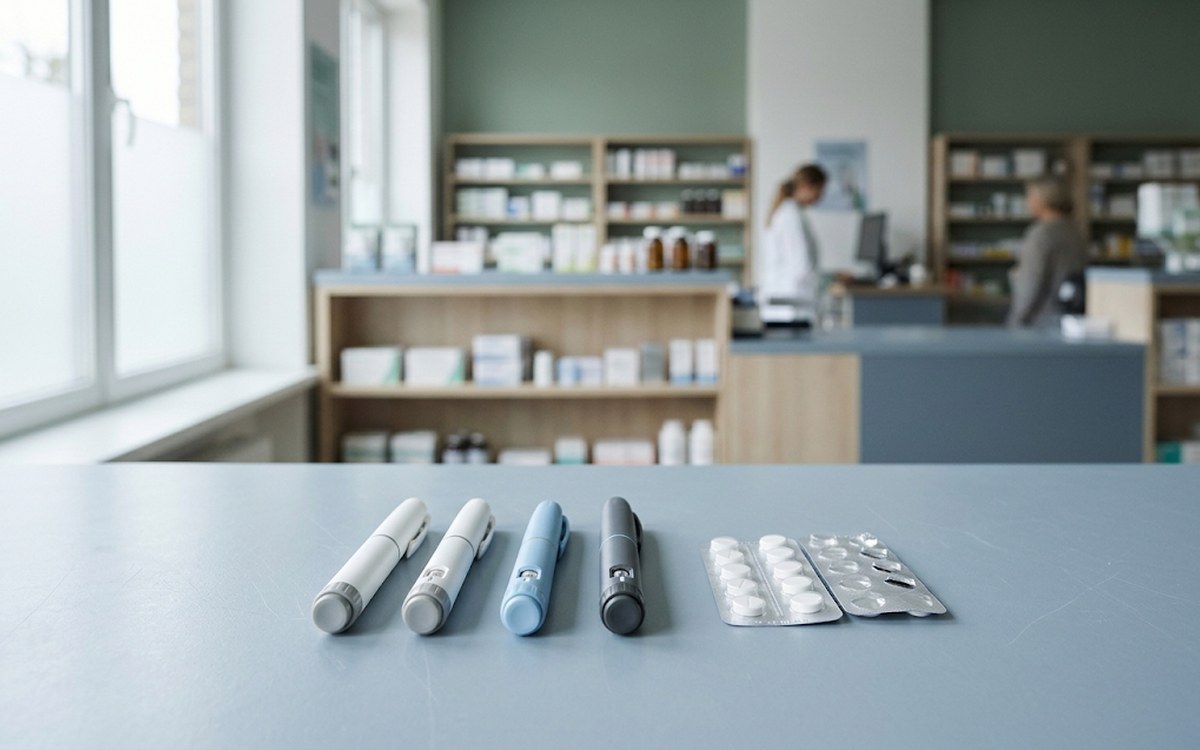
Seven molecules make up the approved GLP-1 class in the US, Europe and the UK. They differ in dosing, in whether they are injections or tablets, and in the conditions they treat. This GLP-1 medications list covers every one, with brand names, makers, dosing and regulatory status. Several more are approved only in China. The GLP-1 medications list is updated as approvals change. For how the drugs work and who they suit, see GLP-1 receptor agonists explained.
The quick list
- Exenatide: Byetta, Bydureon (no longer marketed in the US, EU or UK)
- Liraglutide: Victoza, Saxenda and generic versions
- Lixisenatide: Suliqua (combined with insulin glargine); standalone Lyxumia withdrawn
- Dulaglutide: Trulicity
- Semaglutide: Ozempic, Rybelsus, Wegovy
- Tirzepatide: Mounjaro, Zepbound (a dual GIP and GLP-1 agonist)
- Orforglipron: Foundayo
The Complete GLP-1 Medications List at a Glance
The table runs in order of first approval. Dates show the year of first FDA approval, except for lixisenatide, where the EU date is shown.
| Drug | Main brands | Company | Form and dosing | First approved |
|---|---|---|---|---|
| Exenatide | Byetta, Bydureon | AstraZeneca | Injection, twice daily or weekly | 2005 (US) |
| Liraglutide | Victoza, Saxenda; generics | Novo Nordisk; generic makers | Daily injection | 2010 (US) |
| Lixisenatide | Suliqua with insulin glargine; Lyxumia withdrawn | Sanofi | Daily injection | 2013 (EU) |
| Dulaglutide | Trulicity | Eli Lilly | Weekly injection | 2014 (US) |
| Semaglutide | Ozempic, Rybelsus, Wegovy; Kayshild (EU) | Novo Nordisk | Weekly injection or daily tablet | 2017 (US) |
| Tirzepatide* | Mounjaro, Zepbound | Eli Lilly | Weekly injection | 2022 (US) |
| Orforglipron | Foundayo | Eli Lilly | Daily tablet | 2026 (US) |
*Tirzepatide also activates the GIP receptor, so it is strictly a dual agonist. It is included because it shares the class’s mechanism, uses and safety warnings.
Licensed Uses and Status in the US, EU and UK
Licences are granted product by product. The same molecule can therefore carry different uses under different brand names. The status below was checked on 11 November 2026.
| Product | Main licensed uses | US | EU | UK |
|---|---|---|---|---|
| Ozempic injection | Type 2 diabetes; heart and kidney indications in the US | Approved | Approved | Approved |
| Oral semaglutide (Rybelsus) | Type 2 diabetes | Reformulated as Ozempic tablets, May 2026 | Approved | Approved |
| Wegovy injection | Weight management, heart risk, MASH | Approved | Approved; MASH sold as Kayshild | Approved |
| Wegovy tablet | Weight management | Approved Dec 2025 | Approved Jul 2026 | Approved Jun 2026 |
| Mounjaro | Type 2 diabetes; weight in EU and UK | Approved (diabetes) | Approved | Approved |
| Zepbound | Weight management, sleep apnoea | Approved | Not used (Mounjaro) | Not used (Mounjaro) |
| Foundayo | Weight management; type 2 diabetes in UK and (recommended) EU | Approved Apr 2026 | Positive CHMP opinion Oct 2026 | Approved Aug 2026 |
| Victoza and generics | Type 2 diabetes from age 10 | Approved; generics since 2024 | Approved | Approved; also Diavic, Zegluxen |
| Saxenda and generics | Weight management from age 12 | Approved; generic since 2025 | Approved | Approved; also Biolide, Nevolat |
| Trulicity | Type 2 diabetes from age 10 | Approved | Approved | Approved |
| Byetta | Type 2 diabetes | Discontinued Oct 2024 | Withdrawn Jan 2026 | Not marketed |
| Bydureon | Type 2 diabetes | Discontinued Oct 2024 | Withdrawn Jan 2026 | Not marketed |
| Lyxumia (Adlyxin in US) | Type 2 diabetes | Withdrawn 2023 | Withdrawn Dec 2025 | No longer authorised** |
**The MHRA’s January 2026 class safety review named dulaglutide, exenatide, liraglutide, semaglutide and tirzepatide as the UK-authorised agents. It also noted that lixisenatide is no longer authorised. Detailed indication-by-indication status is in the GLP-1 indications regulatory status map.
Class Safety Updates
Safety warnings are usually applied across the whole class. On 9 November 2026 the FDA required new labelling for GLP-1 receptor agonists in the US. Labels must now warn of a potential increased risk of non-arteritic anterior ischaemic optic neuropathy (NAION). This rare condition can cause sudden vision loss in one eye. The requirement covers US GLP-1 receptor agonist products, so it affects nearly every drug on this GLP-1 medications list. The evidence is examined in what the FDA’s NAION warning means. In the UK, the MHRA strengthened pancreatitis warnings across the class in January 2026.
Short-Acting and Long-Acting Agents
Pharmacologists often divide the class by how long each drug acts. Short-acting agents include twice-daily exenatide and once-daily lixisenatide. They mainly blunt the glucose spike after meals by slowing stomach emptying.
Long-acting agents include liraglutide, dulaglutide, weekly exenatide and semaglutide. They keep the receptor active across the day and night. As a result, they have a stronger effect on fasting glucose. The newer weight management drugs all sit in this long-acting group.
Where Tirzepatide and the Multi-Agonists Fit
Tirzepatide activates the GIP receptor as well as the GLP-1 receptor. Strictly, that makes it a dual agonist rather than a GLP-1 receptor agonist. It appears on most lists because it shares the class’s uses and safety warnings. The MHRA, for example, included it in its January 2026 pancreatitis review alongside the other agents.
Other multi-agonists are following. Mazdutide, approved in China in 2025, pairs GLP-1 with glucagon receptor activity. Retatrutide targets GLP-1, GIP and glucagon receptors together. Both are covered in dual and triple agonists explained.
Oral GLP-1 Medications
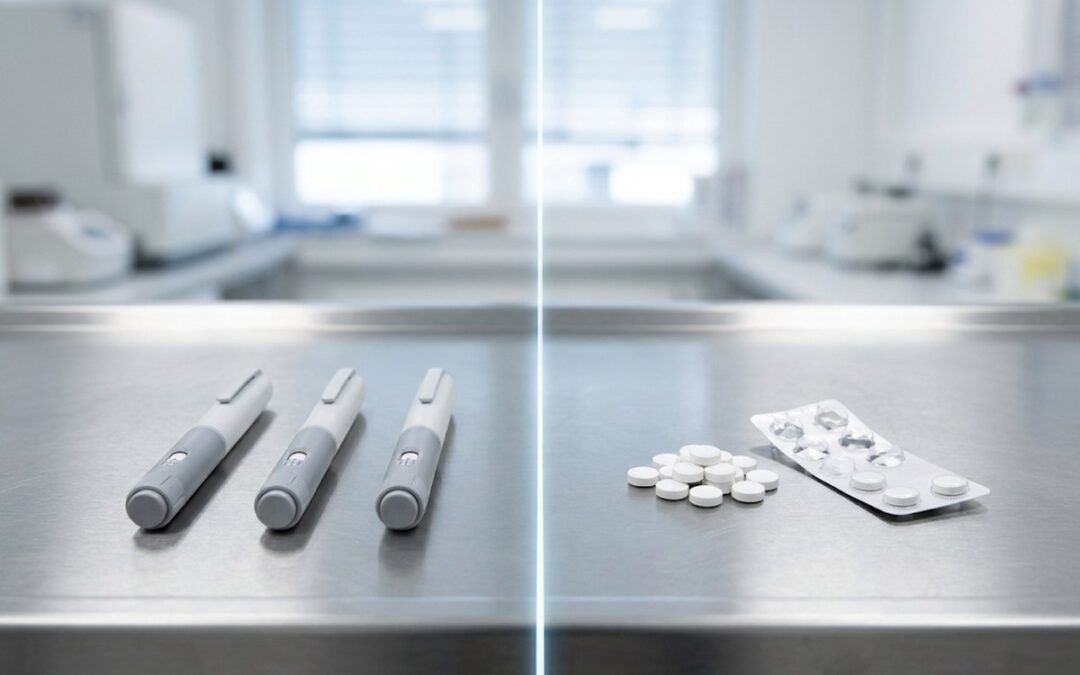
Three GLP-1 tablets are now approved. Oral semaglutide for type 2 diabetes was first approved in the US in 2019 as Rybelsus. Since May 2026 a reformulated version has been sold in the US as Ozempic tablets. The new 1.5, 4 and 9 mg strengths are not interchangeable mg for mg with the original Rybelsus doses. Rybelsus remains the UK and EU name.
A higher-dose semaglutide tablet for weight management, the Wegovy pill, followed in the US in December 2025. The UK approved it in June 2026 and the European Commission on 15 July 2026, as Novo Nordisk announced. Oral semaglutide is a peptide, so it must be taken on an empty stomach with a little water.
Orforglipron (Foundayo) is a small molecule rather than a peptide. It can be taken at any time, without food or water restrictions. The FDA approved it in April 2026 and the MHRA in August 2026. In October 2026 the EMA’s medicines committee recommended EU approval, and a European Commission decision is pending. The two oral options are compared in Foundayo vs Rybelsus.
Generics and Other Liraglutide Brands
Liraglutide was the first GLP-1 to face generic competition. Teva launched an authorised generic of Victoza in the US in June 2024. A generic version of Saxenda followed in August 2025.
In the UK, several other liraglutide brands are now prescribed. Diavic and Zegluxen are used for type 2 diabetes, according to Diabetes UK. Biolide and Nevolat are used for weight management.
Semaglutide is next. Its core patent expired in India, China and Brazil in March 2026. Protection in the UK, EU and US runs to 2031 or later, as the semaglutide patent expiry analysis explains.
GLP-1 Medications Approved Only in China
China has authorised several GLP-1-based medicines that are not available in the US, EU or UK. They sit outside the main GLP-1 medications list above.
- Beinaglutide (Feisumei): Developed by Benemae and approved for weight management in July 2023.
- Polyethylene glycol loxenatide (Fulaimei): A long-acting agent from Jiangsu Hansoh, used for type 2 diabetes.
- Ecnoglutide: Sciwind Biosciences’ cAMP-biased GLP-1 receptor agonist. Already approved for type 2 diabetes, it gained a weight management licence in March 2026.
- Mazdutide: Innovent Biologics’ dual GLP-1 and glucagon agonist, licensed from Lilly. China approved it for weight management in June 2025, and later for type 2 diabetes.
Withdrawn and Discontinued Products
Several products have left the market, mostly for commercial rather than safety reasons. They are recorded here so the GLP-1 medications list stays complete.
- Exenatide: AstraZeneca discontinued Byetta and Bydureon BCise in the US in October 2024. The EU authorisations for Byetta and Bydureon were both withdrawn on 1 January 2026, at AstraZeneca’s request. Exenatide remains authorised in the UK but is no longer marketed there.
- Lixisenatide: The standalone US product, Adlyxin, was withdrawn in 2023. The EU authorisation for Lyxumia was withdrawn on 18 December 2025 at Sanofi’s request, for commercial reasons. Suliqua, its combination with insulin glargine, remains authorised in the EU.
- Albiglutide (Tanzeum, Eperzan): GSK’s weekly injection was approved in the US and EU in 2014. GSK withdrew it worldwide in 2018 for commercial reasons.
What Could Join the GLP-1 Medications List Next
- CagriSema: Novo Nordisk’s combination of semaglutide and the amylin analogue cagrilintide was filed with the FDA in December 2025. The company expects an FDA decision before the end of 2026.
- Retatrutide: Lilly’s triple agonist is targeting a US filing in the first quarter of 2027.
- Survodutide: Boehringer Ingelheim reported phase 3 SYNCHRONIZE results for its dual agonist during 2026.
Every candidate is tracked in the GLP-1 drug pipeline 2026, and monthly changes in the obesity drug news tracker.
Frequently Asked Questions
How many GLP-1 receptor agonists are there?
Seven molecules are currently approved in the US, EU or UK, counting tirzepatide. Several more, including ecnoglutide and beinaglutide, are approved only in China. Albiglutide, withdrawn in 2018, no longer appears on the GLP-1 medications list.
Which GLP-1 medications are taken once a week?
Dulaglutide (Trulicity), weekly semaglutide (Ozempic, Wegovy) and tirzepatide (Mounjaro, Zepbound) are once-weekly injections. Weekly exenatide (Bydureon) is no longer available in the US, EU or UK.
Which GLP-1 medications are approved for weight loss in the UK?
Wegovy (injection and tablet), Mounjaro, Saxenda, the liraglutide brands Biolide and Nevolat, and Foundayo hold UK weight management licences.
Is there a generic GLP-1?
Yes, in some markets. Generic liraglutide is sold in the US, and other liraglutide brands are available in the UK. Generic semaglutide is not available in the UK, EU or US.
Is Ozempic a GLP-1 receptor agonist?
Yes. Ozempic contains semaglutide, a GLP-1 receptor agonist, and is licensed for type 2 diabetes. Wegovy contains the same molecule at doses licensed for weight management.