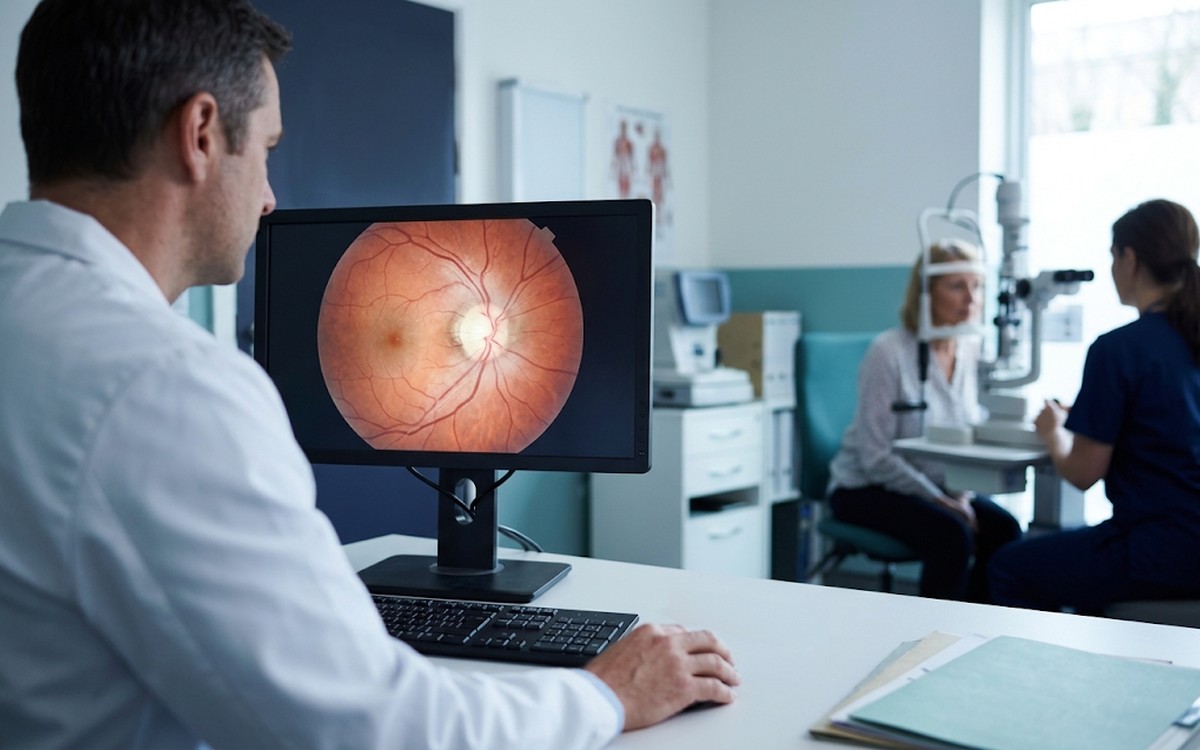
The FDA now requires every GLP-1 receptor agonist label to carry a warning about a rare eye condition. The condition is non-arteritic anterior ischaemic optic neuropathy, or NAION. The agency announced the change in a drug safety communication on 9 November 2026. For readers asking about GLP-1 vision loss, the answer so far is that the risk looks real but small. The FDA describes a potential increased risk, and its own data are mixed.
What did the FDA require on 9 November 2026?
The FDA told application holders for all GLP-1 receptor agonists to add NAION information to the Warnings and Precautions section. The class includes semaglutide, tirzepatide, liraglutide, dulaglutide, lixisenatide, exenatide and the oral agent orforglipron, sold as Foundayo. Brands in the FDA table include Ozempic, Wegovy, Rybelsus, Mounjaro, Zepbound, Trulicity, Victoza and Saxenda. It also lists the combination products Xultophy and Soliqua. BMO analysts, quoted by BioSpace, described the change as a warnings update rather than a restriction on approved indications. The FDA table also notes that Byetta, exenatide, was voluntarily withdrawn in 2025 for reasons unrelated to safety or effectiveness. Only generic exenatide is now marketed.
NAION causes sudden, painless vision loss in one eye. The loss can be permanent. The FDA gave a background incidence of 2.3 to 10.2 cases per 100,000 adults a year over age 50. Known risk factors include smoking, diabetes, high blood pressure, sleep apnoea, anaemia and kidney disease. Several of these are common in people who take GLP-1 drugs.
How big is the GLP-1 vision loss risk in the FDA data?
The FDA drew on three kinds of evidence: a trial meta-analysis, a Sentinel cohort study and published observational studies. Each gives a different answer.
The trial meta-analysis
The FDA pooled 126 randomised controlled trials. They covered 134,253 patients and 288,879 person-years of follow-up. Of these patients, 78,217 took a GLP-1 drug and 56,036 took a comparator. The agency counted 15 probable NAION events. Ten occurred on a GLP-1 drug and five on placebo. None occurred on other glucose-lowering drugs.
That gave 6.4 events per 100,000 person-years on GLP-1 drugs, against 3.8 for comparators. With only 15 events, the comparison rests on a handful of cases. The FDA page, read on 10 November 2026, reports no confidence interval for it.
The Sentinel cohort study
The FDA’s Sentinel analysis followed adults with type 2 diabetes. They started a GLP-1 drug, an SGLT-2 inhibitor or a DPP-4 inhibitor between 2019 and 2024. Event rates ranged from 26 to 32 per 100,000 person-years.
Against SGLT-2 inhibitors, the hazard ratio was 1.19 (95 per cent confidence interval 0.91 to 1.54). That result was not statistically significant. Against DPP-4 inhibitors, the hazard ratio was 1.43 (95 per cent confidence interval 1.02 to 2.01). That increase was statistically significant. The cohort covered people with type 2 diabetes. The FDA page does not report a separate estimate for weight-management use.
Published studies and a 2024 paper
The FDA said rigorous published studies in type 2 diabetes consistently found higher risk against DPP-4 or SGLT-2 comparators. It also cited a 2024 semaglutide study in JAMA Ophthalmology, whose first author was Jimena Tatiana Hathaway. The FDA said that study raised the NAION question. It noted several limitations but judged that further assessment was warranted.
Two further limits apply. Adverse event reports were hard to interpret, because NAION risk factors overlap with conditions common in GLP-1 users. Animal data also did not identify a mechanism.
Do GLP-1 drugs cause NAION, according to the FDA?
The FDA describes a “potential increased risk”, not a proven cause. It states that the underlying cause of NAION is not fully understood. Its own comparison with SGLT-2 inhibitors was not statistically significant. The absolute increase appears small, given the background incidence. Put simply, GLP-1 vision loss is a flagged possibility rather than an established effect.
How does the FDA position compare with Europe and the UK?
Semaglutide: regulators outside the US acted first
Europe moved earlier on semaglutide. PRAC, the EMA safety committee, concluded on 6 June 2025 that NAION is a very rare semaglutide side effect. The drugs are Ozempic, Rybelsus and Wegovy. The EMA defines very rare as up to 1 in 10,000 people. In adults with type 2 diabetes, the studies suggested about a two-fold higher risk. That equals about one extra case per 10,000 person-years of treatment.
The WHO alerted regulators on 27 June 2025. The MHRA followed with a Drug Safety Update on 5 February 2026. It told clinicians to refer sudden vision loss urgently and to stop semaglutide if NAION is confirmed. The UK Wegovy summary of product characteristics already lists NAION. A search of the Wegovy 2.4 mg pen page on emc, on 10 November 2026, found NAION listed. It appears in sections 4.4 and 4.8 as a very rare effect.
Tirzepatide and other GLP-1 drugs
The European review covered only semaglutide. In February 2026, the MHRA said it was reviewing evidence for other GLP-1 drugs. A search of the emc Mounjaro KwikPen 5 mg page on 10 November 2026 found no NAION entry. The check covered sections 4.4 and 4.8. The page showed a last-updated date of 8 September 2026. That SmPC covers all six strengths, and the label may change after the FDA action. Australia’s TGA now lists NAION as a post-marketing report in tirzepatide product information, without a separate warning. Its advisory committee said the evidence may support a signal for semaglutide, but not tirzepatide. For now, GLP-1 vision loss is labelled differently across drugs and across countries.
What should patients and prescribers do now?
The FDA advises patients to contact a healthcare professional right away after sudden, painless vision loss in one eye. Other warning signs include blind spots, tunnel vision, colour distortion and blurry central vision. Patients who have had NAION should discuss with their clinician whether to continue a GLP-1 drug. The advice on GLP-1 vision loss centres on speed: act on symptoms promptly.
Prescribers should refer suspected cases promptly to an ophthalmologist. The FDA says to consider stopping the drug in patients who develop NAION. It makes an exception where the benefits clearly outweigh the risk. For semaglutide, the MHRA advises patients to go to an eye casualty unit or A&E if their sight suddenly worsens.
What is still unknown about GLP-1 vision loss?
Several questions remain open. The trial signal rests on 15 events. The Sentinel result against SGLT-2 inhibitors was not significant. The FDA found no mechanism in animal data. The Sentinel cohort covered type 2 diabetes, so the position for weight-management users is less clear. The UK status of tirzepatide also remains unresolved. The FDA also weighs benefit against risk, so the balance may differ by patient.
Three developments would settle more. Each sponsor’s label wording will show how the FDA language is applied. Any MHRA or EMA decision on tirzepatide would extend the UK position. New trial or registry data would test the gap between 6.4 and 3.8 events. None of the sources read on 10 November 2026 gave a date for any of these.
What does the warning mean for Novo Nordisk and Lilly?
The commercial reading so far is muted. BMO analysts wrote in a Monday note, reported by BioSpace. They see limited risk to Novo Nordisk and Lilly obesity coverage. They cited the rarity of the events. That is one firm’s view. Endpoints News reported that Lilly and Novo shares rose on the day. Novo told Reuters it continues to believe “the data do not establish a cause-and-effect relationship”. A Lilly spokesperson said the company was evaluating the update and would respond to the FDA promptly.
The stakes are large. BioSpace reported that Mounjaro and Zepbound generated combined sales of $36.51 billion in 2025. It put Ozempic, Wegovy and Rybelsus at $36.19 billion.
In short, GLP-1 vision loss is now a required warning, with a rare but uncertain risk. The earlier GLP-1 side effects evidence review covers other contested safety signals. The obesity drug news tracker follows label and approval changes as they arrive.