

As healthcare and life sciences organizations confront workforce shortages, regulatory pressures, rapid technological change, and increasing operational complexity, building a pipeline of extraordinary leaders has never been more important.
Many of these organizations often make the mistake of promoting people into leadership roles primarily because they are outstanding clinicians, researchers, operators, or technical experts. While strong performance is certainly a prerequisite, it is rarely the best predictor of leadership success.
Throughout my career, the people I have promoted into leadership roles demonstrated something more important than technical excellence: they were already influencing, developing, and elevating others before they ever received a leadership title.
I looked for individuals who took ownership beyond their job description, naturally coached peers, addressed problems rather than waiting for someone else to solve them, and consistently left people better than they found them. They understood an important truth that many professionals learn too late: leadership is not about personal achievement—it’s about creating conditions where other people can succeed.
That leads to what I believe is the most underestimated leadership skill among early-career professionals: the ability to simultaneously demonstrate care and challenge.
Many ambitious professionals assume leadership is primarily about expertise, execution, or driving results. Those skills matter, but they are not what create extraordinary teams. What distinguishes future leaders is the ability to help others achieve their full potential.
After practicing medicine as an emergency physician and hospitalist for 22 years while also serving in several leadership roles, I stepped away from direct patient care in 2023 to focus exclusively on leadership development and cultivating the next generation of leaders. I underestimated how much I would miss being at the bedside, working with interdisciplinary teams in service to patients and families. This experience eventually led me to write Leadership Alchemy: Essential Truths for Driving Transformational Change, a book about the timeless principles of serving and developing others through leadership.
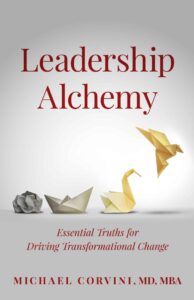
In the book, I use the metaphor of an alchemist transforming lead into gold. While fictional, the leadership challenge is very real. The transformation of ordinary contributors into extraordinary leaders requires two essential tools.
The first is Transformational Care—a leader’s ability to care so genuinely for people that it builds trust, deepens commitment, and unlocks potential.
The second is Transformational Challenge—a leader’s ability to call people toward higher standards, push them beyond their comfort zones, and help them become more than they thought possible.
Neither tool is sufficient on its own.
Many managers naturally drift toward one side of the equation. Some care deeply about people but avoid difficult conversations. Others relentlessly pursue results while neglecting the human being behind the performance. Neither approach consistently develops talent.
The most effective leaders create environments where people feel valued enough to hear difficult truths and challenged enough to discover capabilities they didn’t know they possessed.
This skill has become increasingly important as healthcare and life sciences organizations navigate burnout, operational pressures, and growing demands for performance and innovation. Leaders cannot simply manage tasks or achieve quarterly targets. They must create teams capable of sustained growth, resilience, collaboration, and continuous improvement.
In healthcare, leadership is never merely an internal management issue. The quality of leadership influences employee engagement, retention, teamwork, patient experience, operational performance, and clinical outcomes. Leaders who combine transformational care with transformational challenge create cultures where both people and performance thrive.
I have seen this principle play out repeatedly in clinical environments. A charge nurse, clinician leader, department director, or operational executive who genuinely invests in team development while maintaining uncompromising standards for quality and safety often produces dramatically different results than managers who focus exclusively on either relationships or metrics.
I’ve watched average performers grow into exceptional contributors because a leader believed in them enough to raise expectations. I’ve seen struggling employees regain confidence because someone cared enough to invest in their development instead of merely measuring their shortcomings. Time and again, the strongest leaders refused to choose between compassion and accountability.
When these two forces are applied simultaneously, something remarkable happens: ordinary people begin doing extraordinary things.
Not surprisingly, these are often the same individuals who go on to assume larger leadership responsibilities. Professionals who master this skill become talent multipliers. They strengthen succession pipelines, accelerate leadership development, and create cultures where continuous improvement becomes embedded in daily work. In healthcare and life sciences organizations, talent multiplication may be a leader’s most durable competitive advantage.
The same principle extends beyond clinical care. Whether leading a research team, a biotechnology startup, a pharmaceutical division, a medical device company, or a clinical operations group, leaders are ultimately responsible for creating environments where talented people can do their best work. Exceptional performance depends on both psychological safety and performance accountability.
Looking back on my personal and professional life, several experiences reinforced this lesson. In Leadership Alchemy, I share the story of a six-minute ski lift ride with a thirty-year veteran nurse named Bonnie. During our rapid-fire conversation about healthcare, she bluntly declared that “too many hospitals had done a poor job.”
When I asked whether any had done an outstanding job, she immediately softened and said several had.
“What made them different?” I asked.
Without hesitation, she replied that it came down to “good leadership.”
Her answer was striking because she had worked across multiple organizations over a thirty-year career. She had witnessed many of the same staffing pressures, operational challenges, and workplace realities play out in different environments. In her experience, the differentiator wasn’t resources, strategy, or technology. It was leadership.
Then she explained leadership in language far more memorable than anything found in a textbook: great leaders “actually give a sh*t” and “actually make sh*t better.”
Beneath the colorful wording was a profound truth.
“Actually giving a sh*t” is transformational care.
“Actually making sh*t better” is transformational challenge.
The highest truths in leadership are often remarkably simple. We tend to overlook them, obscure them with complexity, or dismiss them because they don’t sound sophisticated enough. Nurse Bonnie cut through all of that in a matter of seconds.
For professionals aspiring to leadership, my advice is simple: stop focusing so much on proving yourself and start focusing on developing others. Learn to hold high standards while demonstrating genuine care. Every interaction gives you an opportunity to notice someone, encourage someone, coach someone, or challenge someone.
In an industry dedicated to improving and extending human lives, the leaders who create the greatest impact are rarely those who focus solely on results. They are the leaders who develop people capable of achieving results beyond what anyone thought possible. By combining transformational care with transformational challenge, leaders strengthen organizations, elevate performance, accelerate innovation, and expand the positive impact their organizations can have on the people they serve.
And that is how leaders turn the ordinary into the extraordinary.
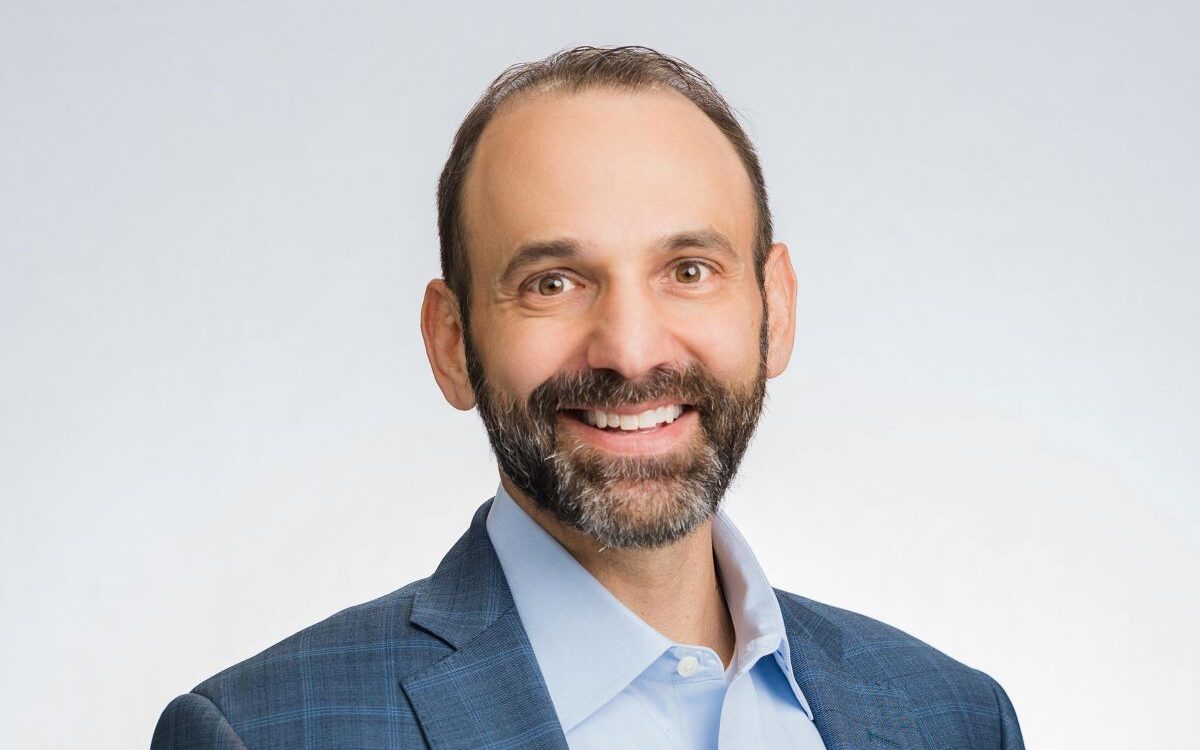
Dr. Michael Corvini is a physician executive with more than two decades of experience practicing medicine, leading healthcare organizations through complex clinical and operational challenges, and developing high-performing teams. He is the author of Leadership Alchemy: Essential Truths for Driving Transformational Change, the first volume in a three-book leadership series exploring the timeless principles behind effective leadership, organizational excellence, and transformational change. His books are available through Amazon and other major booksellers and his weekly reflections can be found through his newsletter on Beehiiv.
Author Bio