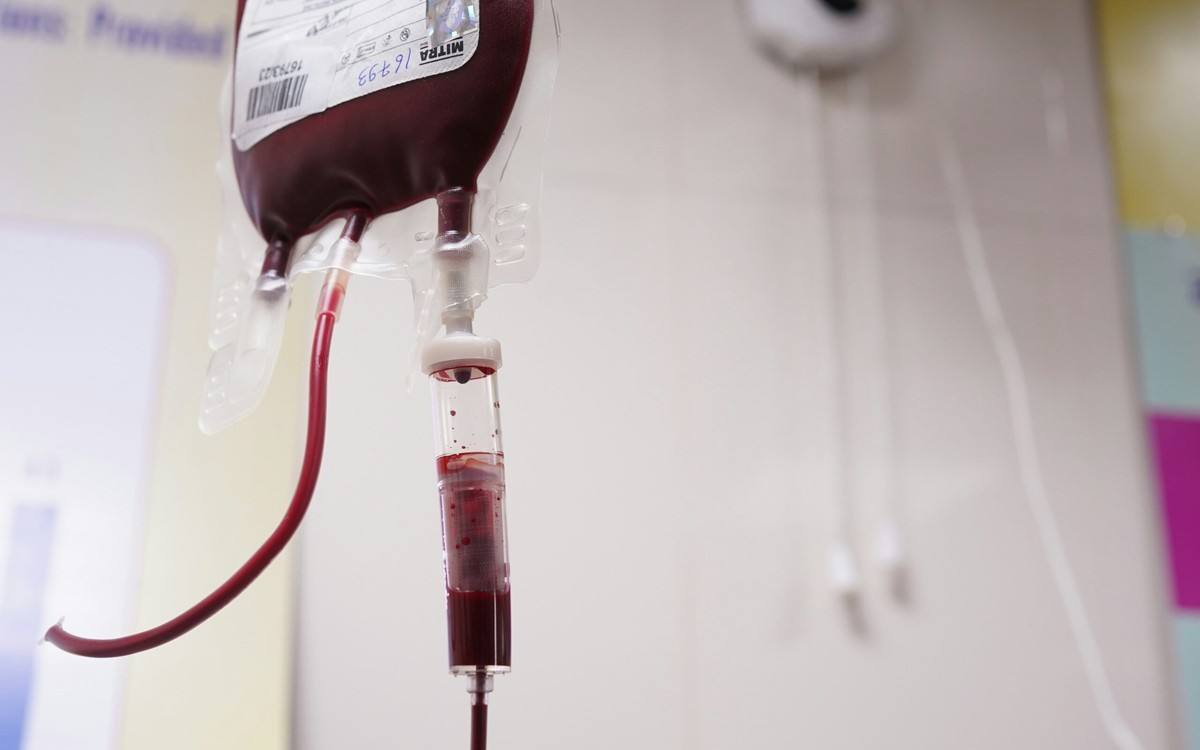
Transfusion medicine plays a crucial role in modern healthcare by ensuring the availability of safe and compatible blood products for patients in need. Recognized globally as an essential medicine, blood remains the cornerstone of the healthcare workflow.
Every few seconds someone in the world needs blood. Blood cannot be manufactured; it can only come from volunteer donors. In the U.S. alone, nearly 16 million blood components are transfused each year[1]. Yet behind this staggering demand lies a structural crisis. According to recent data despite the non-stop clinical need, just three percent of the United States population donates blood each year[2], a figure that continues to decline, particularly among younger generations.
For a trauma patient, these statistics are not abstract; they are a ticking clock. One study found 5% increased odds of mortality for every minute of delay in access to blood[3]. When you consider that unintentional injury is a leading cause of death for individuals under the age of 44, and that up to 56% of hemorrhage victims die before they ever reach a hospital bed[4], the lesson becomes clear: transfusion medicine can no longer be viewed merely as a laboratory science.
It must be recognized as a time-critical clinical practice prioritizing patient-centered therapy and bedside precision.
As a MedTech innovator and an entrepreneur who has spent years moving the needle in infusion therapy while designing mobile and connected IV technologies – and as someone who has also experienced Danish healthcare firsthand as a long-term patient – I look at transfusion medicine through a dual lens. I see the profound biology of the human body, but I also see the physical, human, and technological distress that occurs at the final step of delivery: the point of care.
Transfusion medicine is undergoing a fundamental transformation. We are shifting from a reactive paradigm of simply replacing lost blood to a proactive, high-tech standard focused on blood preservation, digital vigilance, and bed-level precision.
1. Regional Disparities: A Global Dual Challenge
The global demand for blood products – totaling approximately 118.5 million units collected annually[5] – reveals the massive disparity in blood supply, safety, and utilization between high-income and low-to-middle-income countries.
- High-Income Nations[6]: Transfusion functions primarily as a sophisticated supportive pillar for complex clinical interventions such as cardiovascular surgery, transplant surgery, massive trauma, and therapy for solid and hematological malignancies.
- Low- and Middle-Income Countries (LMICs)[6]: The demand is driven overwhelmingly by acute, life-threatening crises: managing pregnancy-related complications and severe childhood anemia.
This global divergence highlights a shared truth: whether managing a complex surgical procedure, taking care of ICU patients or assisting in an obstetric emergency in a rural clinic, access to safe blood and the ability to administer it rapidly without error dictates survival.
2. Patient Blood Management (PBM): The New Gold Standard
For decades, the standard response to surgical blood loss or hospital-acquired anemia was straightforward: start an infusion. Today, the medical community recognizes that the best unit of blood is often the unit the patient never had to receive.
Patient Blood Management (PBM) has emerged as the global gold standard in transfusion strategy. Rather than treating blood purely as a renewable commodity, PBM relies on a patient-centered, evidence-based approach[7] that treats the patient’s own blood supply as an organ system to be conserved.
PBM is structured around three pillars:
1) Pre-Operative Optimization: Optimizing red blood cell mass via screening, diagnosis, and treatment of anemia and iron deficiency;
2) Intra-Operative Blood Salvage: Minimizing surgical and iatrogenic blood loss while managing bleeding and coagulopathies perioperatively;
and
3) Managing Physiological Tolerance: Optimizing physiological tolerance to anemia by improving oxygen delivery and reducing oxygen demand
By shifting from liberal to restrictive transfusion strategies, healthcare networks are not only safeguarding fragile blood bank inventories – they are actively improving patient outcomes, reducing hospital stay durations, and minimizing post-operative complication rates.
3. Real-Time Hemovigilance & Remote Safety Monitoring
While blood screening and laboratory testing have reached unprecedented historical safety levels, the body’s physiological response to a transfusion remains inherently dynamic.
Adverse Transfusion Reactions (ATRs) – ranging from mild allergic responses to catastrophic Transfusion-Related Acute Lung Injury (TRALI) or acute hemolytic reactions – demand rapid detection.
According to a bulletin from the Royal College of Pathologists[8], the leading causes of transfusion-related fatalities in recent years have been transfusion-associated circulatory overload, ABO-incompatible (ABO-i) transfusion and delayed transfusions.
This is where digital health and intelligent monitoring are reshaping patient safety. The integration of remote treatment monitoring, IoT-enabled fluid management, and AI-driven predictive algorithms allows clinical teams to track subtle, early-warning signatures of ATRs in real time.
Continuous telemetry tracking vital sign fluctuations, subtle changes in patient temperature, and fluid flow dynamics allows algorithms to flag early physiological distress signatures long before a patient manifests overt clinical shock. Digitally enabled hemovigilance bridges the gap between the nursing station and the bedside, allowing multidisciplinary teams to intervene immediately, halt an adverse reaction, and adjust care protocols dynamically.
Hemovigilance reporting also plays a vital role in driving improvements in patient safety.
4. The Human Element: Why Avoidable Bedside Errors Persist
Blood transfusion is considered a necessary but high-risk treatment method. If the proper protocols and measures are not followed before, during, and after the transfusion, the reactions can be fatal.
For example, the mistransfusion rate (blood transfused to other than the intended recipient) is about one in 14 000 units in the USA and one in 18 000 in the UK[9]. At the same time roughly half the errors occur in the clinical arena, and about 30% in the laboratory.
A number of factors have been reported to be responsible for transfusion errors[10] including multiple team members involved in distribution of blood components, environmental issues specific to the location of transfusion, overall clinical acuity/distractibility of team members, patient identification issues, and not using a standard checklist.
Despite cutting-edge genomic screening, automated donor processing, and advanced blood-typing crossmatches in central laboratories, within the transfusion community it has been widely recognized that the biggest risk in transfusion practice is the result of human error.
ABO-incompatible transfusions[11] – almost always the result of patient misidentification or mislabeled blood bags during administration – remain one of the leading causes of preventable transfusion injuries and fatalities worldwide. A nurse managing multiple high-acuity patients in a crowded emergency ward or an overstretched ICU faces cognitive overload. Despite modern technological advancements in transfusion medicine, the positive patient identification checks, as well as the verification of prescriptions, unit labels, and issuing documents are still mostly established in a non-electronic format and have to be performed manually. This workflow burden contributes directly to nurse burnout and workplace stress levels.
In modern healthcare, where infusion therapy is administered to roughly 90% of all hospitalized patients and blood transfusion being one of the most common procedures performed in hospitals[12], the physical delivery mechanism itself must act as a safeguard.
We cannot rely solely on policy checklists to eliminate human error; we must introduce safety directly into the medtech transfusion solutions and software deployed at the bedside.
Improvements should, therefore, happen in the areas of development and further implementation of electronic information systems (EIS) throughout the entire transfusion process, including electronic patient identification at the bedside with increased consideration of human factors.
5. Modern Innovations: Engineering the Future of Delivery
The future of transfusion medicine sits at the intersection of medical device design, connectivity, and patient-centric engineering. To overcome donor shortages and delivery bottlenecks, technology is evolving along three critical tracks:
Connectivity and Data Management in Blood Transfusion
IT connectivity is well-known in healthcare for its potential to improve efficiency and increase traceability.
In infusion therapy the potential benefits of connectivity are immense. Establishing two-way connectivity between devices and Electronic Medical Records (EMRs) allows IV drug prescriptions to be automatically verified, significantly reducing the risk of drug-delivery errors. Furthermore, integrating dose data into the EMR enhances pharmacy efficiency and inventory management.
Advanced connectivity across healthcare systems can also create substantial advantages for healthcare and society. It can lead to substantial savings for the healthcare industry[13] by improving productivity and outcomes, ultimately freeing up funds for reinvestment. Indeed, according to The McKinsey Global Institute (MGI) and the McKinsey Center for Advanced Connectivity (MCAC), these improvements could contribute between $250 billion and $420 billion to global GDP by 2030, with approximately 80% achievable using existing advanced connectivity technologies.
In blood transfusion, manual processes and record keeping still dominate the traditional treatment workflow, and this carries a risk of human error.
By enabling remote access to treatment data and records, dynamic treatment updates and step-by-step adherence to SOPs during transfusion, connectivity can help reduce human error and support safety compliance[14].
Beyond Human Donors: Synthetic & Oxygen-Carrying Products
While mechanical and digital systems optimize current delivery, biotechnology is addressing the raw supply shortage. Researchers are advancing hemoglobin-based oxygen carriers (HBOCs), fluorocarbon-based synthetic blood substitutes, and lab-grown red blood cells derived from stem cell lines. These innovations could one day offer shelf-stable, universal-donor alternatives that reduce the delays of blood typing during pre-hospital “golden hour” trauma care.
AI in Transfusion Medicine
The integration of artificial intelligence across critical care, transfusion medicine, and perioperative settings is shifting the focus from reactive treatment to proactive predictive and decision-support capabilities, although challenges remain regarding data quality, model heterogeneity, and limited clinical integration.
Within transfusion medicine, three converging lines of AI application are now emerging:
- Optimization of component quality – from red blood cells and platelets, to advanced deep learning–driven quality control systems;
- Demand prediction and supply management[15] – through forecasting models leveraging big data and advanced analytics;
- Enhancement of safety and clinical support – including predictive models for adverse transfusion reactions, donor management systems, and broader reviews outlining opportunities, challenges, and ethical considerations[16].
AI does not replace clinical judgment but extends the informational horizon, detects early warning signals, offers significant potential to improve the safety and personalization of blood transfusion, as well as supports complex real-time decision-making in transfusion medicine.
Conclusion: Reimagining the Final Centimeter of Care
The healthcare landscape is evolving rapidly, driven by tech innovation, gaps in care, and the invaluable perspectives of medical professionals. These changes promise to revolutionize how care is delivered and experienced, bringing both opportunities and challenges to healthcare as a whole and to infusion therapy in particular.
Transfusion medicine specifically has journeyed from basic biological discovery to a discipline of sophisticated clinical care. Yet, as donor bases go down and clinical demands increase, the life sciences sector must remember that world-class laboratory science is only as effective as the system that delivers it to the human body.
AI and emerging technologies offer significant potential to improve the safety, efficiency, and personalization of blood transfusion. However, comprehensive validation, and robust reporting are essential to translate these innovations into routine clinical practice.
By designing smart, connected, and human-centered transfusion technologies for the point of care, we can ensure that when those crucial minutes count, the right blood reaches the right patient – safely, rapidly, and seamlessly.
Author Bio