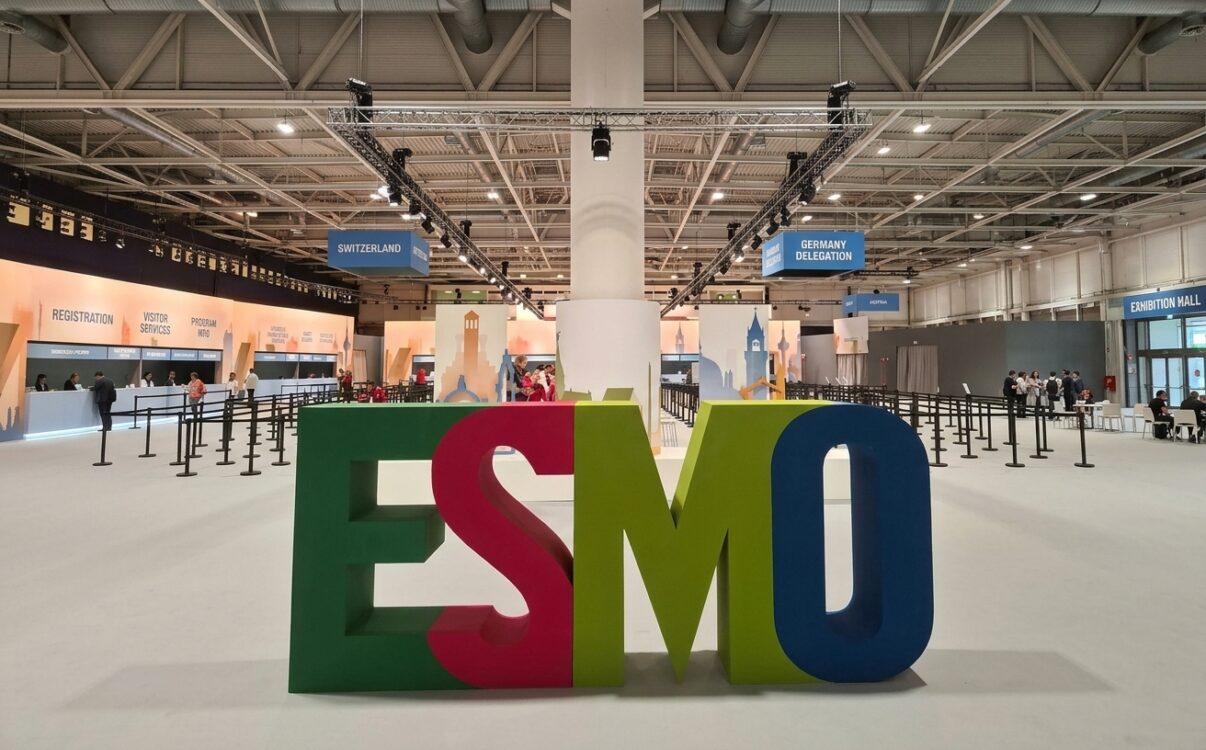
ESMO 2026 closed in Madrid on 27 October after five days of practice-shaping data. The most closely watched results came in three Presidential Symposia, which carried twelve late-breaking phase 3 trials. Five of them stand out for their potential to change how patients are treated.
The five span small cell lung cancer, melanoma, KRAS G12C lung cancer, bladder cancer and biliary tract cancer. Each comes with caveats, and those are set out alongside the headline figures. A shorter section covers four further results, followed by the themes that linked them.
Why the ESMO 2026 Presidential Symposia matter
Presidential Symposia are the congress slots reserved for the late-breaking abstracts judged most significant. This year the twelve trials were numbered LBA1 to LBA12. Several were published simultaneously in The New England Journal of Medicine.
The five results below were chosen on three grounds. These were the size of the benefit, the trial design and how soon regulators could see the data. Hazard ratios below 1.0 favour the experimental treatment throughout.
DeLLphi-305: tarlatamab extends survival in small cell lung cancer
DeLLphi-305 tested Amgen’s tarlatamab (Imdelltra) with AstraZeneca’s durvalumab (Imfinzi) as first-line maintenance therapy. Patients had extensive-stage small cell lung cancer, and the comparator was durvalumab alone. The trial randomised 563 patients 1:1.
Median overall survival was 21.1 months with the combination, against 12.7 months with durvalumab alone. The hazard ratio was 0.42. At 12 months, 79% of patients on the combination were alive, compared with 53% on durvalumab.
Median progression-free survival was 7.4 months versus 1.9 months, a hazard ratio of 0.34. The objective response rate was 26.4% against 4.1%. These figures come from an interim analysis at 61% of planned events, after median follow-up of about 16 months.
Jacob Sands of Dana-Farber Cancer Institute presented the data at ESMO 2026 as LBA3. The results were published simultaneously in The New England Journal of Medicine. When Amgen announced topline results in September, Sands said “DeLLphi-305 represents an unprecedented milestone”.
The overall survival hazard ratio of 0.42 was the lowest among the twelve Presidential Symposium trials. Safety needs careful management, however. Cytokine release syndrome occurred in 49.6% of patients given tarlatamab, with one grade 3 event. Treatment-related adverse events of grade 3 or higher affected 20.9% of patients, against 10.8% on durvalumab alone.
A separate analysis examines when an Imdelltra Imfinzi approval for first-line use could follow.
INTerpath-001: a personalised mRNA cancer vaccine delivers phase 3 data
Merck and Moderna presented INTerpath-001 as LBA1, the opening abstract of ESMO 2026. The trial added intismeran autogene, an individualised mRNA neoantigen therapy, to Keytruda (pembrolizumab). Patients had completely resected stage IIB to IV melanoma at high risk of recurrence.
In all, 1,137 patients were randomised 2:1 to the combination or to Keytruda plus placebo. Recurrence-free survival, the primary endpoint, improved with a hazard ratio of 0.58. At 24 months, 82.2% of patients on the combination were free of recurrence, compared with 70.0%.
Distant metastasis-free survival also improved, with a hazard ratio of 0.62. Merck research president Dean Li called it the first phase 3 study to improve both meaningfully over Keytruda alone. Professor Georgina Long of Melanoma Institute Australia, the study’s principal investigator, presented the data. She said the results “have the potential to make a foundational shift”.
The caveats behind the headline
The benefit was not immediate. During the first six months, the hazard ratio for recurrence-free survival was 0.99, showing no difference between the arms. After six months, it fell to 0.42.
Overall survival data are immature. The hazard ratio of 0.77 did not reach statistical significance. Adverse events led 16.6% of patients on the combination to stop any study drug, against 9.5% on Keytruda alone. Pyrexia affected 52.2% of patients versus 8.2%.
The presentation was also overshadowed by an early leak. The data emerged on 22 October, two days before the scheduled session. ESMO lifted its embargo, and Moderna shares fell 17.3% that day. ESMO said it was investigating the breach.
Merck and Moderna say they are engaging with regulatory authorities. The results have been accepted for publication in The New England Journal of Medicine.
Krascendo 1: divarasib wins a head-to-head KRAS G12C trial
Roche’s Krascendo 1 compared divarasib with the approved KRAS G12C inhibitors sotorasib or adagrasib. Patients had previously treated, KRAS G12C-mutated advanced non-small cell lung cancer. Roche describes it as the only global head-to-head study of a next-generation KRAS G12C inhibitor against approved first-generation agents.
At the first interim analysis, median overall survival was 17.7 months with divarasib versus 12.0 months. The hazard ratio was 0.56. Median progression-free survival was 9.8 months against 5.7 months, a hazard ratio of 0.58. The confirmed objective response rate was 58% versus 32%.
Tolerability also favoured divarasib on several measures. Serious treatment-related adverse events occurred in 7.8% of patients, against 15.2% in the control arm. Discontinuation because of treatment-related adverse events was 4.8% versus 11.7%. Gastrointestinal effects were more common, however, with diarrhoea in 66% versus 38%.
One limit applies to the comparison. Of 171 patients in the control arm, 156 received sotorasib and only 15 received adagrasib. The trial therefore says little about divarasib against adagrasib specifically.
Ferdinandos Skoulidis of MD Anderson Cancer Center presented the data as LBA5. The results were published simultaneously in The New England Journal of Medicine. Levi Garraway, Roche’s chief medical officer, said they “demonstrate the potential for divarasib to become a new standard of care”. In its Krascendo 1 announcement, Roche said it was working closely with health authorities.
VOLGA: a new option around bladder cancer surgery
AstraZeneca’s VOLGA trial enrolled 695 patients with muscle-invasive bladder cancer. All were ineligible for cisplatin-based chemotherapy or had declined it. One arm received durvalumab with enfortumab vedotin before radical cystectomy, then durvalumab after surgery. The comparator was cystectomy with or without approved adjuvant treatment.
Event-free survival improved with a hazard ratio of 0.51. At 24 months, 64% of patients on the durvalumab regimen were event-free, against 45% in the control arm. Overall survival also improved, with a hazard ratio of 0.58. Pathological complete response at surgery was 45% versus 10% on local review.
The added benefit came with added toxicity. Grade 3 or 4 adverse events from any cause occurred in 64% of patients versus 44%. Professor Thomas Powles of Barts Cancer Centre in London presented VOLGA at ESMO 2026 as LBA2. In AstraZeneca’s release, he called the findings “practice-changing results” and the regimen a “potential new standard of care”.
According to AstraZeneca’s VOLGA results release, the FDA granted Priority Review in September 2026. The data were also published in The New England Journal of Medicine.
Why a third drug did not help
VOLGA also tested a triplet that added tremelimumab. That arm improved event-free survival, with a hazard ratio of 0.61. Its overall survival hazard ratio of 0.77, however, was not statistically significant at this interim analysis. Grade 3 or 4 adverse events reached 70%. More treatment did not translate into a clear survival gain.
HARMONi-GI1: ivonescimab beats durvalumab in biliary tract cancer
HARMONi-GI1 compared ivonescimab with durvalumab, each given with gemcitabine and cisplatin. Ivonescimab is a bispecific antibody that targets both PD-1 and VEGF. The double-blind trial enrolled 682 patients with previously untreated advanced biliary tract cancer. Akeso sponsored the study in China.
At the interim analysis, median overall survival was 14.9 months versus 12.1 months. The hazard ratio was 0.75. At 18 months, 44.0% of patients on ivonescimab were alive, compared with 32.5%. Median progression-free survival was 8.4 months against 5.8 months, a hazard ratio of 0.61.
The objective response rate was 53.8% versus 32.5%. Grade 3 or 4 treatment-emergent adverse events were more common with ivonescimab, at 82.0% versus 72.3%. Discontinuation because of adverse events was lower, at 3.5% against 5.6%. Jian Zhou of Zhongshan Hospital in Shanghai presented the ESMO 2026 data as LBA8.
Summit Therapeutics, Akeso’s partner, issued its HARMONi-GI1 release on 25 October. Robert W. Duggan, Summit’s chairman and co-chief executive, said “Overall survival is the gold-standard measurement of benefit for patients”.
Two caveats apply. All patients were enrolled in China, so results in other populations remain to be shown. The timing also matters. The FDA goal date for ivonescimab in EGFR-mutated non-small cell lung cancer is 14 November 2026. That decision concerns lung cancer, not biliary tract cancer.
Other notable results from ESMO 2026
TroFuse-005 in endometrial cancer
Sacituzumab tirumotecan is an antibody-drug conjugate targeting TROP2. In previously treated endometrial cancer, it was compared with treatment of physician’s choice in 776 patients. Progression-free survival improved with a hazard ratio of 0.59. Median overall survival was 19.0 months versus 12.1 months, a hazard ratio of 0.68.
CLARITY-Gastric01 in gastric cancer
Sonesitatug vedotin is an antibody-drug conjugate targeting CLDN18.2. In patients at third line or later, median overall survival was 10.0 months versus 5.0 months. The hazard ratio was 0.47. Progression-free survival in the full population, however, did not reach statistical significance.
MOIO and dose reduction
MOIO tested less frequent immunotherapy, every 12 weeks, in patients responding after six months. Deaths were more frequent with the reduced schedule, at 19.9% versus 10.5%. The overall survival hazard ratio was 2.04. The result does not support routine dose reduction in responding patients.
KEYNOTE-C93 in dMMR endometrial cancer
Keytruda alone was compared with carboplatin and paclitaxel as first-line treatment for mismatch repair-deficient endometrial cancer. Median progression-free survival was 38.2 months versus 8.4 months, a hazard ratio of 0.57. Overall survival, with a hazard ratio of 0.77, was not statistically significant.
Three themes from ESMO 2026
The first theme is the dominance of engineered antibodies. Half of the twelve Presidential Symposium trials tested an antibody-drug conjugate or a bispecific antibody. These included enfortumab vedotin, tarlatamab, ivonescimab, sonesitatug vedotin, sacituzumab tirumotecan and risvutatug rezetecan.
The second is a higher bar for comparators. Krascendo 1 and HARMONi-GI1 beat active targeted or immunotherapy controls, rather than placebo or chemotherapy alone.
The third is the growing role of China-originated assets. Ivonescimab was discovered by Akeso, and sacituzumab tirumotecan by Kelun-Biotech before licensing to Merck. Both reached the main stage at ESMO 2026. The trend is tracked in the China out-licensing deals tracker.
What comes after ESMO 2026
Several of these results now move towards regulators. VOLGA already has FDA Priority Review. Amgen, Roche, Merck and Moderna have each said they are engaging with regulators. Mature overall survival data from DeLLphi-305, INTerpath-001 and Krascendo 1 will be closely watched. For ivonescimab, the 14 November decision in lung cancer is the next milestone.