

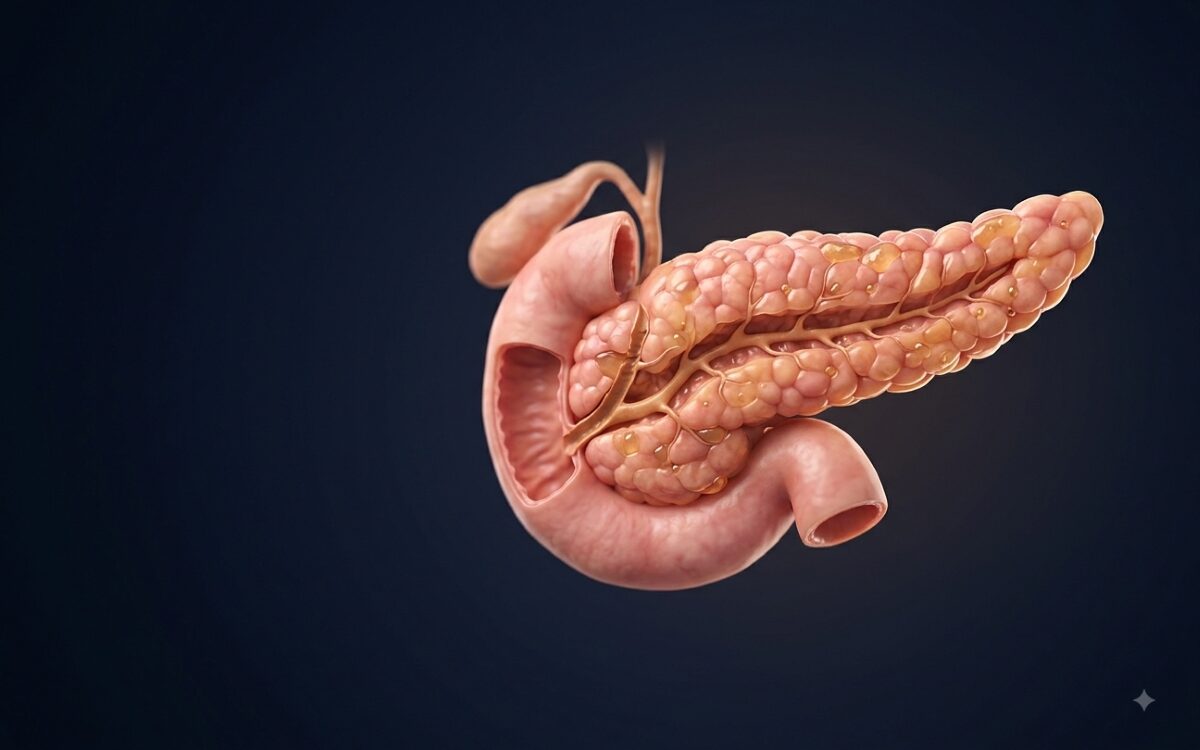
Obesity is increasingly recognized as a chronic systemic disease characterized not only by excess adiposity but also by progressive dysfunction of multiple organs. Recent advances have shifted attention from body weight alone toward ectopic fat deposition as a major determinant of metabolic risk. The recently published Melbourne Consensus establishes, for the first time, a conceptual framework for intrapancreatic fat deposition (IPFD) and introduces the definition of Fatty Pancreas Disorder (FPD), positioning pancreatic fat as a clinically relevant pathological state associated with pancreatitis, pancreatic cancer and type 2 diabetes. This paradigm aligns with the emergence of highly effective anti-obesity pharmacotherapies, minimally invasive endoscopic bariatric procedures and precision lifestyle interventions. Rather than competing strategies, these approaches should be viewed as complementary components of an integrated therapeutic model. This perspective discusses how organ-centered obesity management may become the next frontier in metabolic medicine, emphasizing the importance of combining pharmacological, endoscopic and lifestyle interventions to improve pancreatic health and long-term metabolic outcomes.
Introduction
For decades, obesity has been classified according to body mass index (BMI). Although BMI remains useful for epidemiological purposes, it inadequately reflects metabolic health, organ dysfunction and future disease risk.
Increasing evidence suggests that ectopic fat accumulation, particularly within the liver, skeletal muscle, heart and pancreas, may better explain the heterogeneous clinical presentation of obesity.
Among these organs, the pancreas has historically received little attention despite its central role in endocrine and exocrine homeostasis.
The publication of the Melbourne Consensus represents a landmark in metabolic medicine by formally defining Fatty Pancreas Disorder (FPD) as a distinct pathological condition characterized by excessive intrapancreatic fat deposition associated with adverse health outcomes.
From Fatty Liver to Fatty Pancreas
Hepatic steatosis has become an established therapeutic target over the past two decades.
A similar evolution is now occurring in the pancreas.
Unlike previous terminology such as pancreatic steatosis or pancreatic lipomatosis, the Melbourne Consensus proposes standardized definitions that distinguish physiological intrapancreatic fat deposition from pathological FPD.
This conceptual clarification is expected to facilitate clinical research, improve patient stratification and accelerate therapeutic development.
Why Pancreatic Fat Matters
The consensus recognizes that excessive pancreatic fat is associated with increased risk of:
- acute pancreatitis;
- chronic pancreatitis;
- pancreatitis following endoscopic retrograde cholangiopancreatography (ERCP);
- pancreatic cancer;
- type 2 diabetes;
- post-pancreatitis diabetes.
These observations support the concept that pancreatic fat is not merely an imaging finding but an active component of pancreatic disease biology.
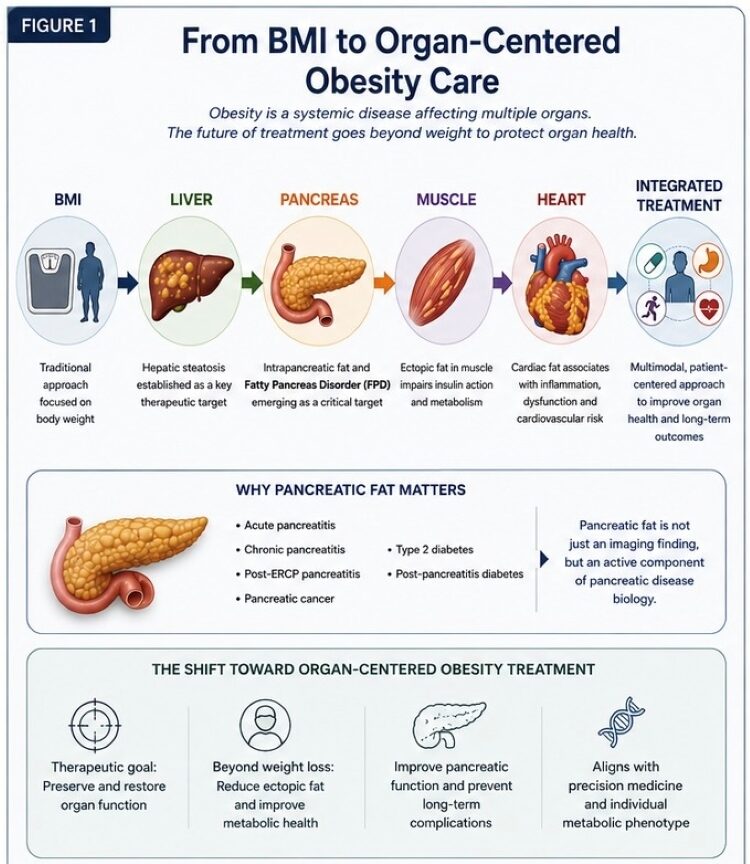
From BMI to organ centered obesity care: ectopic fat across multiple organs and the shift toward organ specific treatment goals.
The Shift Toward Organ-Centered Obesity Treatment
Modern obesity treatment is evolving from a weight-centric model toward preservation and restoration of organ function.
The therapeutic objective should no longer be limited to reducing kilograms but also include reducing ectopic fat, restoring insulin sensitivity, improving pancreatic function and preventing long-term complications.
This broader perspective aligns with precision medicine and recognizes obesity as a disease affecting multiple organs simultaneously.
Combination Therapy Rather Than Competition
One of the greatest misconceptions in obesity care is the perceived competition between pharmacological treatment and procedural intervention.
Instead, they should be viewed as complementary therapies.
Lifestyle intervention remains the cornerstone.
GLP-1 receptor agonists and dual incretin therapies improve appetite regulation and reduce ectopic fat.
Endoscopic bariatric therapies promote durable metabolic improvements while preserving anatomy.
Behavioral medicine and nutritional counseling improve adherence and long-term maintenance.
The future likely lies in individualized multimodal treatment rather than isolated interventions.
The Melbourne Consensus also recognizes dietary intervention, exercise, metabolic surgery and newer glucose-lowering drugs such as GLP-1 receptor agonists and SGLT2 inhibitors as effective approaches to reduce intrapancreatic fat.
Precision Medicine and the Future
Future obesity management will likely incorporate:
- MRI-based assessment of ectopic fat;
- digital metabolic monitoring;
- AI-assisted risk prediction;
- biomarkers of pancreatic health;
- individualized treatment sequencing.
Patients may soon be selected not only according to BMI but also according to their organ-specific metabolic phenotype.
Clinical Implications
Clinicians should begin considering pancreatic health as an additional therapeutic target.
Although routine MRI assessment is not currently indicated for every patient, recognition of FPD opens new opportunities for research and personalized care.
Importantly, the Melbourne Consensus recommends MRI as the preferred modality for quantifying intrapancreatic fat, while emphasizing that endoscopic ultrasonography cannot currently quantify IPFD and should not be used as a diagnostic method for this purpose.
Conclusion
The Melbourne Consensus represents more than a new definition.
It signals a transition toward an organ-centered understanding of obesity.
As minimally invasive bariatric endoscopy, incretin-based pharmacotherapy and precision lifestyle medicine continue to evolve, integrated treatment strategies may offer the greatest opportunity to modify ectopic fat deposition, preserve pancreatic function and improve long-term metabolic health.
The future of obesity care may therefore be measured not only by kilograms lost, but by organs protected.
Author Bio