Telix Pharmaceuticals has agreed to buy ITM Isotope Technologies Munich SE. Telix describes ITM as the largest supplier of lutetium-177 by revenue. The deal places that radioisotope supply business inside a therapeutics developer. Telix issued the joint announcement on Monday 21 September 2026, Australian time. United States outlets, including STAT News, carried the news on 20 September. The agreed upfront value is US$1.65 billion on a cash-free, debt-free basis.
What the radioisotope supply deal is worth
The upfront consideration splits into three parts. Telix will issue US$1.25 billion in shares, being 105.8 million shares at US$11.841 each. It also assumes US$302 million of net debt. A further US$96 million covers management equity rollover and transaction expenses.
Contingent consideration reaches up to US$700 million. Up to US$250 million is tied to approvals of ITM’s lead therapy, ITM-11. The announcement sets US$100 million on a first approval. That indication is grade 1 to grade 2 gastroenteropancreatic neuroendocrine tumours, with a deadline of 31 December 2027. A further US$100 million attaches to a grade 2 to grade 3 indication by 31 December 2030. US$50 million follows an approval in lung neuroendocrine tumours by 31 December 2031.
The remaining US$450 million depends on ITM-11 net global sales above US$150 million in FY 2030. Telix may settle milestones in cash or in shares at its election. On completion, Telix shareholders would hold about 76.3 per cent of the combined company. ITM shareholders would hold about 23.7 per cent.
Inside the radioisotope supply business Telix is buying
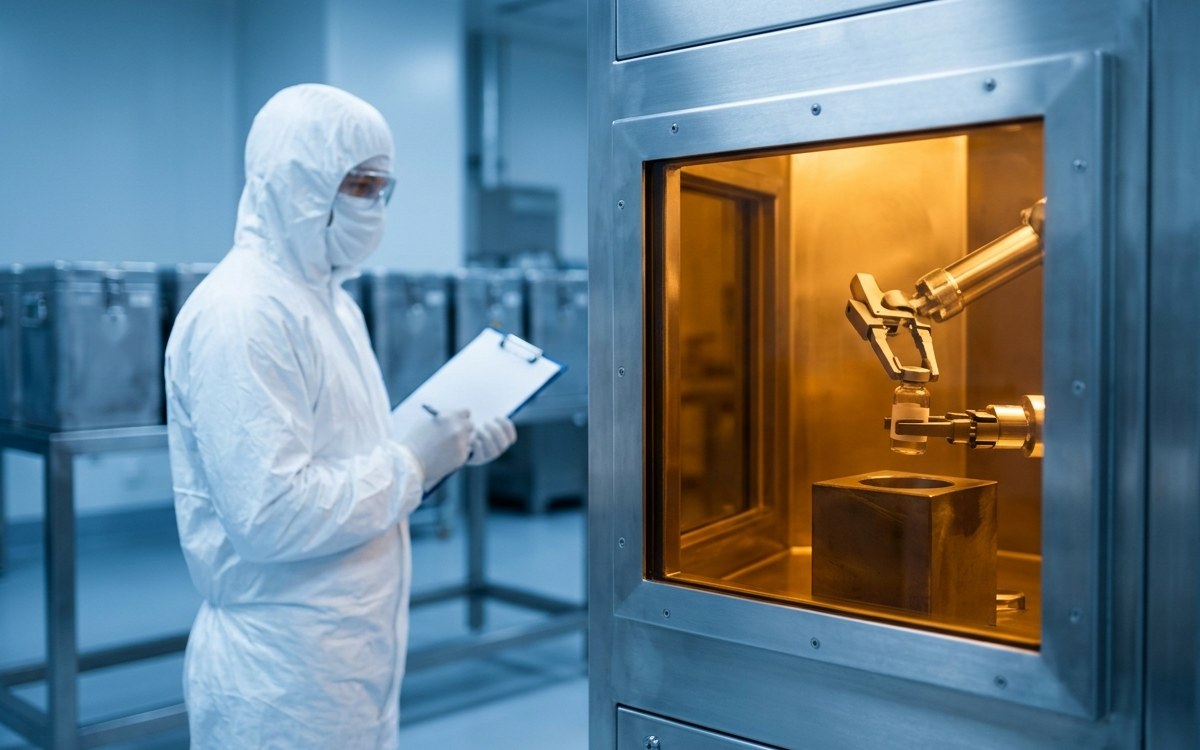
ITM is based in Garching, near Munich. Telix describes it as the world’s leading supplier of therapeutic radioisotopes. Production spans lutetium-177, actinium-225 and terbium-161. The announcement calls ITM the only producer of globally scaled commercial grade lutetium-177.
Its radioisotope supply network reaches more than 65 countries and runs from two GMP manufacturing sites. ITM recorded annual revenue of US$273 million in 2025. Telix puts the compound annual growth rate at 40 per cent between 2021 and 2025. Telix says ITM’s radioisotope manufacturing business is profitable. ITM as a whole is not: Telix’s pro forma figures show a US$57 million operating loss for 2025.
Reactor access underpins all of it. The announcement states that ITM holds exclusive reactor access through its agreement with Isogen. That is “15-year exclusive access to Bruce Power’s nuclear reactors in Canada”. The contract covers “the irradiation services required to manufacture 177Lu”. On LSDN’s reading, that deal rather than the pipeline is the scarce asset in this radioisotope supply base.
Two manufacturing rejections, thirteen months apart
Both parties to this merger have had a United States application blocked on manufacturing grounds. The FDA issued ITM a complete response letter for ITM-11 on 7 August 2026. ITM announced it on 10 August. The agency said it was “unable to approve the NDA in its present form”. It cited “CMC- and third-party commercial facility-related items”.
ITM was explicit that the science was not at issue. ITM said the FDA identified no concerns “regarding the clinical or nonclinical data package or safety profile of ITM-11”. ITM had announced in November 2025 that the FDA accepted the application with a goal date of 28 August 2026. The rejection therefore landed three weeks before that date.
Telix had received a comparable letter thirteen months earlier. On 28 August 2025 it disclosed a complete response letter for its kidney cancer imaging agent, TLX250-CDx. The FDA asked for more data on comparability between the trial product and the scaled-up commercial process. It had also issued Form 483 deficiency notices to “two third-party manufacturing and supply chain partners”.
LSDN reported on 15 September that Telix’s glioma imaging agent was cleared only after an earlier rejection. That 2025 rejection turned on clinical evidence, not manufacturing. Manufacturing control, not clinical evidence, blocked the ITM-11 and TLX250-CDx applications. On LSDN’s reading, that makes this transaction as much about owning the failure point as about building scale.
What the merger announcement does not say
The phrase “complete response letter” does not appear anywhere in the joint announcement. Both outstanding applications surface only in the forward-looking statements. That section refers to “the planned NDA resubmission for ITM-11 and the planned BLA resubmission for TLX250-Px”. TLX250-Px is Telix’s current code for TLX250-CDx, which carries the proposed brand name Zircaix. LSDN found no published resubmission date for either as at 21 September 2026. LSDN draws no inference from the absence of narrative discussion.
The investor presentation lodged the same day does address the letter directly. It describes the letter as limited to CMC and third-party facility items. It also lists FDA resubmission of ITM-11, or a path to resubmission satisfactory to Telix, among Telix’s closing conditions.
The clinical case behind ITM-11
ITM-11 is non-carrier-added lutetium-177 edotreotide. The Phase 3 COMPETE trial randomised 309 patients two to one against everolimus. Median progression-free survival, the primary endpoint, reached 23.9 months against 14.1 months. The hazard ratio was 0.67, with a 95 per cent confidence interval of 0.48 to 0.95. The p value was 0.022.
Objective response rate by central review was 22 per cent against 4 per cent, at a p value below 0.0001. Grade 3 or 4 treatment related adverse events were lower on ITM-11, at 18 per cent against 40 per cent. The most common treatment related events on ITM-11 were diarrhoea and nausea, both at 36 per cent. Asthenia followed at 33 per cent.
The trial record also carries less flattering findings. Interim overall survival, a secondary endpoint, reached a median of 63.4 months against 58.7 months. That hazard ratio of 0.78 carried a confidence interval of 0.5 to 1.1. The p value was 0.206, so the result did not reach significance. Those data were cut on 21 January 2025. ITM notes that later therapies after progression may have confounded the comparison.
ITM states that overall survival data will continue to mature. Its own summary also records one grade 2 serious event of myelodysplastic syndrome related to ITM-11.
The results were published in The Lancet. Telix dates that publication 2 July 2026, while ITM announced it on 7 July. Writing in Nature Reviews Clinical Oncology on 16 July 2026, Diana Romero set the finding in context. She noted that earlier evidence for lutetium-177 oxodotreotide came from trials whose control arms received long-acting somatostatin analogues. COMPETE instead tested a monotherapy against an active targeted agent.
A supplier to its buyer’s rivals
ITM does not serve only its own pipeline. It already supplies Telix, and the investor presentation says it secures supply for Telix’s late-stage assets. Telix also describes ITM as the primary external supplier of lutetium-177 for Novartis’s Pluvicto. ITM has held long-term contracts with Novartis since 2018, according to the same presentation. Novartis also markets Lutathera, a lutetium-177 therapy that competes directly with ITM-11.
The presentation adds that ITM supplies other commercially available lutetium-177 radioligand therapies, without naming them. LSDN draws no inference about which products those are.
ITM signed a further radioisotope supply agreement with Radiopharm Theranostics on 19 May 2025. Andrew Cavey, chief executive officer of ITM, set out the company’s position at the time. He described ITM then as “the leading global manufacturer of non-carrier-added Lutetium-177”. The company was “just as committed to supplying our global partners with high-quality medical radioisotopes”, he said. That commitment matched the one “to supplying our own pipeline”.
ITM was still signing new radioisotope supply deals as recently as last month. It announced a clinical supply agreement with Akiram Therapeutics on 20 August 2026. That fell ten days after the FDA rejection and a month before this transaction. Those undertakings were all given by an independent supplier.
LSDN found no published statement from either company on whether third-party supply agreements continue unchanged after completion. The joint announcement does not address the question. Telix’s own risk disclosures come closest. They state that ITM relies on a limited number of key customer contracts. They add that there is no assurance these will continue or renew on current terms. For any developer with a lutetium-177 programme, the terms of future radioisotope supply are now the live commercial issue.
Why radioisotope supply is a United Kingdom question
England already depends on this market. NICE technology appraisal TA539, published on 29 August 2018, recommends lutetium (177Lu) oxodotreotide “within its marketing authorisation”. It covers unresectable or metastatic, progressive, well-differentiated grade 1 or grade 2 somatostatin receptor-positive GEP-NETs in adults. The recommendation applies only where the company supplies the medicine according to the commercial arrangement.
The isotope itself cannot be made here. Baroness Merron set out the position for the Department of Health and Social Care. She was answering Lord Ravensdale on 13 January 2026. “There are currently no reactors in the UK that manufacture medical isotopes, all of these are therefore imported,” she said. She added that the government has no current plans to produce a strategy on further domestic manufacture.
A House of Lords Library briefing of 12 November 2025 set out the exposure in more detail. It records that most UK radioisotope supply comes from European facilities, many of them built in the 1950s and 1960s. LSDN has examined the same dependency in the Singapore radiopharmaceutical market. Consolidation of radioisotope supply is therefore a security of supply question for health systems, not only a corporate one. That is an LSDN reading, and neither NICE nor the MHRA has taken any position on this transaction.
Market reaction and the road to closing
The share price fell on the news. Rask Media reported the Telix share price down 6 per cent on the Australian Securities Exchange on 21 September. Other accounts gave a smaller fall, so LSDN publishes the direction only. Analysts were more positive. Fierce Biotech reported that William Blair was “extremely bullish” on the combined group’s growth prospects. The dilution is material, given 105.8 million new shares.
Christian Behrenbruch, Telix managing director and group chief executive officer, framed the logic as consolidation. “ITM is the leader in radioisotope production, with deep scientific expertise and a track record of value-adding innovation,” he said. Cavey said the combination creates “a company with unmatched breadth and depth across the value chain”.
Completion requires Telix shareholder approval under the ASX Listing Rules. An extraordinary general meeting is expected in November 2026. The companies expect to close by the end of FY 2026, subject to regulatory approvals and customary conditions. Telix’s conditions also include the ITM-11 resubmission point noted above and a rollover of ITM’s funded debt.
Holders of more than 90 per cent of ITM shares had approved the transaction at signing. Telix guides to unaudited combined 2026 pro forma revenue and income above US$1.3 billion, based on management estimates. The company was scheduled to hold an investor research and development day in New York on 22 September 2026.
Whether the combined group keeps supplying its competitors will shape the next phase of this market. On that question, the radioisotope supply agreements already signed are the only public guide. No answer has yet been given.