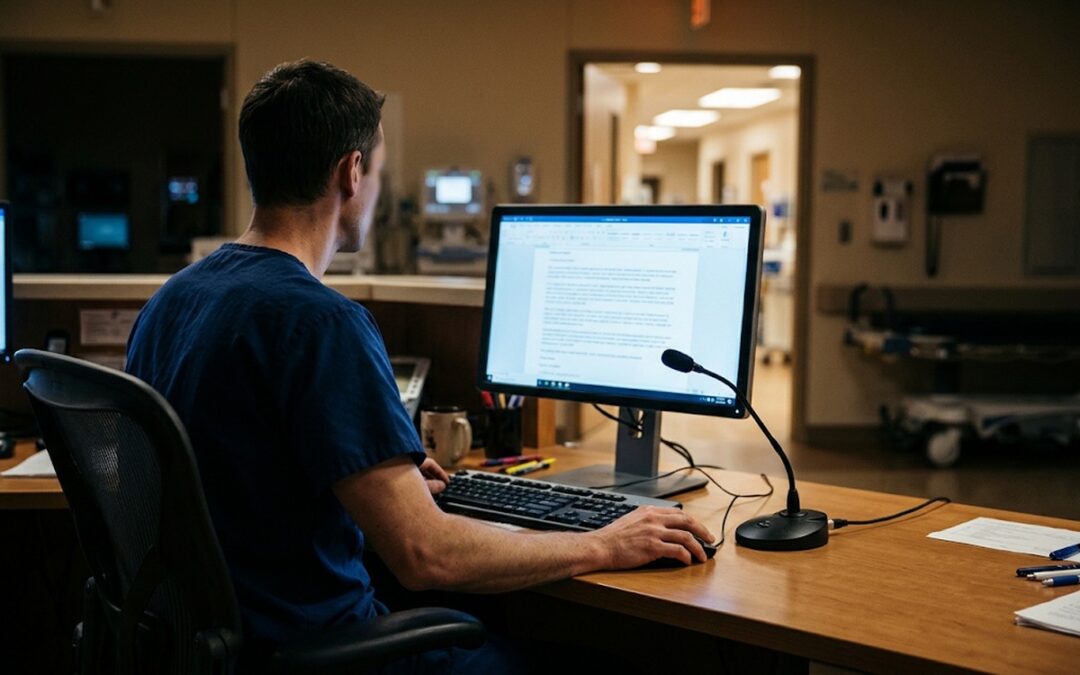
I practice emergency medicine. Overnight care is where timing funds or fails any sepsis early warning tool. A recommendation that sits unconfirmed for hours is not decision support. It is wallpaper.
Confirmation is the intervention
Accuracy slides still dominate vendor demos. Real deployments tell a harder story: impact tracks whether a clinician actually engages the alert in time.
In a prospective multi-site study of a machine-learning sepsis early warning system across five hospitals, researchers monitored hundreds of thousands of adult encounters. Among sepsis patients whose alert fired before antibiotics, confirmation by a physician or advanced practice provider within three hours was associated with earlier antibiotic orders and lower adjusted in-hospital mortality compared with alerts that were dismissed, confirmed late, or never addressed in the system. Evaluation rates were high, but confirmation rates were much lower. Adoption, not just sensitivity, carried the clinical signal.[1][2]
Three hours can look modest on a daytime unit with full coverage. Overnight it can span a shift change, a boarding surge, and two simultaneous resuscitations. If your governance packet celebrates model discrimination and never names a confirmation owner on nights and weekends, you are measuring the wrong finish line.
The quiet tax of alerts that do not help
Emergency departments (EDs) already carry a heavy alert load from medication clinical decision support. In one academic ED study of a medication decision-support system, clinicians encountered nearly fourteen alerts per one hundred orders, and almost two-thirds of alerts were overridden. Override patterns tracked physician factors, patient factors, environment, and the alert design itself.[3]
Override is not automatically error. A systematic review of overridden computerized order-entry alerts found average override rates from roughly half to well over ninety percent, with large shares judged appropriate for some alert types and more concerning for others. Common stated reasons included plans to monitor and prior patient tolerance.[4] Separately, opioid-related alerts in an ED setting were overridden at very high rates, while the alerts that mattered for preventing harm were rare relative to total volume. The authors estimated more than one hundred unnecessary alerts per adverse drug event prevented.[5]
That volume is the overnight tax. Every interrupt competes with the same scarce attention that must also confirm a sepsis flag, answer a family, and move a boarding patient. Alert fatigue is not a soft culture complaint. It is a throughput and safety constraint.
When the model underperforms usual care
Independent validation remains the other half of honesty. An external validation of a widely implemented proprietary sepsis prediction model in hospitalized patients reported modest discrimination at the hospitalization level, poor calibration, alerts on a sizable share of hospitalizations, and a large share of sepsis cases the model still missed relative to contemporary clinical practice and timely antibiotics.[6]
That finding is not an argument against sepsis early warning. It is an argument against treating a deployed score as a finished clinical product. If usual care already starts antibiotics for many true cases before or without the model, overnight teams need a clear rule for what a new alert adds, what to do when it conflicts with bedside judgment, and what to review when it stays silent.
Who owns the last mile at 3 a.m.
Regulators have drawn a practical line for clinical decision-support software: some tools sit outside device oversight only when clinicians can independently review the basis for the recommendation and are not meant to rely primarily on the software. Time-critical work makes that independent review harder.[7] Health-delivery organizations also inherit monitoring and validation duties when tools push urgent, singular outputs or pull frequent physiologic inputs into regulated territory.[8]
Liability analyses land in a similar place. Physicians keep malpractice duties around whether their use of a tool met the standard of care. Organizations face risk for selection, validation, training, and monitoring. No single actor absorbs the whole chain by default.[9][10]
Overnight, those abstract roles become staffing questions:
- Who is the named confirmation owner for high-risk alerts after midnight?
- What is the expected time from alert to documented confirm, dismiss, or escalate?
- Who can silence a noisy rule without waiting for a weekday committee?
- How are silent misses reviewed when no alert fired and the clinical course later showed the risk the tool was supposed to catch?
- Are reason codes required on overrides so the system can learn, or do blank dismissals erase the signal?
If those answers live only in a daytime committee deck, the night shift is improvising.
Overnight emergency medicine already runs with fewer people who can both notice and act. Tools that assume a full daytime bench will look better in a quarterly report than they feel at 3 a.m. The confirmation clock does not pause for boarding, a simultaneous trauma, or a thin attending coverage model. Design for the shift you actually staff.
What to measure instead of another accuracy slide
For teams that want early-warning tools to survive overnight emergency care, useful next metrics include confirmation latency by shift, confirmation owner coverage on nights and weekends, override rate with reason codes, silent-failure case review, and whether earlier treatment actually follows confirmed alerts rather than the score alone.[1][2][3]
The model can light a tile at 3:14 a.m. Someone still has to own the next step. Until confirmation, escalation, and quiet-hour staffing are part of the evaluation, overnight emergency medicine will keep exposing the gap between a printed risk and a finished decision.
Read Harvey Castro’s earlier article: When the Model Is Confident and the Patient Is Not
Author Bio