Novartis has licensed an mRNA-encoded T-cell engager from Abogen Biosciences of Suzhou, China. Abogen announced the licensing and option agreement through PR Newswire on Friday 2 October 2026. The upfront payment is 575 million US dollars. Milestones could add up to about 7.2 billion US dollars if Novartis exercises every option. The headline value is therefore close to 7.8 billion US dollars.
The asset is ABO2203. Novartis takes an exclusive worldwide licence to it. The company also takes exclusive options on further assets from Abogen’s RNA platform. Royalties on future sales are possible. Closing depends on customary conditions and required regulatory clearances.
What the Agreement Covers
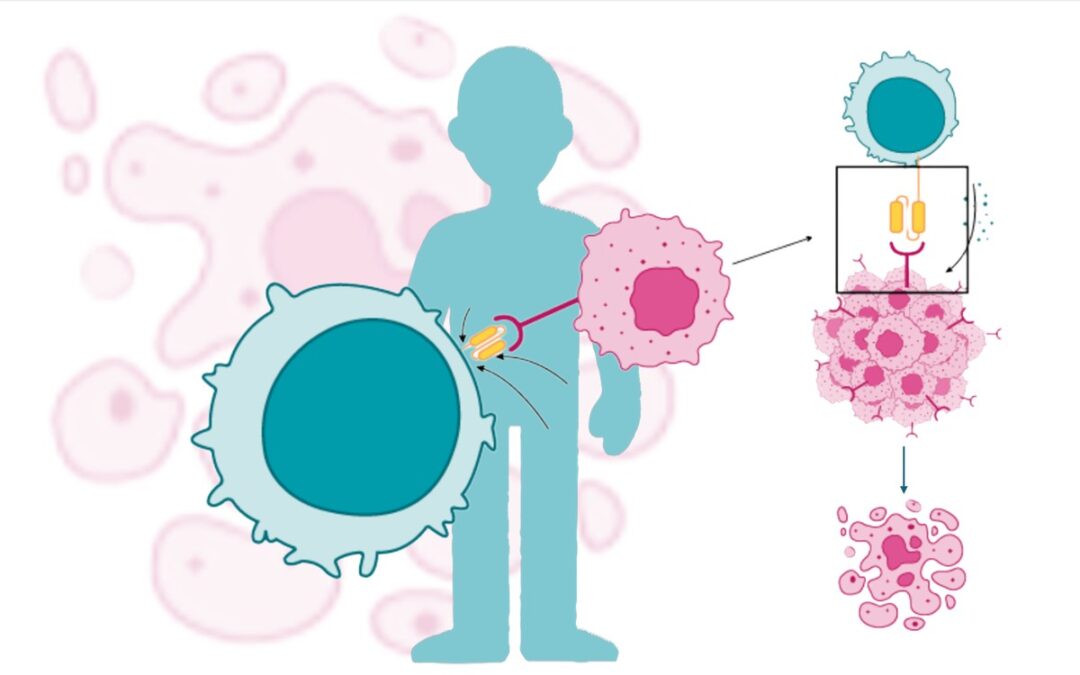
Abogen calls ABO2203 the first mRNA-encoded T-cell engager to enter clinical evaluation in autoimmune disease. The molecule is a CD19 by CD3 engager. Lipid nanoparticles carry the messenger RNA that encodes it. Patient cells then make the engager inside the body.
Bo Ying, Chief Executive Officer of Abogen, said in the release that the deal “marks an important milestone”. He pointed to “the broad potential of our RNA platform to expand beyond prophylactic vaccines”. Fiona Marshall, President of Biomedical Research, Novartis, was more measured. Her release line describes “mRNA-encoded T-cell engagers” as “an innovative approach that could complement existing therapeutic modalities”.
The release does not name who leads development after closing. It does not set out how trial costs are shared. LSDN found no Novartis media release on the agreement on 2 October 2026. The licensee has not announced the transaction in its own newsroom.
Why an mRNA-Encoded T-Cell Engager Differs From CAR-T
The distinction matters to anyone tracking B-cell therapies. An mRNA-encoded T-cell engager does not permanently alter a patient’s T cells. The messenger RNA instead drives production of a bridging protein. Allsci described the design as driving transient production in the body. Fierce Biotech reported that no lymphodepletion or premedication is required.
In vivo CAR-T works differently. AbbVie’s CPTX2309 uses messenger RNA to encode an anti-CD19 chimeric antigen receptor. Targeted lipid nanoparticles deliver that payload to CD8 T cells. Those cells are then reprogrammed to carry the receptor themselves.
The Timing Alongside Novartis’s Own Safety Pause
Novartis’s pause of its autoimmune cell therapy programme became public a month before this deal. The asset was rapcabtagene autoleucel, also known as rap-cel or YTB323. Three patients died from immune effector cell-associated haemophagocytic syndrome. BioSpace reported the pause on 1 September 2026. A Novartis spokesperson confirmed it to BioSpace, citing three serious cases of the syndrome.
LSDN’s coverage of the autoimmune CAR-T safety pause recorded eight affected studies, four of them Phase 2. Screening, randomisation and dosing stopped across the autoimmune and neurology trials. Cancer studies of the same asset continued.
LSDN found no announcement that those studies have resumed. That search was run on 2 October 2026. Novartis told Reuters its approach to business development has remained consistent over time. LSDN draws no conclusion about why the company licensed this asset now.
The Clinical Record Behind the mRNA-Encoded T-Cell Engager
Dose Escalation in B-Cell Lymphoma
Abogen presented first-in-human data at AACR 2026 on 20 April 2026. The study enrolled nine patients with relapsed or refractory B-cell non-Hodgkin lymphoma. The group had a median of four prior lines of therapy. All had failed earlier CD20-targeted treatment. Doses ran from 3 micrograms to 1,920 micrograms by subcutaneous injection.
The release reported objective response rates of 33, 67 and 100 per cent across dose tiers. Complete metabolic responses occurred in the medium and high dose cohorts. The maximum tolerated dose was not reached.
Abogen also reported no dose-limiting toxicities. It reported no cytokine release syndrome and no neurotoxicity of the ICANS type. Grade 1 to 2 pyrexia was the most common adverse event. Grade 3 and 4 events were infrequent and mainly haematological. Peak concentration came at 5.5 days, with a half-life of 7.9 days.
These are dose-escalation figures from nine patients. There is no comparator arm. Response rates at individual dose levels therefore rest on very small groups. Professor Li Wang of Ruijin Hospital, Shanghai Jiao Tong University School of Medicine, presented the data.
Three Patients With Secondary Immune Thrombocytopenia
The autoimmune evidence is smaller again. A paper in Cell appeared online on 18 September 2026. It described three women with refractory secondary immune thrombocytopenia. Their underlying conditions were lupus, Sjögren’s syndrome and antiphospholipid syndrome.
The authors reported durable platelet recovery across six months of follow-up. They reported rapid, complete depletion of peripheral B cells. Depletion was sustained in the bone marrow. All treatment-related adverse events were grade 1 or 2. No cytokine release syndrome or neurotoxicity of the ICANS type was observed.
The paper has sponsor authors. Bo Ying, Abogen’s chief executive, is among them. Six further authors are Abogen employees, according to its declaration of interests. The paper also records 16 patients with refractory autoimmune disease enrolled by 26 January 2026. Outcomes are published for only three of them.
The paper reports no cytokine release syndrome. LSDN found no reference in it to haemophagocytic syndrome. Published outcomes for twelve patients across two small studies cannot rule out severe inflammatory events.
A Licence, Not a Purchase
The structure is the most instructive part of this transaction. Large companies have already bought in vivo cell therapy platforms outright. Three purchases frame the comparison. AstraZeneca agreed to acquire EsoBiotec on 17 March 2025. It paid 425 million US dollars upfront, with up to 1 billion in total consideration.
AbbVie went further. Its agreement to acquire Capstan Therapeutics was announced on 30 June 2025. The price was up to 2.1 billion US dollars in cash at closing. Laura Shawver was then President and Chief Executive Officer of Capstan. She called in vivo CAR-T “a potential new treatment modality in medicine”.
Bristol Myers Squibb agreed to buy Orbital Therapeutics for 1.5 billion US dollars in October 2025, Fierce Biotech reported. Orbital’s lead asset is an in vivo CD19 CAR-T candidate for autoimmune disease.
Novartis has not bought a platform. It has licensed a single mRNA-encoded T-cell engager, plus options on more. Its upfront alone exceeds what AstraZeneca paid upfront to own EsoBiotec outright. That comparison is an LSDN reading of the published terms. Neither company has framed the deal that way.
The upfront share is also worth noting. It is roughly 7 per cent of the headline value. LSDN’s China out-licensing deals tracker records VBInsight putting upfronts at 5.8 per cent of first-half outbound licensing value. The two figures come from different series and are not directly comparable.
Deal activity is running hot across the sector. BioWorld counted a record 199.2 billion US dollars of biopharma deal value in the first eight months of 2026.
Novartis itself has had a difficult autumn. Pelacarsen missed its primary endpoint in Lp(a)HORIZON, announced on 4 September 2026. Del-desiran missed its primary endpoint in HARBOR, announced on 8 September 2026. Reuters reported that the two failures erased nearly 30 billion US dollars of market value.
The HARBOR result drew comment from the company. Shreeram Aradhye, President, Development and Chief Medical Officer, Novartis, addressed it in the Novartis update on the study. He said that “setbacks are part of scientific progress”.
Gillian Hollenstein is lead manager at Point Capital Navigator Fund. She told Reuters the deal “has a better risk profile”. Her reason was that Novartis pays a smaller amount upfront to secure the rights.
What an mRNA-Encoded T-Cell Engager Would Meet in England
No UK or European filing for ABO2203 was found on 2 October 2026. No UK trial record was found either. The clinical work to date has been conducted in China.
The English pathway for immune thrombocytopenia is instructive all the same. NICE technology appraisal TA853 was published on 15 December 2022. It recommends avatrombopag “within its marketing authorisation” for refractory primary chronic disease in adults. The same guidance describes how clinicians sequence the options.
That guidance states that clinicians generally use thrombopoietin receptor agonists before rituximab. It gives the reason plainly: rituximab “can suppress the immune system”. In primary immune thrombocytopenia, B-cell depletion already sits behind platelet-raising agents in England.
One caveat matters here. TA853 covers primary chronic immune thrombocytopenia. The three published autoimmune cases were all secondary disease. Novartis has not named its target indications. A spokesperson declined to disclose them to BioSpace. Reuters describes the drug as designed for conditions such as lupus and rheumatoid arthritis. The published cases and any future indication may not match.
LSDN’s reading is that deep B-cell depletion faces a sequencing question in England. That question is not only about safety. Neither NICE nor either company has framed the issue in these terms.
What LSDN Could Not Confirm
Several points remain open as at 2 October 2026. Novartis published no release of its own on the agreement. Abogen’s news index carries no item announcing the Cell publication. No resumption of the paused rapcabtagene autoleucel studies has been announced.
No UK trial site for ABO2203 was identified. Novartis has not said which indications it will pursue. LSDN will add this agreement to its China out-licensing tracker at the next monthly update.