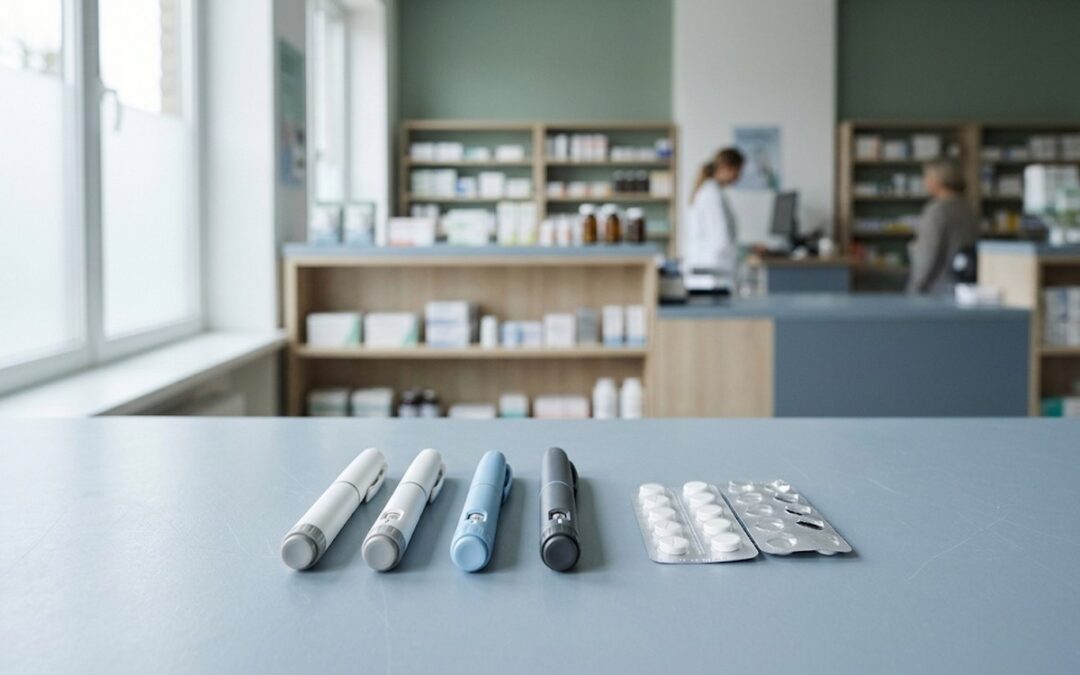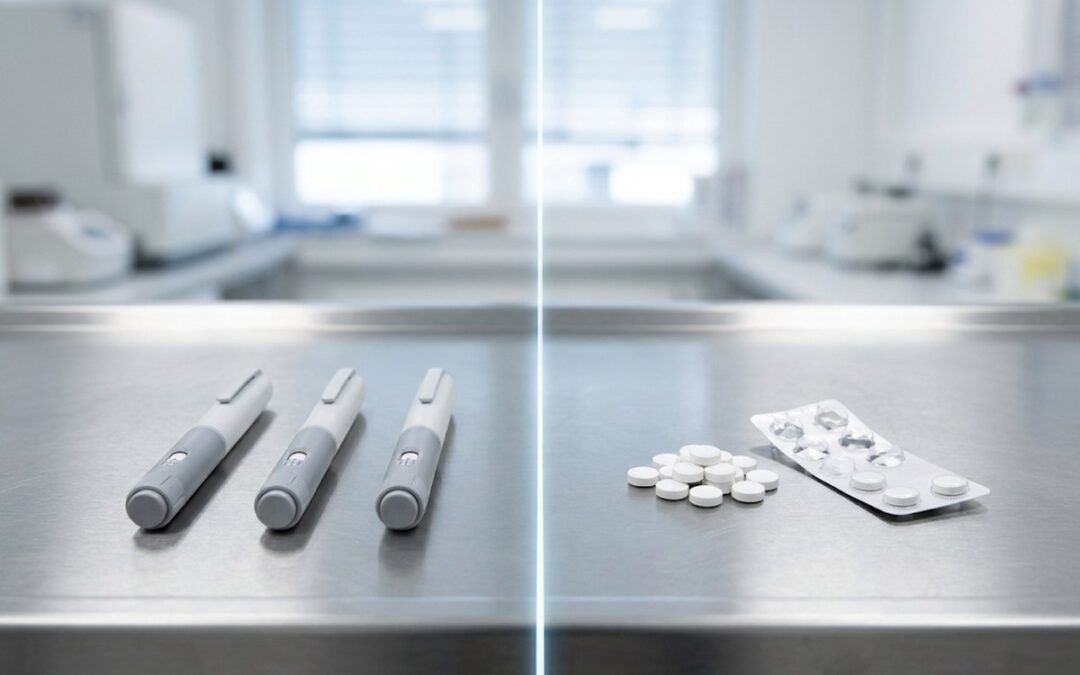

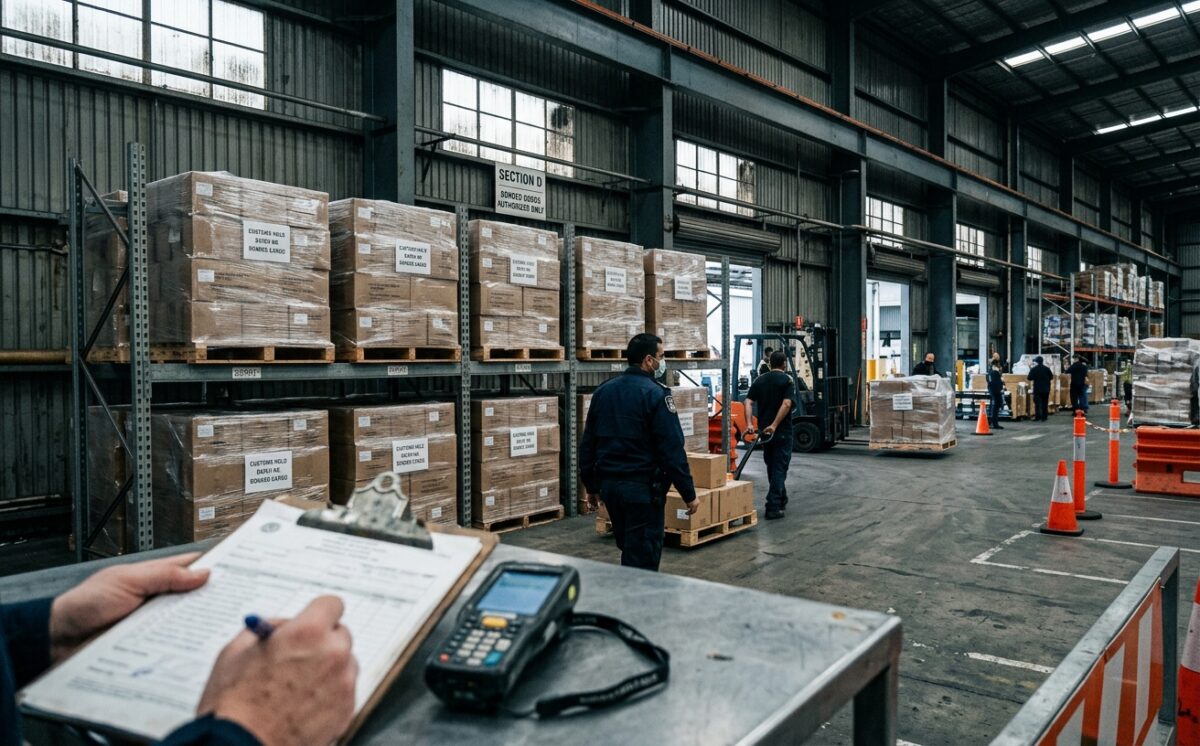
On 29 September 2026, Section 232 pharma tariffs reach every company not named in Annex III. The default rate is 100 per cent ad valorem. It applies to patented finished medicines and their associated ingredients. That means active pharmaceutical ingredients and key starting materials. Reduced rates exist, but only through defined routes. A company with no approved onshoring plan pays the full rate. So does a company with no pricing agreement and no qualifying country of origin.
The regime rests on Proclamation 11020, signed on 2 April 2026. It followed a Commerce Department investigation under Section 232 of the Trade Expansion Act of 1962. Commerce found that import reliance in patented medicines threatened national security. The proclamation cites FDA figures for 2025. About 53 per cent of patented medicines distributed in the United States were made abroad. Only 15 per cent of patented active ingredients by volume were produced domestically. That dependency has been tested before, when a Strait of Hormuz closure threatened global medicine supplies.
What Section 232 pharma tariffs change on 29 September
The proclamation set two effective dates. The first, 31 July 2026, covered the 17 large manufacturers listed in Annex III. The second, 29 September 2026, covers everyone else.
That second date is the operational news. Mid-sized and smaller manufacturers, importers and distributors are the population newly exposed. Many hold no company-specific agreement and no Commerce determination.
Scope is narrower than the headline rate suggests. Section 232 pharma tariffs attach only to products tied to a valid United States patent. In practice that means listings in the FDA Orange Book or Purple Book. Coverage runs across Chapters 29 and 30 of the Harmonized Tariff Schedule.
Rate structure under Proclamation 11020
| Category | Section 232 rate |
| Default: patented products listed in Annex I | 100% |
| Commerce-approved onshoring plan | 20%, rising to 100% on 2 April 2030 |
| EU, Japan, South Korea, Switzerland and Liechtenstein | 15% |
| United Kingdom | 0% |
| Onshoring plan plus MFN pricing agreement | 0% until 20 January 2029 |
| Generics, biosimilars, US-origin products | 0% at this time |
Two further rules affect the arithmetic. Where more than one rate could apply, the lowest applicable rate governs. Drawback is available on duties imposed under the proclamation.
Who was already paying, and who starts now
The staggering gave the largest firms roughly 120 days from the proclamation. Everyone else received about 180 days. Both windows have now nearly closed.
Annex II ratified company-specific agreements that Commerce concluded before 2 April 2026. Annex III named the large manufacturers whose treatment began on 31 July. Companies outside both lists have been waiting for September.
Customs and Border Protection issued implementing guidance on 30 July 2026. One detail matters for the September group. Importers outside Annex III have reported a Chapter 99 provision on entry since 31 July. No duty was payable during that window. From 29 September, duty falls due on the same entries.
Four checks before 29 September
Four questions decide whether the exposure is real. Classify the portfolio against Annex I and Annex IV. Confirm patent status for each product in the Orange Book or Purple Book. Establish country of origin, which for many products follows the active ingredient. Then confirm with Commerce whether any agreement covers the importing entity.
The legal footing is worth stating plainly. Section 232 pharma tariffs rest on a different authority from the reciprocal tariffs. Those were imposed under the International Emergency Economic Powers Act. The Supreme Court invalidated them on 20 February 2026 in Learning Resources, Inc. v. Trump. That ruling did not reach Section 232. Conflating the two is the most common error in secondary coverage.
The exemption route: onshoring plus most favoured nation pricing
Two conditions unlock the zero rate under Section 232 pharma tariffs. A company needs an onshoring plan approved by the Secretary of Commerce. It also needs a Most-Favored-Nation (MFN) pricing agreement with Health and Human Services. Meeting only the first condition gives 20 per cent, not zero.
Neither rate is permanent. The zero rate runs until 20 January 2029. The 20 per cent onshoring rate rises to 100 per cent on 2 April 2030.
The Bureau of Industry and Security opened applications on 13 May 2026. Submissions were requested by 12 June. Applicants had to set out ownership, product portfolios and planned United States investment. The Secretary may also extend reduced treatment to firms he assesses will qualify soon. That includes companies holding agreements in principle.
Domestic capacity is being built out alongside the tariff regime. The FDA PreCheck program is one route regulators have taken. Contract manufacturers have expanded US capacity in parallel.
By 31 August 2026, 26 manufacturers had entered MFN pricing agreements. The White House put their combined share of the branded market at about 89 per cent. Nine agreements were announced that month, mostly with mid-sized companies. Those nine also committed close to 20 billion dollars in United States manufacturing. Four of them pledged ingredients to the Strategic API Reserve.
Whether a given firm now qualifies for a reduced rate is not fully public. Annex III membership and Commerce determinations are disclosed selectively. Companies should confirm their own position with Commerce rather than infer it.
What Section 232 pharma tariffs do not cover
Generic medicines and their associated ingredients sit outside the regime at this time. Biosimilars are excluded on the same basis. Products of United States origin are also outside it.
The qualifier carries weight. The proclamation states that generics “shall not be subject to tariffs pursuant to section 232 at this time.” It requires the Secretary to report back within a year on generic imports. Exclusion is a current setting rather than a settled principle.
A phased plan for generics has since been announced. The President said on 21 July 2026 that imported generics would stay duty-free for two years from 1 August. A 100 per cent rate would follow in August 2028, and 200 per cent in August 2029. No proclamation, executive order or Commerce rule has implemented that plan.
Several specialty categories carry a zero rate as well. These include drugs whose approved indications are all orphan-designated. Nuclear medicines, plasma-derived therapies and fertility treatments are also listed. So are cell and gene therapies and antibody drug conjugates. Relief in these categories depends on a Commerce determination published in the Federal Register.
The structural consequence follows directly. Section 232 pharma tariffs bear on branded and patented supply chains. The high-volume generic base that the NHS and comparable systems depend on is untouched by Section 232 for now. A separate measure still reaches some of it. Generics finished from Chinese or Indian ingredients can fall within the Section 301 forced labour duties. Those took effect on 24 July 2026.
Where UK and European manufacturers stand
UK-origin patented pharmaceuticals currently carry a zero rate. The proclamation had set 10 per cent for the United Kingdom. That rate was reducible to zero under a future pricing agreement. Commerce published the reduction on 4 August 2026, effective from 31 July.
The underlying instrument is the pharmaceutical pricing arrangement concluded on 2 April 2026. It records a preliminary understanding reached on 1 December 2025. Relief runs to 19 January 2029. In return, the UK committed to raise NHS spending on new medicines. It also agreed to revise NICE cost-effectiveness thresholds.
The arrangement is contested at home. Published analysis has questioned the NHS opportunity cost of the higher thresholds, and the government disputes those estimates. The prospect of drug tariffs had unsettled UK manufacturers well before the December understanding.
One condition deserves attention. The arrangement requires major UK companies to enter agreements with Commerce and HHS. Commerce confirmed in August that the requirement was being met. UK relief therefore rests on continuing compliance, not a permanent carve-out.
Origin is the second variable. Relief follows country of origin rather than the site of final dosage manufacture. For many medicines, origin tracks the active ingredient. Finishing imported API in Britain may not secure the UK rate.
European exporters sit differently. EU, Japanese, South Korean and Swiss products carry 15 per cent. That figure reflects pharmaceutical commitments in existing trade deals. It is a country-level ceiling, and company-level routes to a lower rate remain open.
What to watch next
Three developments will shape exposure to Section 232 pharma tariffs through 2027.
The first is the generic review, and the phased plan announced in July. Any move against generic imports would change the exposure profile entirely. Formal implementation is the trigger to watch.
The second is codification. The administration has pressed Congress to write the pricing agreements into statute. Statutory footing would alter the calculus for firms weighing whether to sign.
The third is disclosure. Company filings for the fourth quarter offer the first hard evidence of cost impact. Until then, circulating numbers are estimates rather than reported figures.