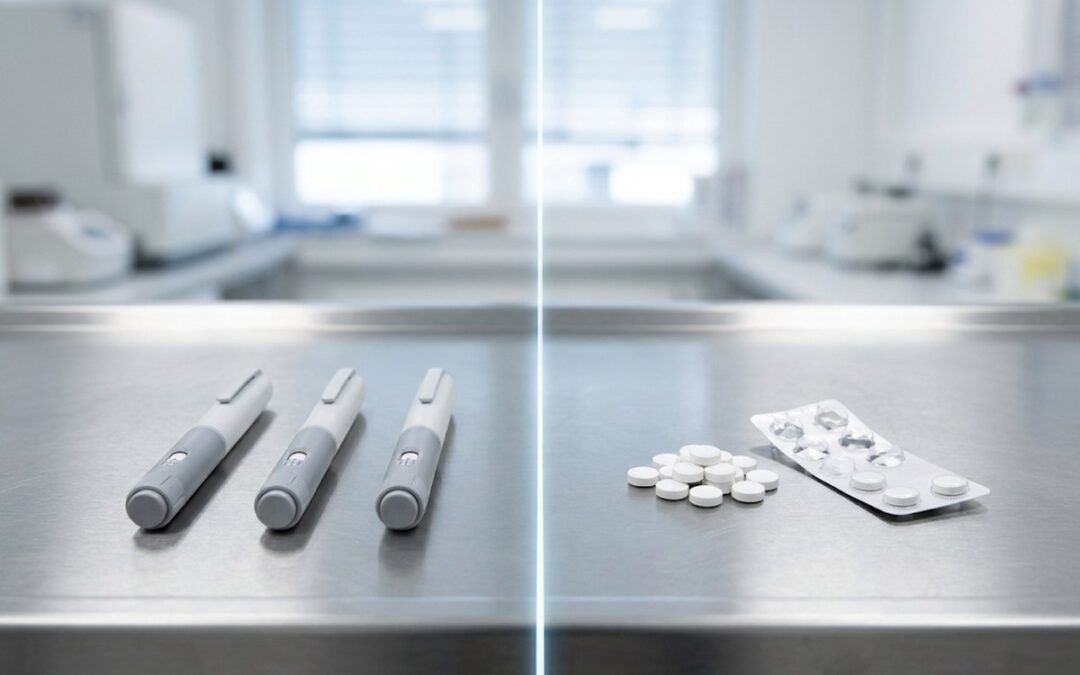

Why did pelacarsen fail, when the drug did exactly what it was designed to do? Novartis’s antisense therapy lowered lipoprotein(a), or Lp(a), by an estimated 77.7 percentage points more than placebo at one year. Yet heart attacks, strokes, urgent coronary procedures and cardiovascular deaths did not fall.
The full results came at the American Heart Association (AHA) Scientific Sessions in Chicago on 7 November 2026. They were published simultaneously in the New England Journal of Medicine. Cleveland Clinic, which led the trial, reported primary endpoint events in 12.3% of patients on pelacarsen and 12.1% on placebo.
Novartis has since ended development of pelacarsen in atherosclerotic cardiovascular disease (ASCVD). That leaves Amgen and Eli Lilly carrying the field, with outcomes trials that differ from Lp(a)HORIZON in important ways.
What the Lp(a)HORIZON trial tested
Lp(a)HORIZON randomised 8,350 patients at 797 sites in 42 countries between December 2019 and July 2022. Of these, 8,322 were included in the efficacy analysis. Every participant had established cardiovascular disease and Lp(a) of at least 70 mg/dL.
Patients self-injected pelacarsen 80 mg or a matching placebo once a month. Median follow-up was 4.7 years. The primary endpoint combined cardiovascular death, non-fatal myocardial infarction, non-fatal stroke and urgent coronary revascularisation requiring hospitalisation.
At 12 months, Lp(a) had fallen by 78.4% with pelacarsen and by 3.2% with placebo. Cleveland Clinic reported an estimated treatment difference of 77.7 percentage points, the trial’s headline measure of Lp(a) lowering. LDL cholesterol was also modestly lower, at 62.3 mg/dL against 71.2 mg/dL.
TCTMD reported a hazard ratio of 1.02 for the primary endpoint (95% CI 0.90 to 1.15). Each individual component was neutral. Results were also neutral in patients with baseline Lp(a) of at least 90 mg/dL, a prespecified analysis population. All-cause death occurred in 5.7% of pelacarsen patients and 5.9% of placebo patients.
Steven Nissen of Cleveland Clinic, the study chair, put it plainly to Bloomberg. “It is just stone cold neutral,” he said.
Why did pelacarsen fail despite strong genetic evidence?
The surprise lies in what came before. Observational studies and Mendelian randomisation analyses had consistently linked high Lp(a) to heart attack, stroke and aortic valve disease. Lp(a) levels are about 90% genetically determined, Donald Lloyd-Jones of Boston University noted at the AHA media briefing.
Karol Watson of UCLA, the study discussant, summed up the puzzle. The trial showed that “even with compelling biology, compelling genetics, everything went right, but cardiovascular events didn’t change,” she said.
The question for clinicians and investors alike is therefore simple: why did pelacarsen fail? No single explanation has been confirmed. Investigators and independent cardiologists have instead set out several hypotheses, and each remains unproven.
Why did pelacarsen fail? Five possible explanations
Treatment may have started too late
Participants had a prior cardiovascular event between three months and ten years before enrolment, so their atherosclerosis was already established. Lloyd-Jones questioned whether lowering Lp(a) at that stage can reverse decades of exposure. “Are we too far down the pathway to be able to fully reverse it?” he asked.
Trial length is a related concern. Genetic studies reflect lifelong exposure, whereas Lp(a)HORIZON measured just under five years of treatment.
Background risk was already well controlled
Median baseline LDL cholesterol was about 65 mg/dL, and around 78% of patients took high-intensity statins. Mean systolic blood pressure was 125 mm Hg. Nissen suggested that such well-treated patients may have left little room to show an added benefit.
The entry threshold may have been too low
The trial enrolled patients from 70 mg/dL, roughly 148 nmol/L. David Maron of Stanford University, president of the American Society for Preventive Cardiology, questioned that choice. “Maybe a higher Lp(a) should have been required for entry into the trial,” he told NPR.
Residual Lp(a) is a connected question. At 12 months, levels were 64.4 nmol/L on pelacarsen against 233.4 nmol/L on placebo. Lloyd-Jones raised the possibility that enough residual Lp(a) remained for risk to persist.
The antisense approach may be less potent than siRNA
Pelacarsen is an antisense oligonucleotide that blocks production of apolipoprotein(a). Small interfering RNA (siRNA) drugs act on the same target but have produced deeper reductions. In the Phase 2 OCEAN(a)-DOSE study, Amgen’s olpasiran cut Lp(a) by more than 95% at higher doses. Those doses were 75 mg or above.
According to TCTMD, Nissen called the Novartis decision to stop a good one. He suggested siRNA therapies may be a more attractive approach.
Tolerability may have offset any benefit
Adverse events were markedly more frequent on the drug. Drug-related adverse events affected 56.8% of pelacarsen patients and 18.0% on placebo. Discontinuation because of adverse events reached 20.6% against 7.5%.
Nineteen pelacarsen patients had adjudicated anaphylaxis, compared with none on placebo. Serious adverse events, however, were less frequent with pelacarsen, at 37.3% against 41.1%. Lloyd-Jones described tolerability as an open question rather than a settled explanation.
Commercial fallout for Novartis and Ionis
Whatever the answer to the question “why did pelacarsen fail?”, the commercial consequence is already clear. Novartis said it will discontinue the pelacarsen ASCVD programme, including ongoing ASCVD studies and its Managed Access Programme. One study continues. The Phase 2 Lp(a)FRONTIERS CAVS trial is testing pelacarsen in 502 patients with mild or moderate calcific aortic valve stenosis. Its estimated primary completion date is March 2030.
Expectations had already reset after the September topline. Novartis chief medical officer Shreeram Aradhye spoke in the topline announcement on 4 September 2026. “These are not the results we hoped for,” he said. Visible Alpha consensus then cut pelacarsen’s probability of success to 37.5%, from 58.75%, S&P Global Market Intelligence reported.
Ionis Pharmaceuticals discovered pelacarsen. Novartis exercised its licence option in February 2019, paying $150 million split equally between Ionis and its affiliate Akcea Therapeutics. In January 2023, Ionis said it retained rights to $650 million in pelacarsen development, regulatory and commercial milestones.
Ionis was also entitled to tiered royalties in the mid-teens to low 20% range on any sales. In the same 2023 deal, Royalty Pharma acquired 25% of that royalty stream. Our earlier report on the topline pelacarsen trial miss set out the questions the full dataset needed to answer.
The Lp(a) drug pipeline after pelacarsen
Why did pelacarsen fail where rivals still hope to succeed? The designs of the remaining trials offer some clues. Four Phase 3 outcomes trials now carry the Lp(a) hypothesis. They differ from Lp(a)HORIZON in drug class, entry threshold and patient population.
| Drug | Company | Modality | Outcomes trial | Population and entry Lp(a) | Est. primary completion |
|---|---|---|---|---|---|
| Olpasiran | Amgen | siRNA, injection every 12 weeks | OCEAN(a)-Outcomes (NCT05581303) | Prior MI or revascularisation; 200 nmol/L or more; 7,297 enrolled | March 2028 |
| Olpasiran | Amgen | siRNA, injection | OCEAN(a)-PreEvent (NCT07136012) | No prior event, aged 50 or over; 200 nmol/L or more; about 11,000 planned | October 2031 |
| Lepodisiran | Eli Lilly | siRNA, injection | ACCLAIM-Lp(a) (NCT06292013) | Established ASCVD or high-risk primary prevention; 175 nmol/L or more; about 17,300 planned | March 2029 |
| Muvalaplin | Eli Lilly | Oral small molecule | MOVE-Lp(a) (NCT07157774) | Prior event or high risk; 175 nmol/L or more; about 10,450 planned | March 2031 |
| Zerlasiran | Silence Therapeutics | siRNA, injection | Phase 3 not started | Awaiting a development partner | Not applicable |
Source: ClinicalTrials.gov registry records, Lilly, Amgen and Silence Therapeutics disclosures. Dates are sponsor estimates and may change.
Two design differences stand out. ACCLAIM-Lp(a), MOVE-Lp(a) and OCEAN(a)-PreEvent all include patients without a prior cardiovascular event, a population Lp(a)HORIZON did not test. Each trial in the table also requires a higher entry level, of 175 or 200 nmol/L.
Muvalaplin takes a different route. It is an oral small molecule that disrupts assembly of the Lp(a) particle, rather than silencing the gene.
Silence Therapeutics, a London-based company, has an earlier-stage siRNA, zerlasiran. It cut Lp(a) by about 80% over 36 weeks in Phase 2. However, Silence has said it will only start a Phase 3 outcomes study once it secures a partner.
OCEAN(a)-Outcomes is likely to report first. Older registry entries gave an estimated completion of December 2026. The record, updated in February 2026, now lists March 2028.
Nissen remains cautious about drawing wider conclusions. “The Lp(a)HORIZON trial is not the end of the story,” he said.
What it means for clinicians and Lp(a) testing
Patients may reasonably ask: why did pelacarsen fail, and should I still be tested? On testing, the guidance has not changed. The National Lipid Association (NLA) says clinicians and patients should continue to measure Lp(a). Its 2024 scientific statement and the 2026 ACC/AHA multisociety dyslipidaemia guideline both recommend universal Lp(a) testing in all adults.
High Lp(a) remains a recognised risk marker. Cleveland Clinic cites an estimated 1.4 billion people worldwide with elevated levels. Statins and lifestyle changes have little effect on it.
For now, attention returns to the risk factors that can be treated, such as LDL cholesterol and blood pressure.
So why did pelacarsen fail? On current evidence, nobody can yet say with confidence. The clearest answers are likely to come from the siRNA and oral trials due to report between 2028 and 2031.